Delhi government has reported a plan to expand Delhi's EV charging network to 32,062 points by December 2029 and to add 10 public charging stations for electric freight trucks. The move matters for Delhi drivers and fleet operators, but the main projects are not live yet: 382 PM E-DRIVE sites are still moving through technical approval, reassessment or tendering, according to reports published on 29 Oct 2026.
Key takeaways
- The reported charging-point count was 14,225 as of 30 Sep 2026, after 5,312 points were added between 1 Jan and 30 Sep 2026.
- Delhi's target is 32,062 EV charging points by December 2029, alongside a new push for heavy-vehicle charging.
- The Centre has sanctioned ₹127.16 crore for charging facilities at 382 sites under PM E-DRIVE; 180 sites have been reassessed as suitable for chargers.
- Ten public e-truck charging stations have received ₹8.9 crore in support sanctioned on 23 Oct 2026, with 20 chargers rated at 360 kW planned across the project.
- The reported registration deadlines are 1 Jan 2027 for electric three-wheelers and N1 goods carriers, and 1 Apr 2028 for two-wheelers.
What Delhi has announced
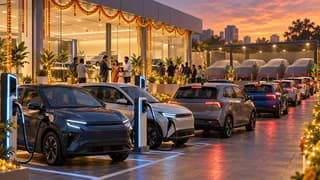
The latest plan combines a wider city charging network with charging capacity for commercial freight. The Times of India and Jagran both reported on 29 Oct 2026 that Delhi wants to take its EV charging-point count to 32,062 by December 2029. The reports attribute the plan to Delhi government figures and Energy Minister Ashish Sood.
The same reports put Delhi's current reported total at 14,225 points as of 30 Sep 2026. The city added 5,312 points from 1 Jan to 30 Sep 2026, exceeding the 13,913-point target set by the Commission for Air Quality Management for December 2026. These are point-in-time figures; they do not mean every charger is available to every vehicle, open at all hours or located on a route a driver needs.
Where the ₹127.16 crore package stands
Under the PM E-DRIVE programme, the Centre has sanctioned more than ₹127.1 crore for 382 approved sites, with Jagran reporting the amount as ₹127.16 crore. A second assessment found 180 sites suitable for composite chargers with capacities of 12 kW, 60 kW and 120 kW. Delhi submitted details of those 180 sites to the Ministry of Heavy Industries on 8 Oct 2026.
That distinction is important for EV owners: a sanctioned site package is not the same as a working public charger. The reports say technical approvals, committee review and tendering are still underway through Delhi Transco and the relevant procurement departments. Until those steps are completed, drivers cannot assume that any of the 382 sites has a confirmed opening date, final operator, tariff or access rule.
Freight charging gets a separate build-out
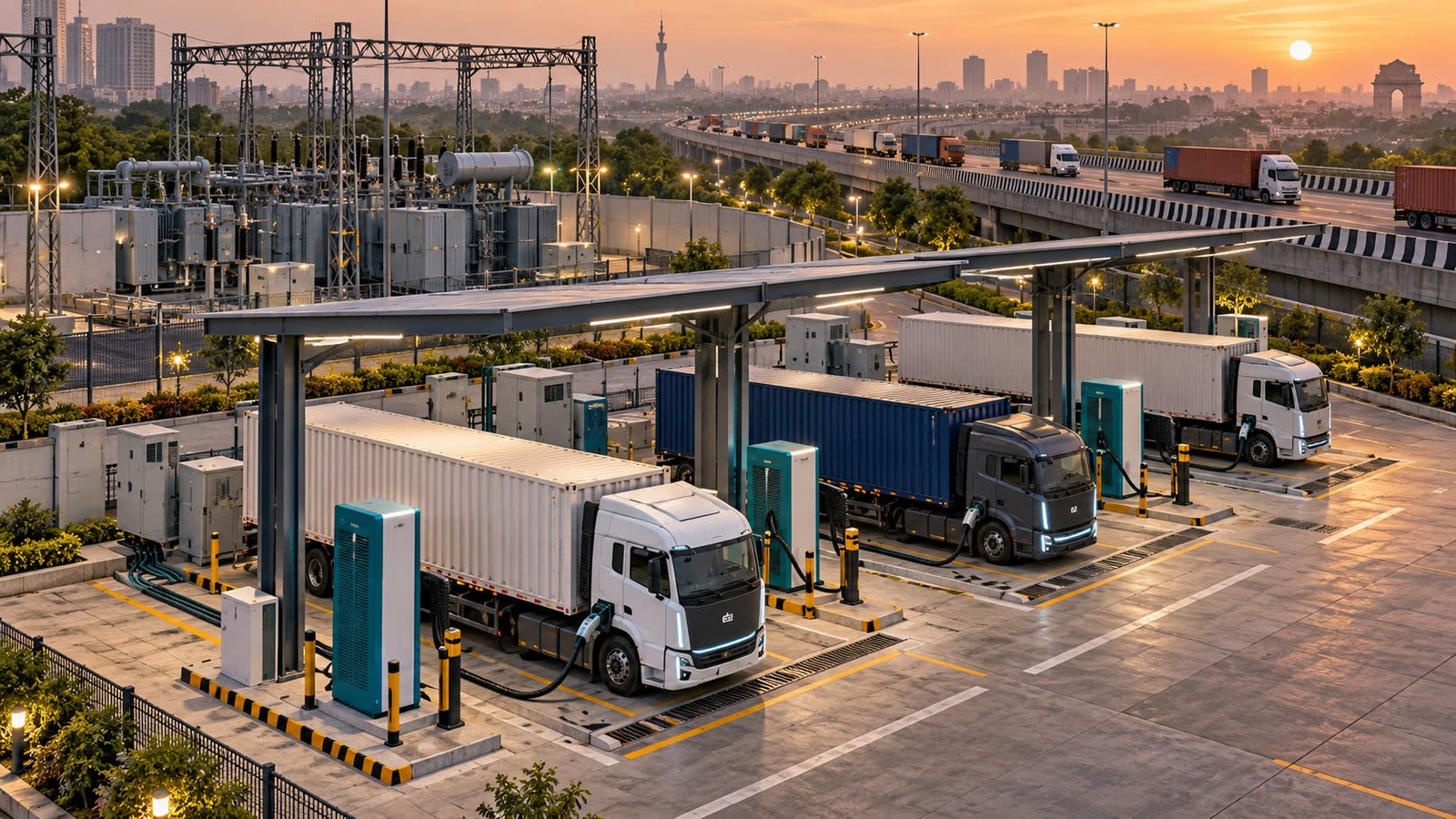
Delhi is also planning 10 public charging stations for electric freight trucks. The Ministry of Heavy Industries sanctioned ₹8.9 crore for the stations on 23 Oct 2026, according to both reports. The plan includes 20 heavy-duty CCS-II chargers rated at 360 kW. That is a higher-power configuration than the 12 kW, 60 kW and 120 kW composite chargers described for the wider site package.
For transport operators, the useful question is not only how many stations are approved, but where they will be placed and how many trucks each site can serve during a delivery shift. Operators will also need the eventual details on connection capacity, queue management, payment, operating hours and charging tariffs. None of those operating details should be treated as final until Delhi publishes the tender and commissioning information.
Why this matters to drivers and fleets
For a private EV owner, more points can reduce the need to detour for a top-up, especially on trips that begin or end in outer Delhi. It may also make apartment-free charging more practical for people who cannot install a home charger. The near-term benefit, however, depends on the locations that actually receive equipment and whether they remain reliable after commissioning.
For delivery fleets and small freight operators, dedicated truck stations could help reduce the time spent searching for compatible chargers. The effect on trip cost will depend on electricity tariffs, utilisation, financing and the vehicle's energy consumption. A high-power charger can shorten a stop, but it does not automatically make a route cheaper than diesel or guarantee that a vehicle can complete a shift without a planned charging break.
Drivers planning a longer electric journey can use FuelPrice's EV charging station directory to check available locations, then use the road-trip planner to place charging stops around the route. The directory is a planning aid, not confirmation that a proposed Delhi site is already operational.
Registration deadlines to watch
The charging expansion is being linked to the Delhi EV Policy 2026. The Delhi Transport Department maintains the official Delhi EV policy page, while the 29 Oct reports describe the next registration milestones: from 1 Jan 2027, only electric three-wheelers and N1-category goods carriers are to be newly registered; from 1 Apr 2028, the same approach is to extend to two-wheelers. The reports also cite a target for school-bus fleets to reach 30% electric by 2030.
These are registration-policy deadlines, not a claim that every existing petrol or diesel vehicle must leave Delhi on those dates. Buyers and operators should check the applicable vehicle category, registration date and any later government clarification before making a purchase or fleet decision.
What changes now
Nothing in the 29 Oct reports changes petrol or diesel prices, toll charges or the current availability of Delhi's working chargers. The immediate change is the stated direction of infrastructure spending and the approval work behind it. Delhi's plan is aligned with the national PM E-DRIVE brief, which lists charging infrastructure and electric trucks among the scheme's objectives.
For readers comparing an electric vehicle with an internal-combustion alternative, the fuel cost calculator can show the petrol or diesel side of a planned trip. That comparison should be kept separate from the charging rollout: the new stations are planned infrastructure, while a vehicle's running cost depends on the route, energy prices, efficiency and charging access available on the day.
Reader takeaway
Delhi's 32,062-point target is a sizeable infrastructure plan, but the practical test will be delivery: which of the 382 sites receives equipment, when the 10 truck stations open, and whether tariffs and uptime work for real routes. EV owners should track commissioned stations rather than count approvals, while fleets should wait for location, access and operating details before building a route or cost model around them.
Sources
- The Times of India — Delhi targets 32,062 EV charging points by 2029, clears 10 e-truck stations — 29 Oct 2026
- Jagran — Delhi EV charging expansion across 382 sites and freight hubs — 29 Oct 2026
- Transport Department, Government of NCT of Delhi — Delhi EV policy — page updated 22 Oct 2026
- Ministry of Heavy Industries — PM E-DRIVE: Brief — accessed 30 Oct 2026