Delhi’s winter pollution plan will bring higher charges at authorised parking sites, staggered office hours and a 50% work-from-home arrangement from 1 Nov 2026, while construction and demolition curbs will tighten through January 2027. For drivers, the practical effect is a change in where and when trips can be made, not a change in petrol or diesel prices.
The measures were put back in focus after a 28 Sep meeting chaired by Union Environment Minister Bhupender Yadav with Delhi Chief Minister Rekha Gupta and senior officials. The Delhi Environment Department’s published air-pollution directions provide the official policy basis; the latest reports describe how the government plans to enforce the winter package.
Key takeaways
- Authorised parking charges in Delhi are reported to double from 1 Nov 2026 through 28 Feb 2027; DMRC-owned and managed parking is exempt, according to the reported plan.
- Government and private offices are to operate with no more than 50% physical attendance during the winter period, with staggered office timings for MCD and GNCTD offices.
- Dust-generating demolition and outdoor civil construction are to be restricted from 1 Nov to 31 Jan, followed by a complete construction-and-demolition ban from 10 Dec to 20 Jan, subject to essential-work exemptions.
- Reports differ on whether the 50% WFH arrangement ends on 31 Jan or 28 Feb. Readers should follow the final order issued for their office or establishment.
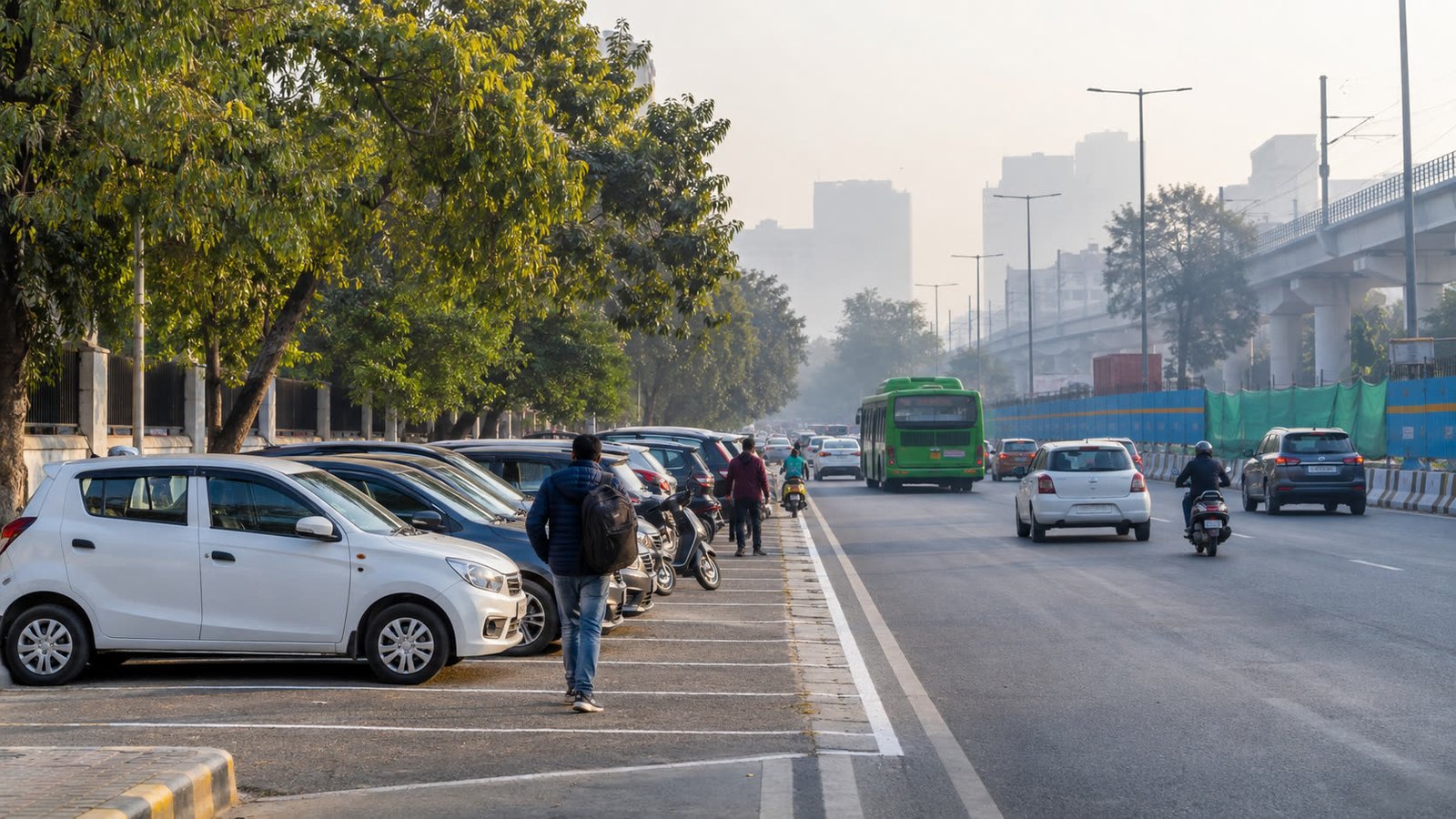
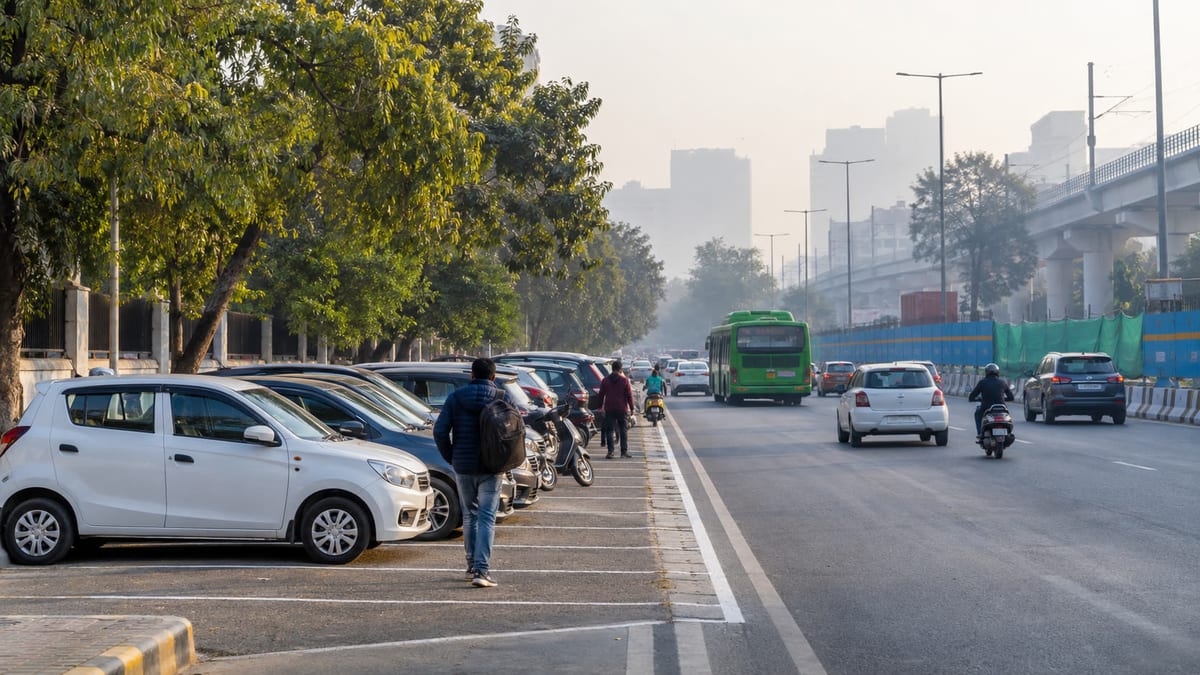 Representative editorial image of Delhi traffic, parking and construction-control measures. Credit: FuelPrice illustration.
What changes for Delhi commuters
The reported winter schedule is designed to reduce private-vehicle movement and dust before air quality deteriorates. It runs alongside the Commission for Air Quality Management’s graded restrictions, which are triggered by measured air quality. The important distinction is that several measures are scheduled in advance rather than waiting for a particular AQI stage.
Parking fees and office timings
Authorised parking sites are reported to charge twice their existing fee from 1 Nov 2026 to 28 Feb 2027. Parking facilities owned and managed by Delhi Metro Rail Corporation are excluded from that increase. Because the government has not announced one single citywide parking rate, the rupee impact depends on the site’s current fee and the number of days a commuter parks there: the additional cost is the existing fee multiplied by the number of affected parking days.
Office timings are also being staggered. The Indian Express and Economic Times report MCD office hours of 8:30 am to 5:00 pm and GNCTD office hours of 10:00 am to 6:30 pm from 1 Nov to 28 Feb. Essential services such as hospitals, public transport, power, water, sanitation and pollution-control agencies are exempt from the physical-attendance restriction reported for other offices.
The 50% WFH end date needs attention. The Economic Times and Hindustan Times describe the arrangement as running from 1 Nov to 28 Feb, while the Indian Express reports the 50% physical-attendance cap from 1 Nov to 31 Jan. That is a material difference for commuters planning office attendance in February. Until a final department-specific order resolves it, employers and employees should treat the dates as reported implementation windows rather than assume one applies to every workplace.
Construction restrictions will affect routes
From 1 Nov to 31 Jan, dust-generating demolition and outdoor civil construction are reported to be prohibited except for essential public-infrastructure work. From 10 Dec to 20 Jan, the restrictions tighten into a complete construction-and-demolition ban, with urgent government and emergency work excluded.
For a private driver, that does not automatically mean every road project stops or every route closes. It does mean that active worksites and traffic diversions may change, especially around large projects. Before a cross-NCR journey, use the road-trip planner to compare timing and route options, and allow for changes that local agencies may issue as enforcement begins.
What drivers should check now
- Check PUCC validity: The separate enforcement drive against vehicles with invalid Pollution Under Control Certificates is due to begin on 1 Oct. Fuel stations may refuse service under the notified no-PUCC, no-fuel framework. FuelPrice’s earlier report on the PUCC and no-fuel enforcement rules covers that vehicle-level requirement.
- Check the parking location: Do not assume a DMRC park-and-ride site and a municipal or other authorised site will have the same charge during the winter period. Confirm the displayed fee before leaving the vehicle.
- Check the office window: Ask the employer which attendance schedule applies, particularly for February, because current reports do not match on the WFH end date.
- Check the route and fuel budget: If a diversion or longer approach road is announced, estimate the added running cost with the fuel cost calculator rather than treating the change as only a time issue.
Who is affected, and what is not changing
The measures directly affect people who park at authorised sites, work from offices in Delhi or travel through construction zones. They may also change peak-hour traffic if office timings and attendance reduce commuting demand. Delhi Metro parking exemptions and essential-service exemptions mean the package will not apply identically to every commuter or workplace.
The announcement is a pollution-control and mobility package; it is not a revision to Delhi’s petrol or diesel retail price. Drivers can still use the live fuel-price page to check city rates separately. The financial effect comes from parking and route length, while the final amounts depend on the applicable local fee and enforcement order.
What to watch next
The next useful documents will be the department-level implementation orders that specify office categories, parking-site instructions, construction exemptions and enforcement responsibility. Watch also for route advisories around major construction corridors and any clarification of whether WFH continues to 31 Jan or 28 Feb. The policy is already notified for recurring winter enforcement, but the operational details determine what a particular driver or commuter will experience.
This article is for general information only and is not financial, insurance or legal advice.
Sources
- Delhi Environment Department, “Notifications and Directions 2022 Onwards” / comprehensive direction under Section 5 of the Environment (Protection) Act — 23 Jun 2026
- The Indian Express, “From Dec 10 to Jan 20, no construction, no demolition in Delhi” — 28 Sep 2026
- The Economic Times, “Delhi announces construction ban, parking charges to double, orders WFH under Winter Pollution Plan” — 28 Sep 2026
- Hindustan Times, “'No PUC, no fuel' rule, 150 more e-buses on roads: How Delhi govt plans to curb winter pollution” — 28 Sep 2026