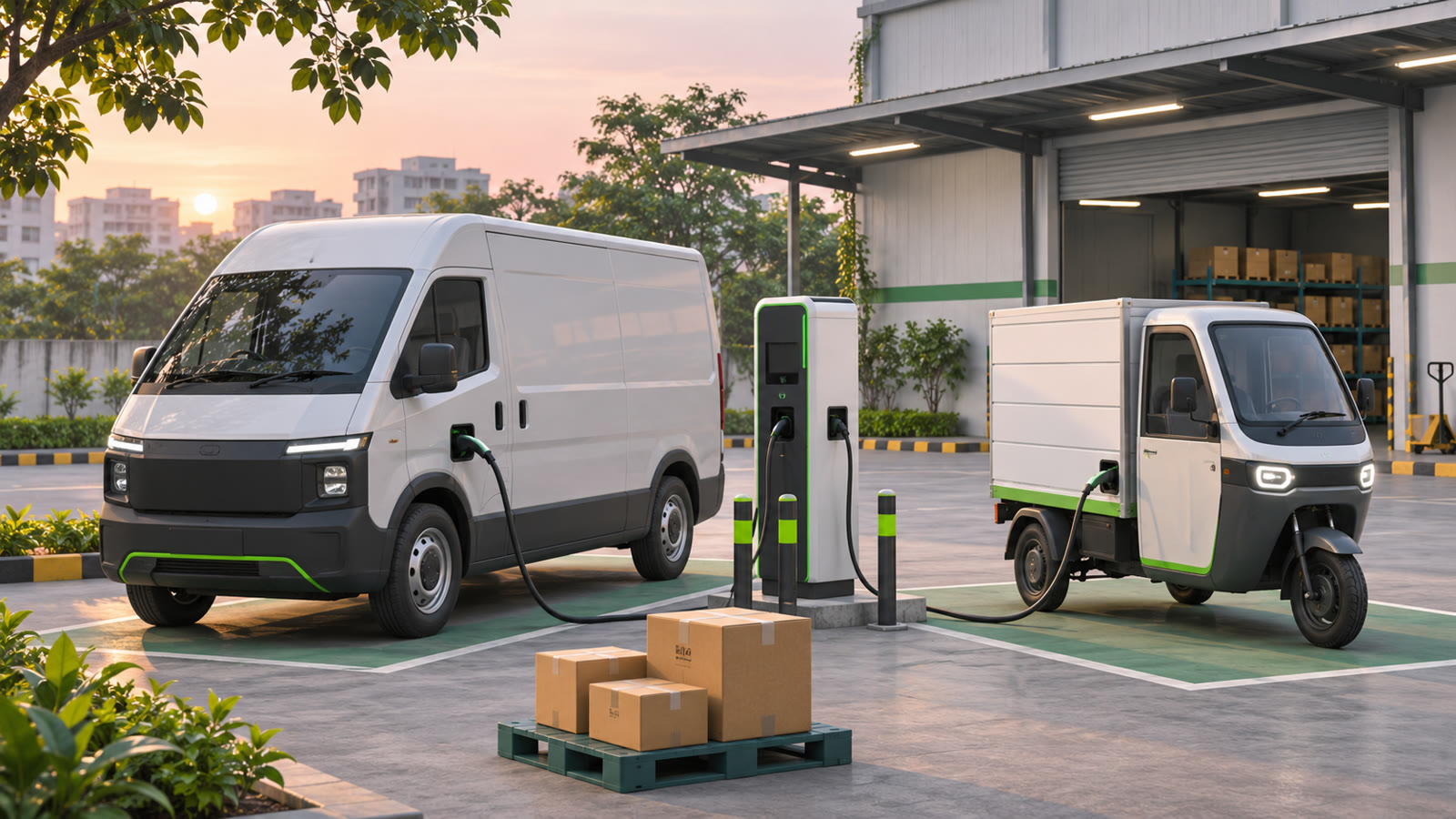
Delhivery is shifting future additions to its intracity delivery fleet towards electric vehicles and is targeting a fully electric network within four to five years. The plan matters beyond one logistics company: it shows how fuel-price volatility, urban route patterns and charging access are beginning to shape commercial-vehicle decisions in India.
Key takeaways
- Delhivery is moving new intracity fleet additions towards electric commercial vehicles.
- The company’s stated long-term target is a fully electric intracity network within four to five years.
- The immediate focus is on shorter urban routes, where vehicles return to a base often enough to make depot charging practical.
- Charging availability, payload, uptime, financing and maintenance will decide whether the switch works for delivery partners.
What Delhivery has announced
Business Standard reported on 13 Nov 2026 that Delhivery had signed fresh memoranda of understanding with commercial-vehicle makers for electric vehicles to be deployed across its intra-city logistics network. The report said the rollout will cover multiple small commercial-vehicle categories, beginning with urban-delivery applications and later extending to higher-capacity vehicles for heavier payloads.
The Economic Times separately reported that electric vehicles will be the only option for new additions to Delhivery’s intracity fleet. It also reported that the company is planning an all-electric intracity network over the same four-to-five-year horizon. These are company plans, not a government mandate for delivery operators, and the reports do not mean that every diesel or CNG vehicle in Delhivery’s wider network will be replaced immediately.
The first operational test is likely to be concentrated on routes that start and end at a controlled facility. That gives the operator a clearer opportunity to schedule charging, monitor energy use and match vehicle size to the day’s parcels. It also makes the economics different from long-distance freight, where charging time, payload and access to suitable public infrastructure can be harder to control.
Why fuel costs are part of the EV decision
For a delivery fleet, fuel is not only a vehicle expense. It can affect route pricing, vendor earnings, customer contracts and the cost of keeping vehicles available during a peak delivery period. In Delhivery’s 30 Oct 2026 shareholder letter, the company said fuel-linked price increases were implemented after diesel-rate increases in the first quarter of FY27. That disclosure shows why a fleet operator may look at an electric vehicle even when its purchase price is higher: reducing exposure to liquid-fuel price swings can be an operating objective, not just an emissions goal.
Operators comparing a diesel route with an electric route can start by modelling the existing trip pattern in the fuel cost calculator. The useful comparison is the full daily cost, including energy, routine maintenance, driver time, charging downtime, insurance, financing and the cost of keeping a backup vehicle available.
The trade-offs for delivery partners
The Economic Times reported that Delhivery sees lower energy costs per kilometre from EVs, while also noting the higher upfront cost of comparable vehicles and the effect of battery weight on tyres. That combination makes route suitability more important than a simple petrol-versus-electric headline. A vehicle that completes predictable urban runs and charges overnight may have a different total cost from one that needs several shifts, carries a heavy load or works far from a depot.
Charging is therefore part of the fleet plan. Business Standard reported that Delhivery is piloting charging infrastructure at its facilities, starting with Delhi-NCR, and plans to support vendor partners with low-cost charging and free parking. Delivery partners assessing a route can use the state-wise EV station directory to understand public charging coverage, but a depot-based fleet still needs its own electricity connection, charging schedule and contingency plan.
Payload is another practical limit. Smaller electric commercial vehicles can suit parcel runs, but a higher-capacity vehicle may be needed when a route carries bulky or dense consignments. The choice affects loading time, range, tyre wear and the number of trips required. It also affects how many vehicles a vendor needs to meet the same delivery commitment.
What fleet operators should compare now
- Daily route pattern: record actual distance, traffic time, return-to-base frequency and the number of delivery stops.
- Payload and body type: compare the vehicle’s usable load space and carrying capacity with real consignments, not brochure assumptions.
- Charging readiness: check available power, charging time, parking access and what happens if a charger is unavailable.
- Cost structure: compare finance or lease payments, energy, tyres, service, insurance and replacement-vehicle costs together.
- Contract terms: check whether delivery rates, minimum utilisation and downtime treatment reflect the vehicle’s operating pattern.
For route owners who are planning a mixed fleet, the road-trip planner can help map distance and stop patterns before the charging requirement is estimated. The key is to treat the EV as part of a route system rather than as a standalone vehicle purchase.
What to watch next
The next evidence will come from execution: which vehicle categories enter service first, how quickly charging sites are added, how vendor partners are supported and whether the planned rollout holds up during high-volume delivery periods. Delhi-NCR is the reported starting point for the charging pilot, while the broader plan is intended to extend across the intracity network.
For Indian fleet operators, the significance is practical. A large logistics network moving new urban vehicles towards electric power can create more demand for commercial EVs, depot charging and specialised maintenance. It may also reduce some exposure to diesel costs on suitable routes, although the result will depend on utilisation, electricity pricing, financing and uptime. The transition is underway as an operating experiment; its success will be measured in reliable deliveries and total cost, not in the number of vehicles announced.
Sources
- Business Standard — Delhivery signs MoUs to deploy up to 2,000 electric commercial vehicles — 13 Nov 2026
- The Economic Times — Delhivery eyes 20,000 intracity vehicles in five years — 13 Nov 2026
- Delhivery — Letter to Shareholders on financial results for the quarter and half year ended 30 Sep 2026 — 30 Oct 2026