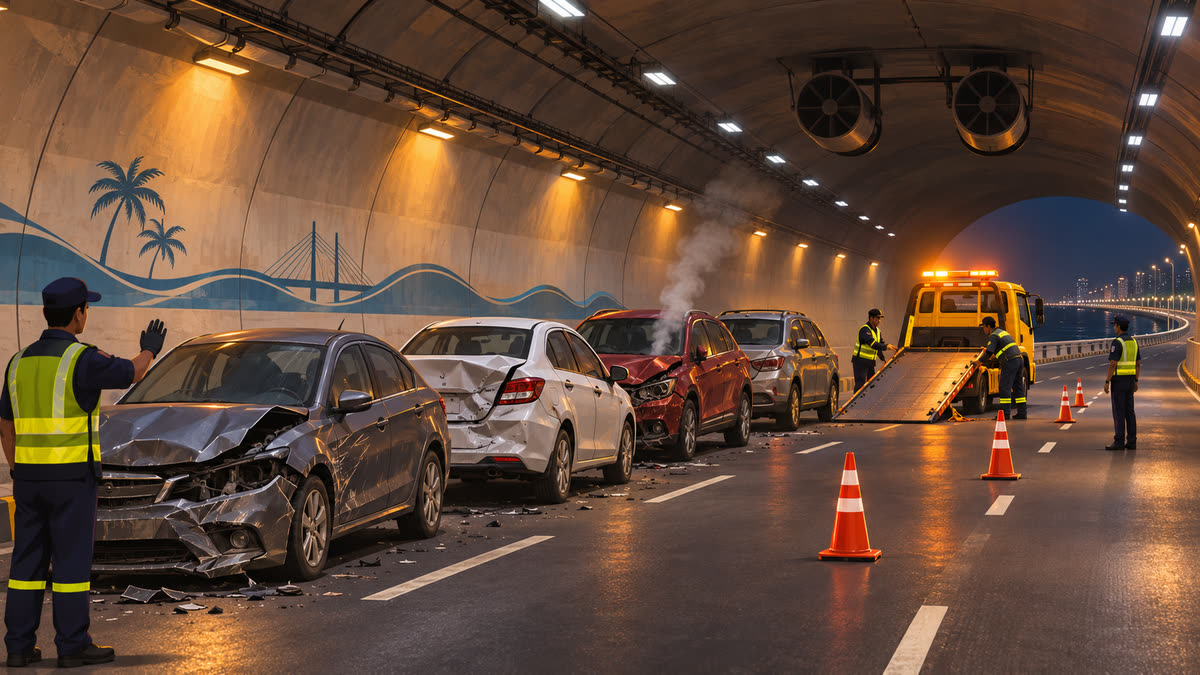
What happened: A chain-reaction crash was reported on Friday, 13 Nov 2026, on Maharashtra’s Samruddhi Mahamarg in Buldhana district. The incident disrupted traffic and early media reports do not agree on the number of vehicles or injured people, so drivers should treat all initial figures as provisional while authorities complete clearance and verification.
Key takeaways
- The crash was reported on the Mumbai–Nagpur Expressway in Buldhana district, affecting traffic on the Mumbai-bound corridor.
- NDTV reported that an overturned tanker had led police to hold a queue of vehicles during a clearance operation before a truck struck the stationary traffic.
- Early reports differ on the scale: NDTV reported 15–20 vehicles damaged and 20–22 people injured, while Loksatta reported 8–10 vehicles involved and said an official injury count was not available.
- For anyone approaching a stopped queue, the immediate risk is a secondary collision. Lower speed, a large following gap and compliance with cones or police directions matter more than trying to save a few minutes.
What happened on the Samruddhi Mahamarg
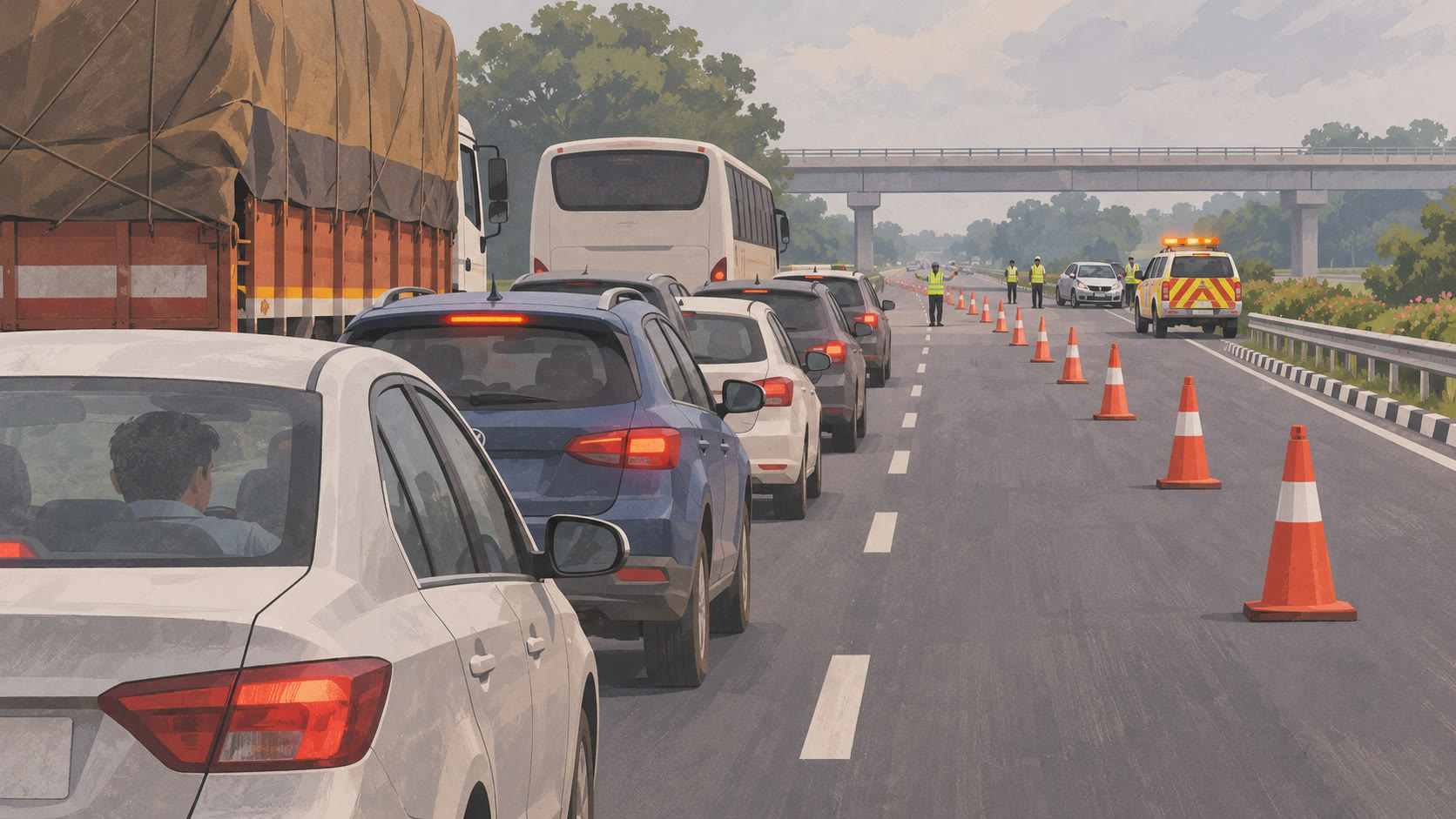
According to NDTV’s report, a tanker overturned on the expressway at about 6:30 am. Police then halted roughly 40–50 vehicles while the tanker was being cleared. At about 11:30 am, a truck travelling from Nagpur towards Mumbai hit the stationary queue, triggering a second chain-reaction crash.
NDTV reported that the collision damaged between 15 and 20 vehicles and that 20–22 people were injured, including five or six people described as being in critical condition. It said the injured were taken to a hospital in Mehkar. These were the numbers available in its initial report on 13 Nov and were not presented as a final official tally.
Why the early numbers do not match
Loksatta’s report from the Buldhana district described a chain collision involving about eight to 10 vehicles near Dasarkhed. It reported extensive damage, said there were no deaths, and noted that police had reached the spot and were moving damaged vehicles aside. It also said the number of injured people had not been officially confirmed.
Sakal’s Marathi report carried a higher preliminary estimate of 25–30 vehicles and about 30 injured people, while also saying that the exact cause and official injury count were not yet available. The difference may reflect updates from separate points around the same clearance operation or changing on-scene information. Until police, the expressway operator or district authorities publish a consolidated update, none of these early ranges should be treated as final.
What this means for drivers
The most immediate effect is the risk of a long queue forming behind an incident on a high-speed, access-controlled road. A driver who reaches the back of a queue at speed has little room to react, particularly when a tanker, truck or recovery vehicle is being moved. A delay can also continue after the first crash is cleared because damaged vehicles, cones and emergency vehicles occupy parts of the carriageway.
Before leaving, compare the timing and alternatives for the journey in the road-trip planner. It is useful to check the route before entering the expressway rather than attempting an improvised turn or shoulder manoeuvre after a queue has formed.
After selecting a route, estimate the likely fuel outlay with the fuel cost calculator. A diversion, prolonged idling or a lower-speed approach can change the trip’s fuel requirement even when the distance appears similar.
For a trip that includes a tolled corridor, use the toll charges calculator to compare the expected toll cost before accepting a longer alternative. The result is an estimate; live traffic controls and police instructions take priority on the road.
What motorists should do near a stopped queue
- Reduce speed early when brake lights, cones or an emergency vehicle appear ahead.
- Leave enough space to stop without blocking the adjacent lane, and avoid overtaking through the shoulder or a closed gap.
- Keep the vehicle aligned in its lane and follow instructions from highway police, recovery crews and authorised traffic marshals.
- If traffic is stationary, stay alert for vehicles approaching from behind and do not assume that a cleared lane is safe until the control team signals movement.
- Check the latest local traffic update before starting the trip; an early report of clearance is not the same as a confirmed, normal-flow status.
What to watch next
The next useful update is a confirmed account of the injured, the vehicles involved and the time at which both directions returned to normal movement. Authorities may also clarify whether the first tanker rollover and the later truck impact will be recorded as separate incidents. That distinction matters for anyone travelling the corridor, but it should not be guessed from conflicting first reports.
For now, the practical takeaway is simple: approach any queue on the Samruddhi Mahamarg as a live hazard zone, not as ordinary congestion. Leave extra time, keep a safe gap and follow the diversion or clearance instructions in force when you arrive.