India has prohibited exports of lithium-ion battery black mass under a Directorate General of Foreign Trade (DGFT) notification dated 10 November 2026. The policy is intended to keep recoverable lithium, cobalt, nickel and manganese in India for domestic recycling, but it does not itself change an EV owner's charging access, retail price or current battery warranty.
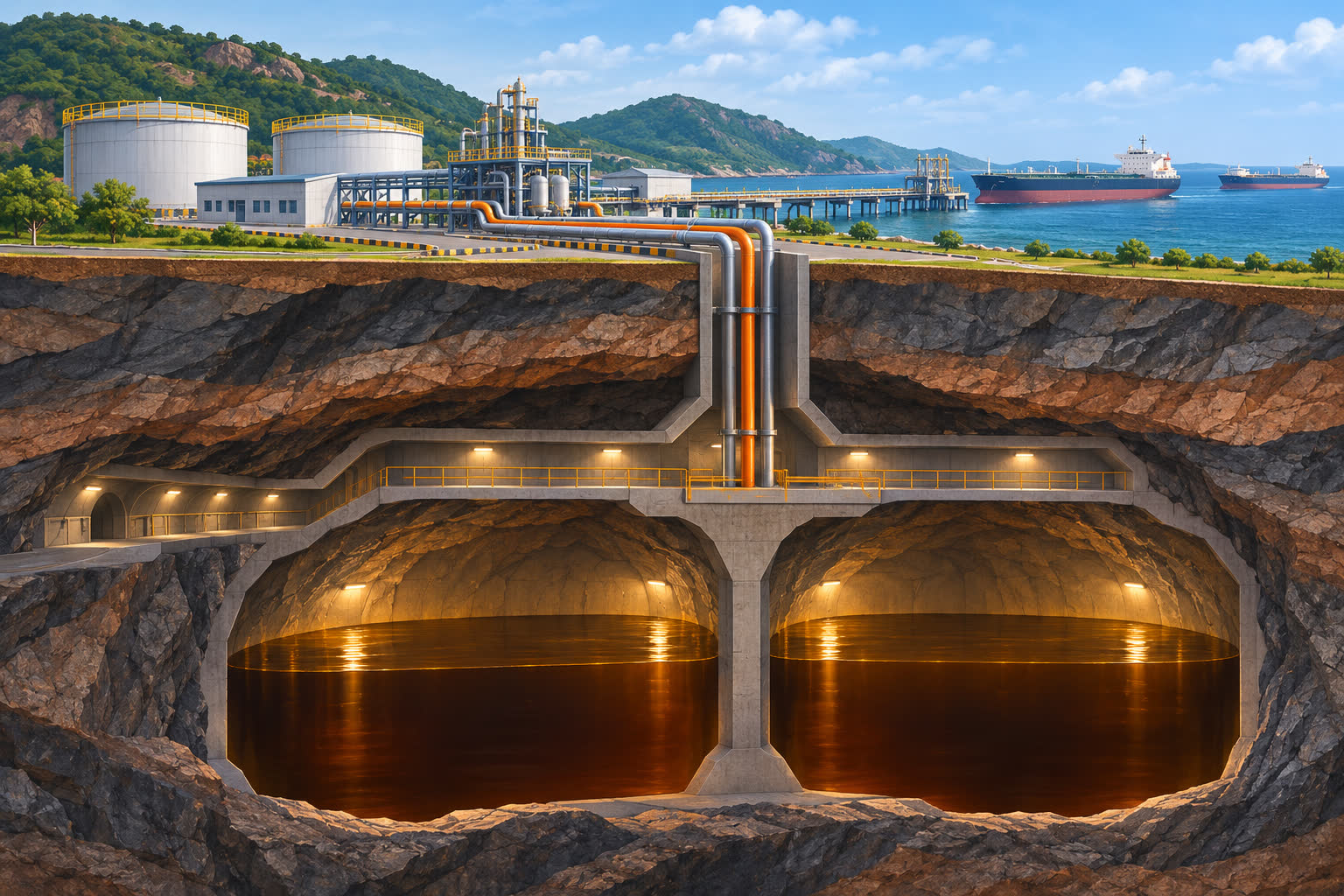
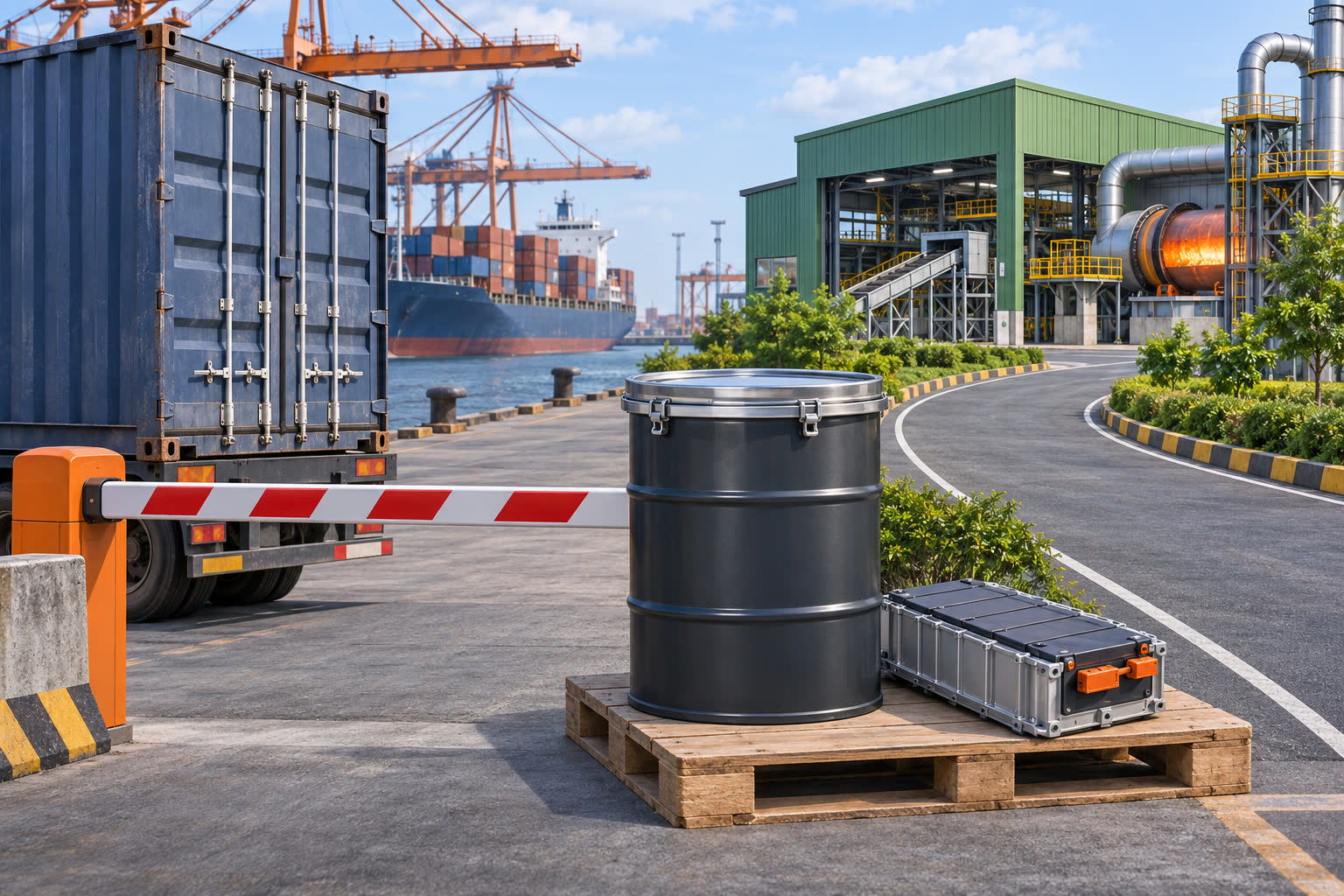
Illustration: FuelPrice. Representative policy visual; not a photograph of an actual customs seizure or recycling plant.
Key takeaways
- DGFT has changed the export policy for lithium-ion battery black mass from “Free” to “Prohibited” under ITC(HS) code 85491400.
- The change took effect immediately on 10 November 2026 and remains in force until further orders; transitional arrangements under Para 1.05 of the Foreign Trade Policy 2023 apply.
- Black mass is the powdery material produced when end-of-life lithium-ion batteries and battery manufacturing waste are shredded.
- The direct impact is on exporters, recyclers, processors and battery-material supply chains. EV owners should not read the order as an immediate change to charging, vehicle registration or battery prices.
What DGFT changed
Notification No. 49/2026-27 changes the export policy of the specified battery waste from “Free” to “Prohibited”. The official description covers waste and scrap of primary cells, primary batteries and electric accumulators, as well as spent cells, batteries and accumulators that are unsorted and do not contain lead, cadmium or mercury. The notification specifically identifies lithium-ion battery black mass under ITC(HS) 85491400.
The prohibition has immediate effect and continues until further orders. The Ministry of Commerce and Industry said transitional arrangements under Para 1.05 of the Foreign Trade Policy 2023 will apply. That matters for exporters and logistics operators with existing shipments, contracts or commitments: the DGFT notification and applicable transition provisions, rather than a media summary, determine how a specific consignment is treated.
Why black mass matters to the EV supply chain
Black mass is not a finished battery. It is a concentrated waste stream created after lithium-ion batteries or battery-production waste are mechanically processed. The material can contain recoverable quantities of lithium, cobalt, nickel and manganese, which are inputs for batteries, electric mobility, energy storage, electronics and other clean-energy equipment.
The government says India’s battery-waste recycling and critical-mineral refining capacity has grown, but is not being fully used because domestic feedstock is inadequate. It also says some Indian recyclers have had to import material even while black mass generated in India was being sent overseas. The export restriction is therefore designed to redirect that secondary resource to Indian recycling and refining units.
The Indian Express reported that the move is part of a broader effort to build a domestic battery-recycling and refining ecosystem. It also noted that the technical challenge is not only collecting black mass, but recovering the minerals to the required grades. That means the export restriction may improve access to feedstock, while actual supply-chain benefits will still depend on processing capacity, compliance and investment.
What it means for Indian EV owners
For most private EV owners, this is an upstream trade-policy change rather than a new ownership rule. The notification does not announce a new EV fee, a change in public charging access, a revised battery-warranty condition or an immediate retail-price adjustment. It is also not a new instruction for drivers to export, store or process battery material themselves.
There could be medium-term effects if domestic recycling becomes more capable and recovers more battery minerals in India. More local processing could make the battery supply chain less exposed to imported intermediate materials, but the government has not promised a specific reduction in EV prices or charging costs. Vehicle buyers should therefore treat cheaper batteries or lower ownership costs as possible outcomes to watch, not confirmed results of this notification.
For the practical cost question today, the fuel cost calculator can help compare petrol or diesel trip costs with the running-cost assumptions used in a vehicle decision. Current public charging availability is a separate issue; drivers can check the EV charging station directory for locations rather than infer charging changes from the export order.
What recyclers, exporters and manufacturers should watch
Exporters and recyclers will need to check the exact product classification, shipment timing and transition provisions against the notification. The scope is tied to a customs code and a specific description, so different battery-waste streams should not automatically be treated as identical. Companies handling the material will also need to continue following applicable environmental and hazardous-waste requirements; the export ban does not replace those rules.
The policy sits alongside the government’s ₹1,500 crore Incentive Scheme for Critical Mineral Recycling, which the PIB said was approved by the Union Cabinet in September 2025. The scheme is intended to support separation and production of critical minerals from secondary sources such as battery waste and e-waste. Retaining black mass in India gives that developing capacity a domestic source of material, but it does not by itself prove that the capacity is already available in every region.
What changes now, and what comes next
The confirmed change is straightforward: exports of the specified lithium-ion battery black mass are prohibited with immediate effect from 10 November 2026, subject to the stated transitional arrangements. The next developments to watch are DGFT clarifications, how customs handles existing consignments, the pace of domestic recycling capacity and whether battery manufacturers begin using more recovered material.
For drivers, the takeaway is to separate the policy’s long-term supply-chain goal from today’s vehicle economics. It may strengthen India’s recycling loop and reduce dependence on imported critical minerals over time, but it does not provide a new charging benefit or a guaranteed saving on an EV purchase. For trip planning and route decisions, the road-trip planner remains the relevant tool; this export notification does not change road access or charging routes.
Sources
- PIB: DGFT prohibits export of Lithium-Ion Battery Black Mass to strengthen domestic recycling and critical mineral recovery — 11 Nov 2026
- Business Standard: Centre bans export of battery waste, including lithium-ion black mass — 11 Nov 2026
- The Indian Express: Government bans export of lithium-ion battery waste days after new scheme on critical minerals processing — 12 Nov 2026