An Assam news report dated 10 Nov 2026 says the National Highways Authority of India (NHAI) has completed the remaining four-laning work on the Harangajao–Jatinga Junction–Narimbanglo stretch in Dima Hasao. The update matters for people travelling through the hill district and freight moving between the Barak Valley and the wider East-West Corridor, but the latest dated official records located for this check still list the same project as under construction.
Key takeaways
- NKTV reported on 10 Nov 2026 that the remaining four-laning work on the Dima Hasao section was complete.
- A Rajya Sabha answer dated 11 Feb 2026 describes the balance work as a 49.2-km section and lists its status as under construction.
- An NHAI project-status document dated 1 Oct 2024 lists the same work as 49.23 km and under construction, showing why the completion claim needs a fresh official update.
- The report does not announce a new toll rate, an opening date or a lane-by-lane traffic order for route users.
What the latest report says
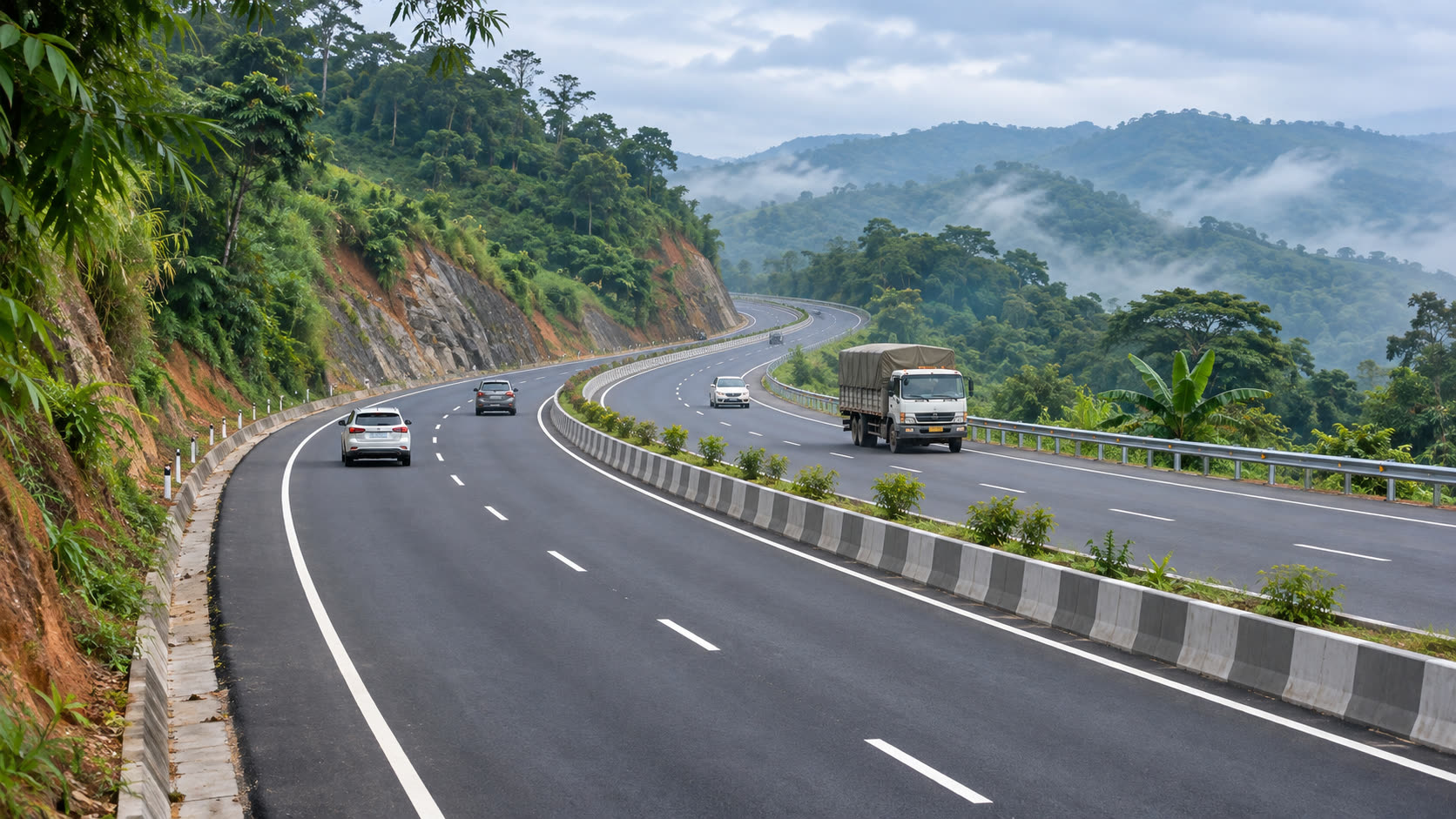
NKTV’s report says NHAI completed the remaining four-laning between Harangajao, Jatinga Junction and Narimbanglo in Dima Hasao district. It identifies the work as part of the Bharatmala Pariyojana, executed through the Hybrid Annuity Mode, and places the corridor on old NH-54, now NH-27, within the East-West Corridor.
That is a meaningful road-infrastructure update if it is followed by an operational opening. A continuous four-lane section can give passenger vehicles and goods traffic more room to maintain separation, reduce the need to follow slow traffic through narrow stretches and make movement more predictable. Those benefits are expected outcomes of the reported completion, not a guarantee of a shorter journey until the road is open and traffic conditions are observed.
Why the completion status needs a caveat
The report conflicts with the official project records available for comparison. In a Rajya Sabha answer dated 11 Feb 2026, the government described the Narimbanglo–Jatinga Junction–Harangajao balance work as a 49.2-km, four-lane East-West Corridor project and marked it “Under Construction”. NHAI’s project-status document dated 1 Oct 2024 gives the length as 49.23 km and also records “Under Construction (AD issued)”.
The difference may reflect work completed after those records were prepared, a delay in updating the public status, or a distinction between construction completion and opening for traffic. The sources reviewed do not resolve which explanation applies. The safe editorial reading is that completion has been reported by a regional outlet, while official confirmation of operational opening is still to be checked.
What it could mean for drivers and transporters
Dima Hasao is a hill route where weather, curves, slope stability and access to towns can matter as much as the number of lanes. Even when the main carriageway is complete, drivers may still encounter temporary traffic controls near junctions, unfinished safety work, construction vehicles, local access points or restrictions during rain and fog. A newly surfaced road can also encourage higher speeds before users have adjusted to the alignment and roadside conditions.
For freight operators, a dependable four-lane link could eventually reduce stop-start movement and make trip scheduling easier. That does not automatically mean lower freight rates or a lower fuel bill: the result depends on the full route, payload, gradient, traffic, idling and whether the upgraded section is available end to end.
Before setting out, use the FuelPrice road-trip planner to compare the route and expected travel time with an alternative. For a vehicle-specific estimate, the fuel cost calculator can help separate the fuel effect of distance and mileage from any assumed time saving.
Tolls and route costs are a separate question
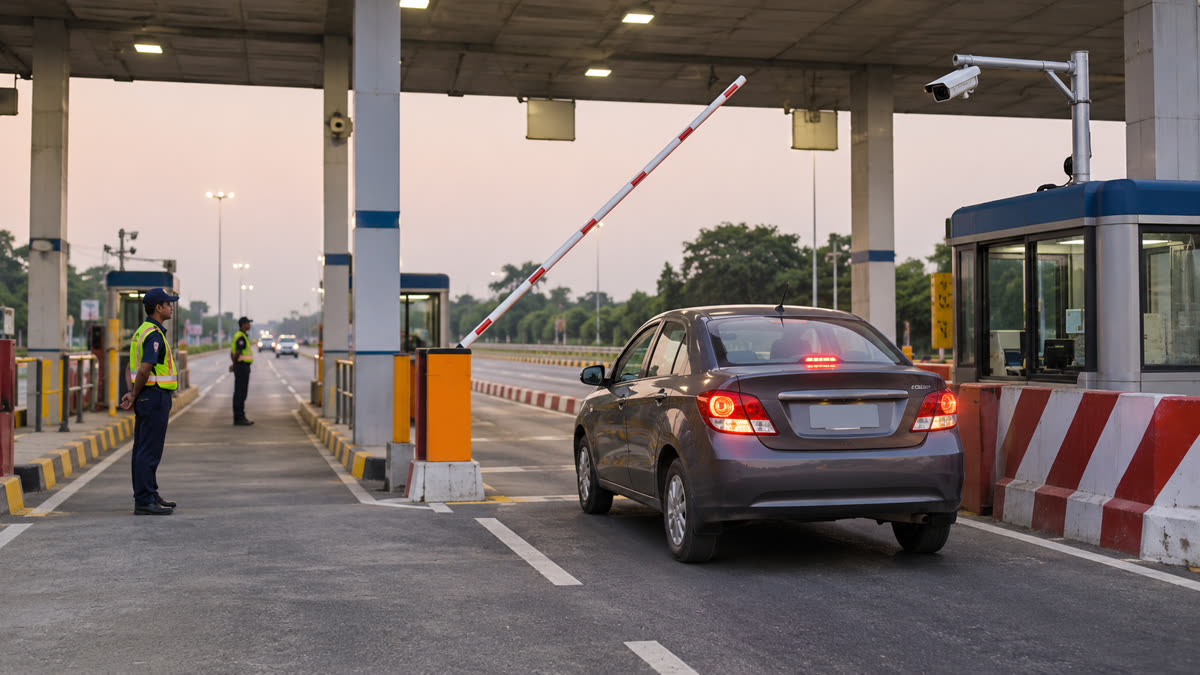
Four-laning alone does not create or revise a toll. A fee change would require a notified user-fee decision and a functioning tolling point, neither of which is announced in the fresh report or in the two official status records reviewed here. Once route-level toll information is confirmed, users can check it through the toll charges calculator hub rather than treating a road-upgrade report as proof of a new charge.
A faster design can reduce time spent behind slower traffic, but a route may still take longer if vehicles are diverted, if a section is not yet open, or if hill weather slows traffic. A cautious comparison should therefore use the current live route status, not only the project’s intended final layout.
Checks before using the upgraded section
- Look for an operational notice. Check a current NHAI, local traffic-authority or district update before assuming that the complete four-lane carriageway is open in both directions.
- Follow the road signs at the site. Temporary barricades, speed limits, diversions and local-access rules take priority over a news report about construction completion.
- Allow a hill-road buffer. Rain, fog, landslip response and commercial-vehicle movement can change journey times even on a wider road.
- Recheck the route cost. Compare distance, fuel use, tolls and expected stops after the live road status is clear; do not assume four-laning by itself changes any of those figures.
What to watch next
The useful next confirmation would be an updated NHAI or Ministry of Road Transport and Highways project record showing the construction stage, followed by an operating or traffic-management notice for the relevant chainage. A separate user-fee notification would be needed before any toll implication could be reported. Until then, the completion report is best treated as a development to monitor rather than a blanket assurance that every part of the corridor is ready for unrestricted travel.
Reader takeaway
The reported completion of the Dima Hasao NH-27 four-laning is potentially useful for passenger and freight movement in Assam, but it is not yet supported by matching official status records in the sources checked. Drivers should verify the live opening and traffic arrangements, plan for hill-road conditions and calculate the full trip cost after the operating status is confirmed.