The Centre is preparing Bharat NCAP-style safety standards for e-rickshaws, Union Road Transport and Highways Minister Nitin Gadkari said at an awards event on 17 Nov 2026. The statement matters to passengers, drivers and manufacturers, but it is a proposal: no test protocol, rating method or effective date has been published yet.
If the framework is eventually notified, it could give buyers and passengers more comparable safety information about a common last-mile vehicle. For now, it does not create a new star rating to check or change the current registration and type-approval process.
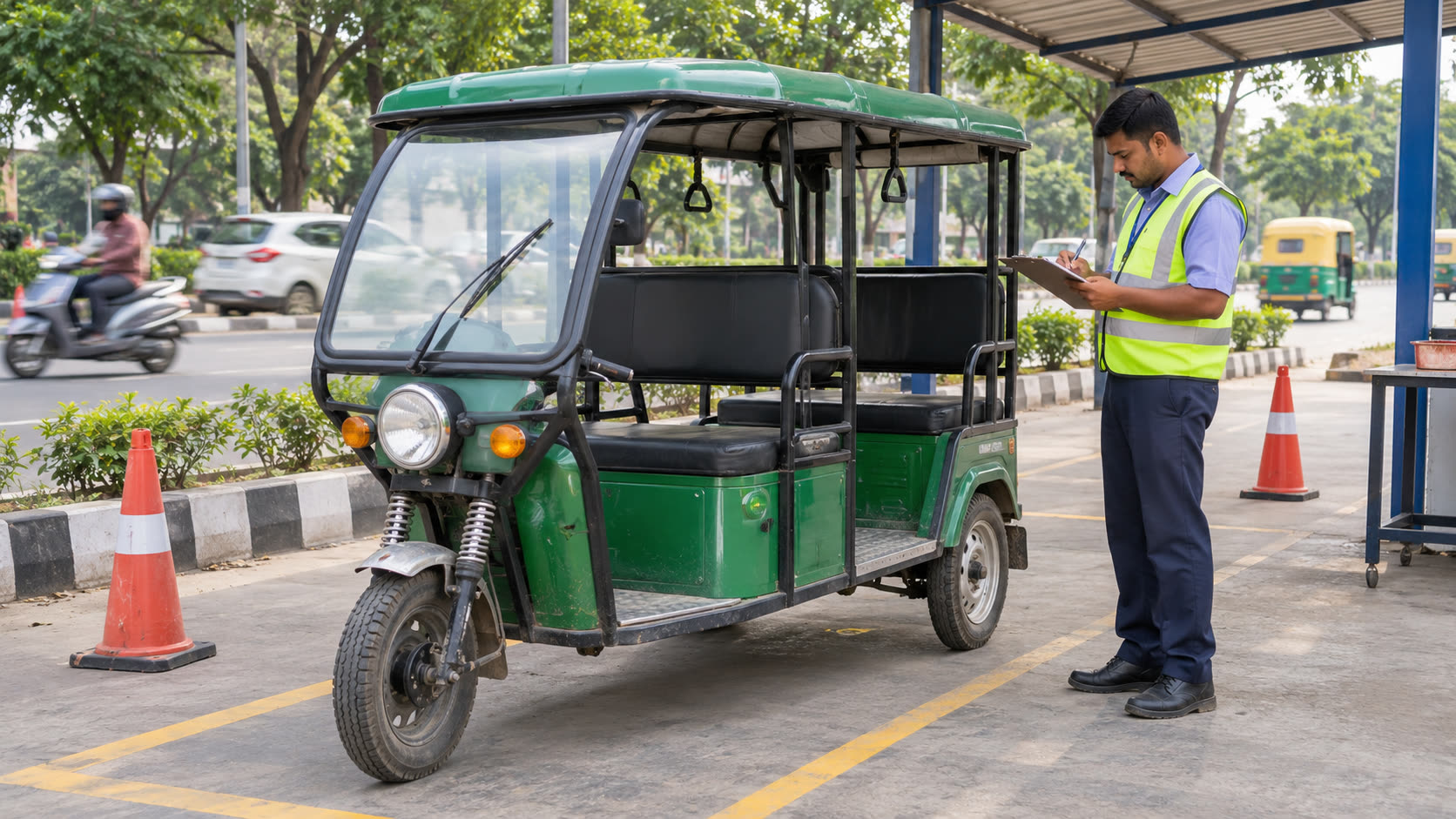
Illustrative image: a generic e-rickshaw at a safety inspection point; it is not a photograph of a specific model or an official testing site.
Key takeaways
- Confirmed: Gadkari said on 17 Nov that the government is preparing e-rickshaw safety standards on the lines of Bharat NCAP.
- Not yet in force: the announcement did not include a draft notification, test procedure, rating scale or implementation date.
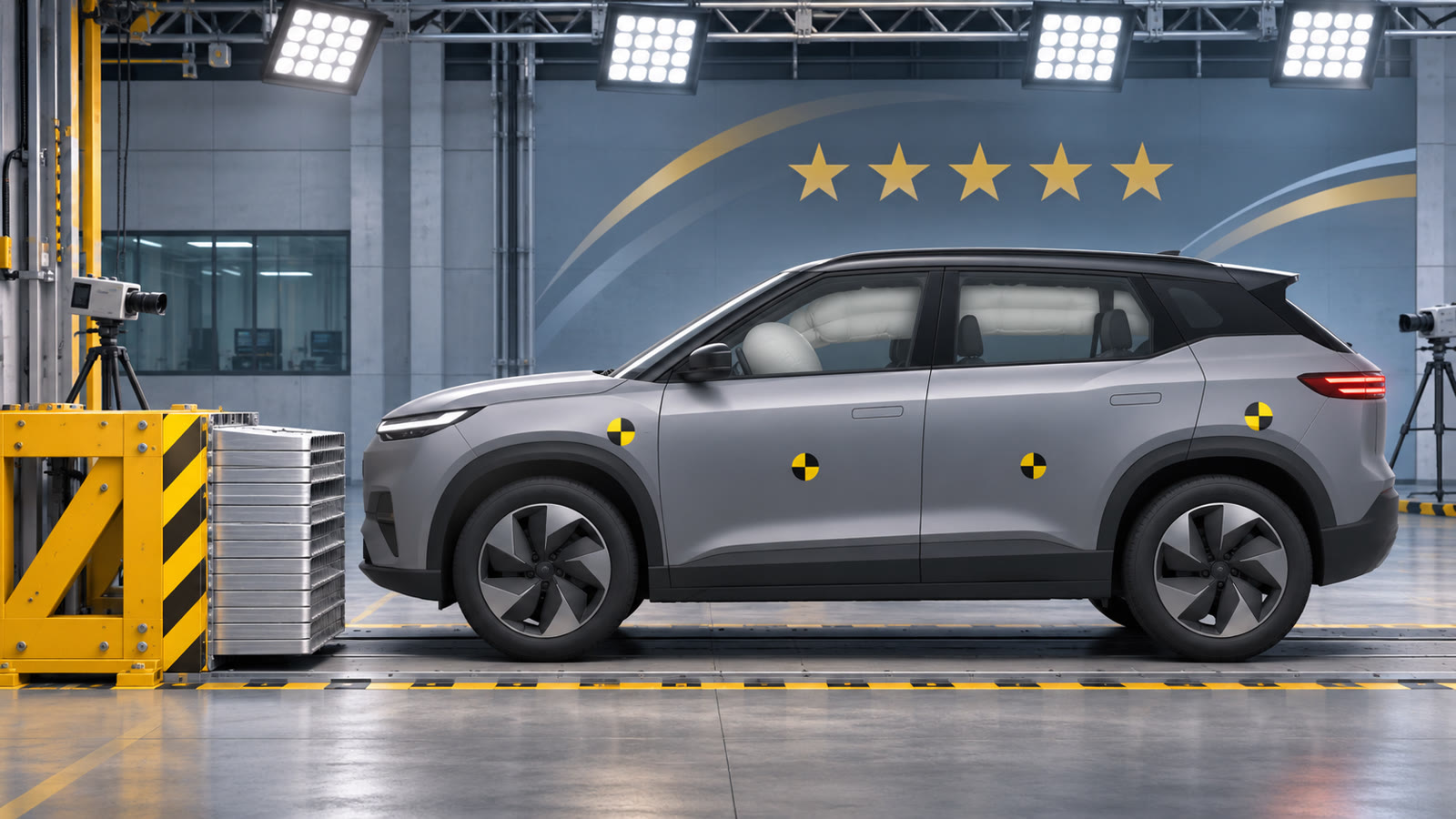
- What is being copied: Bharat NCAP is a government vehicle-safety assessment programme based on structured testing and star ratings for eligible passenger cars.
- What users should do now: do not treat unofficial star claims as an official rating; continue checking the vehicle's existing registration, type-approval and safety documentation.
What the government announced
Gadkari made the announcement while addressing the Bharatiya Yuva Shakti Trust (BYST) JRD Tata Awards 2026 in New Delhi on 17 Nov. BYST's release confirms that the minister chaired the event, while The Economic Times and Business Standard reported the safety-standard statement.
The minister's wording is important. He said the standards are being prepared “on the lines of Bharat NCAP”, which describes the direction of the work rather than a finished e-rickshaw programme. Neither report gives a notified test schedule, the vehicles that would be covered, or the consequences for a vehicle that does not meet a future benchmark.
What “Bharat NCAP-style” could mean
MoRTH's official August 2023 summary records the launch of Bharat New Car Assessment Programme on 22 Aug 2023, with the programme commencing from 1 Oct 2023. It was created to make vehicle-safety performance easier to compare through controlled assessment and star ratings. The current programme is for passenger-car categories, so it cannot be assumed to apply unchanged to an e-rickshaw.
An e-rickshaw framework could therefore use the same broad idea—standardised testing followed by a public result—while requiring a different technical design. A three-wheeler's stability, braking, lighting, passenger protection, electrical system and battery risks are not identical to those of an M1 passenger car. The eventual notification will need to say which of those areas are tested and how a result is assigned.
The government has already acknowledged that e-rickshaw certification is a live safety issue. In a July 2026 PIB release, the Ministry of Heavy Industries said manufacturers and importers must submit vehicle prototypes to a notified testing agency under Rule 126 of the Central Motor Vehicles Rules. The same release referred to AIS-156 battery-safety requirements and AIS-038 electric-powertrain safety requirements for applicable electric vehicles. That certification framework is separate from the new Bharat NCAP-style assessment proposal.
What changes for passengers and operators now?
There is no immediate nationwide rating requirement from the minister's statement alone. A policy announcement is not the same as a Gazette notification, and the reports do not say that an e-rickshaw will be refused registration or operation because it lacks a Bharat NCAP-style score.
Passengers may eventually gain a clearer way to compare safety, but they cannot yet use an official e-rickshaw star score when choosing a ride. Operators and fleet owners should likewise avoid advertising an “NCAP rating” unless it comes from the notified programme or an authorised testing process. Existing paperwork and safety compliance remain the relevant checks until the ministry publishes something new.
For an electric three-wheeler route, the FuelPrice EV station directory can help identify listed charging locations. Charging availability is a trip-planning question, not proof that a vehicle has passed any safety assessment. Buyers looking at a used electric vehicle can also use the used EV battery, warranty and RC checklist as a general reference, while remembering that e-rickshaw type approval is vehicle-category specific.
Questions the final rules must answer
- Scope: whether the programme covers passenger e-rickshaws, e-carts, or both, and whether it applies only to new vehicles or also to the existing fleet.
- Test method: which safety areas are measured, which agency conducts the tests, and whether manufacturers or the government pay for assessment.
- Rating and enforcement: whether a score is voluntary, mandatory for sale, required for registration, or only an information label.
- Transition: the effective date, treatment of vehicles already on the road, and any phase-in period for manufacturers and operators.
These details matter more than the phrase “Bharat NCAP-style”. Without them, readers cannot compare one e-rickshaw with another or know whether a claim made by a seller has legal meaning.
What to watch next
The next meaningful development would be a MoRTH draft or final notification setting out the assessment procedure. Until that appears, the safe reading of the 17 Nov announcement is that the government is exploring a new safety benchmark for a growing last-mile segment, not that a new rule has already started.
For users, the practical takeaway is simple: rely on current registration, type-approval, battery and operating documents, and treat any future rating as official only after it is linked to a government notification or an authorised testing agency. A published framework could make safety information more transparent, but its value will depend on transparent tests, consistent enforcement and clear treatment of the existing fleet.
Sources
- The Economic Times — “Nitin Gadkari hints at new safety rules for e-rickshaws on the lines of Bharat NCAP” — 18 Nov 2026
- Business Standard — “Gadkari says e-rickshaw safety standards on lines of Bharat NCAP in works” — 17 Nov 2026
- Bharatiya Yuva Shakti Trust — “Hon’ble Union Minister Sh. Nitin Gadkari Honours Winners of Job-Creating Micro-Entrepreneurs at JRD Tata Awards 2026” — 17 Nov 2026
- Ministry of Road Transport and Highways — “Monthly Summary for August 2023” — Aug 2023
- Press Information Bureau, Ministry of Heavy Industries — “Cybersecurity Vulnerabilities in E-Rickshaw BMS and Role of Certification Agencies” — 21 Jul 2026