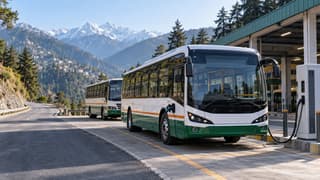
EaseMyTrip has started electric-bus operations in Bhopal through its mobility arm, Easy Green Mobility (EMTev), and says it is building capacity to manufacture 5,000 electric buses a year within five years, according to the company’s 25 Sep 2026 exchange filing. The immediate reader angle is commercial mobility: EMTev’s first stated coach is a 12-metre, 423.9-kWh model with a claimed range of up to 350 km, but real-world route performance will depend on load, speed, weather and charging access.
That makes the announcement relevant beyond the company’s travel business. If the programme scales, it could add another operator and manufacturer to India’s intercity electric-bus market, where the cost of energy, depot charging and vehicle utilisation matters as much as the vehicle’s headline range.
Key takeaways
- EMTev has begun its electric-bus rollout in Bhopal as part of EaseMyTrip’s Vision 2030 plan.
- The company says it is working towards annual manufacturing capacity of 5,000 electric buses within five years.
- The initial coach is a 12-metre, 45-passenger-plus-driver model with a 423.9-kWh LFP battery and a claimed range of up to 350 km.
- EMTev says both its 12-metre and 13.5-metre electric-bus models have received type approval.
- Routes, fares, delivery schedules and the number of buses in the first Bhopal deployment were not specified in the announcement.
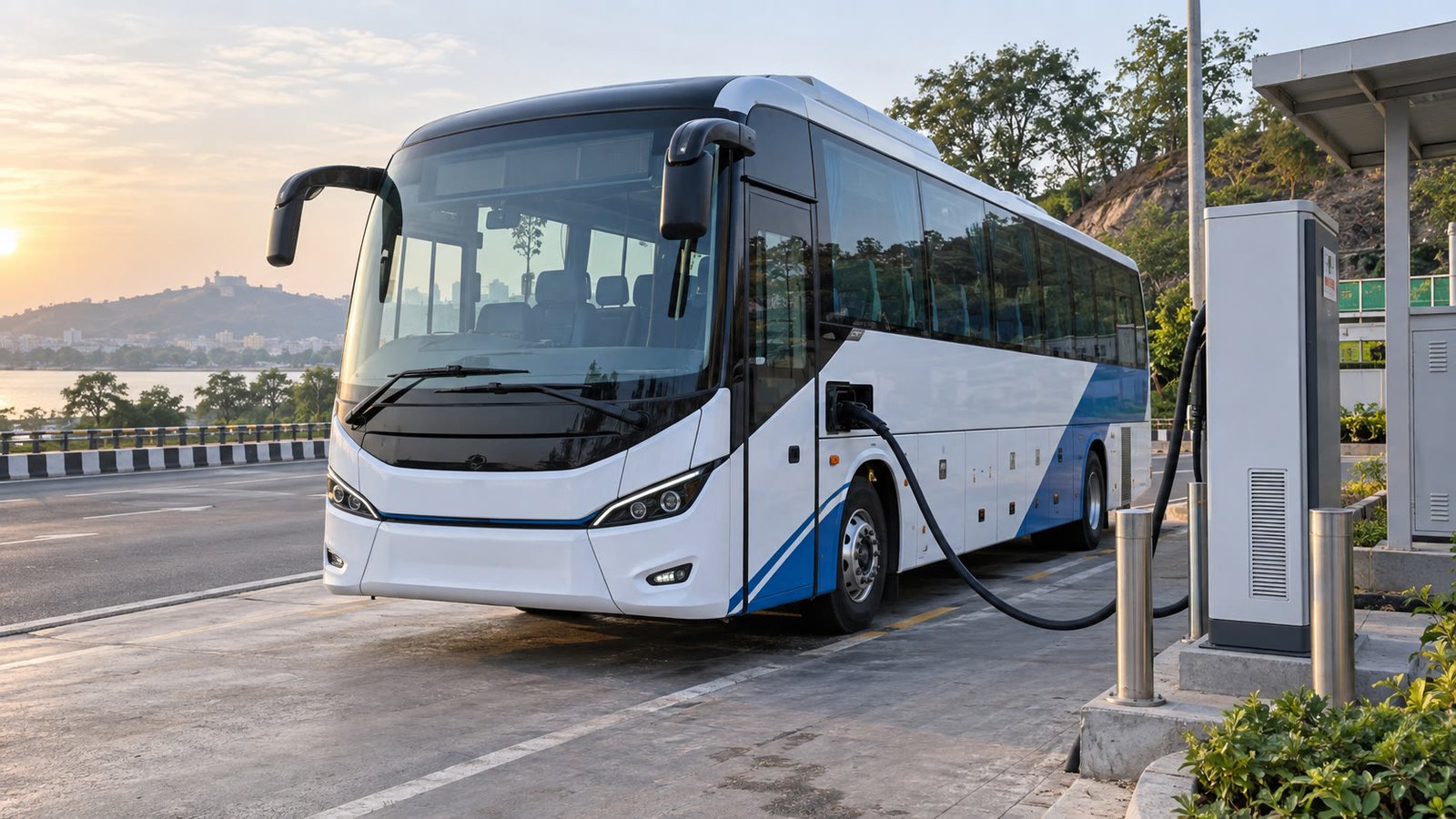
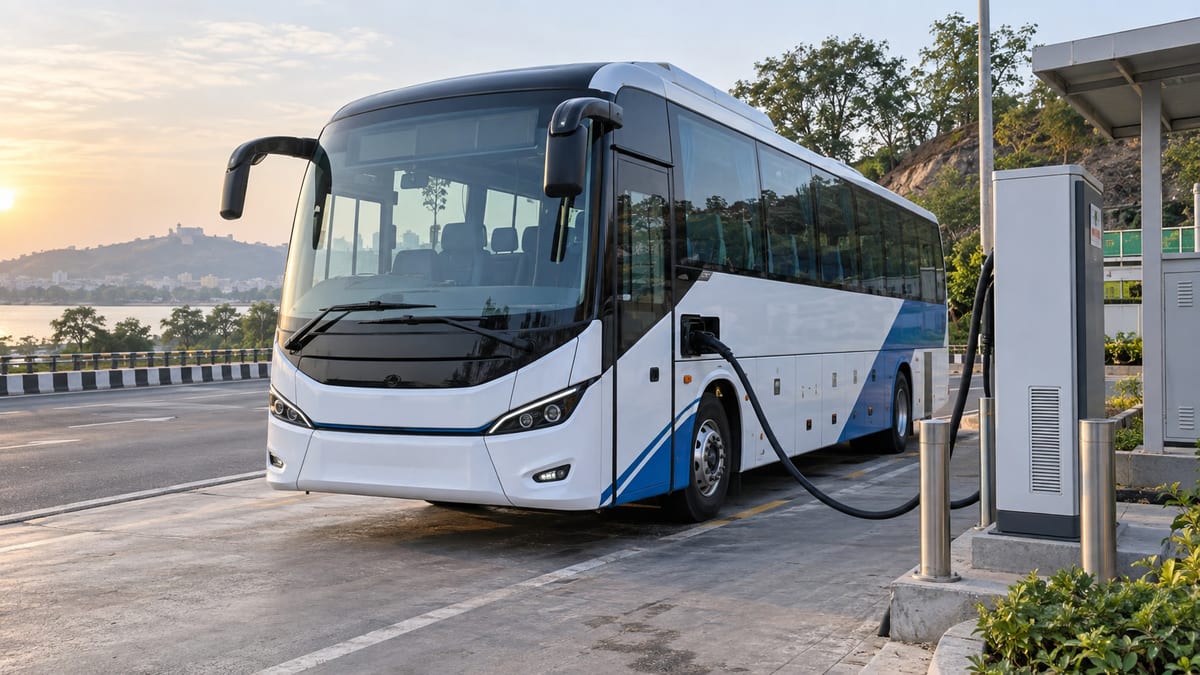 Editorial illustration of an electric intercity coach at a highway charging stop. Credit: FuelPrice.
What EMTev has announced
The 25 Sep 2026 filing describes the Bhopal rollout as the first step in an integrated electric-mobility business. EMTev’s stated plan covers vehicle manufacturing, fleet operations, service support and progressive localisation of components. Business Standard and The Economic Times, reporting the same announcement independently, also described the Bhopal deployment and the five-year manufacturing target.
The target is capacity, not confirmed production delivered today. It means the company wants the ability to make 5,000 buses in a year within five years; it does not mean 5,000 buses will immediately enter service. The first operating and manufacturing milestones will therefore matter more to readers than the long-range target by itself.
What the first coach offers
EMTev’s initial portfolio includes a 12-metre electric seater coach designed for 45 passengers plus the driver. The company says it uses an LFP battery with 423.9 kWh of total energy, a PMSM motor, air suspension and electronic-hydraulic power steering. The stated range is up to 350 km and the stated top speed is up to 100 km/h, according to the 25 Sep 2026 release reported by Business Standard and The Economic Times.
Those figures are manufacturer claims, not an independently measured trip result. A fully loaded intercity coach can use more energy than an empty test vehicle, while hills, traffic, air-conditioning demand and temperature can change consumption. The fixed-battery architecture also means the bus needs suitable charging locations rather than a battery-swap stop.
The release says the coach supports fast charging through a dual-gun configuration. It also lists electronic braking and stability systems, camera-based monitoring and a centralised control tower for vehicle and battery data. EMTev is developing AI-enabled driver monitoring and blind-spot detection, with ADAS features described as part of its future technology roadmap rather than as a completed feature set for every bus.
Why it matters to passengers and fleet operators
For passengers, the Bhopal rollout could eventually mean more electric coaches on city or intercity routes, but no route map, ticket fare or service timetable was included in the announcement. Those details will determine whether the rollout changes a commuter’s daily trip or is initially focused on contracted or private operations.
For fleet operators, the more important test is the complete duty cycle. A bus that can cover a scheduled leg on one charge still needs enough time and power at the depot or midway stop, plus a plan for peak-demand periods. Operators will also need to compare vehicle availability, charger utilisation, maintenance support and electricity tariffs against the existing diesel fleet. Our fuel-cost calculator can provide a diesel route baseline, while it should not be treated as an electric-bus tariff calculator.
Travellers planning an EV road journey can use our state-wise EV charging directory to check the broader charging network and our road-trip planner to think through distance and stop timing. The tools do not confirm EMTev’s operating routes, so readers should wait for an operator timetable or booking information before treating a particular service as available.
What to watch next
The next useful updates will be concrete: the number of buses deployed, the routes served from Bhopal, delivery dates, charging-depot locations and whether the 13.5-metre model enters commercial service. Evidence of local component production and operating data from loaded routes would also show whether the company’s manufacturing and lower-running-cost ambitions are translating into dependable public or intercity transport.
For now, the confirmed development is the start of EMTev’s Bhopal electric-bus rollout and a stated five-year capacity plan. The 350-km range and 5,000-bus figure should be read as company specifications and targets, not guarantees about every route or the final size of the operating fleet.
Sources
- National Stock Exchange of India — EaseMyTrip exchange filing on EMTev electric buses in Bhopal and the 5,000-bus target — 25 Sep 2026
- Business Standard — EaseMyTrip rolls out electric buses in Bhopal, targets 5,000 units a year — 25 Sep 2026
- The Economic Times/ANI — EaseMyTrip’s EMTev rolls out electric buses in Bhopal, targets 5,000 units annually in five years — 25 Sep 2026