Electric two-wheeler rental companies are expanding fleets and city operations around delivery work, as Yulu, Zypp Electric and Baaz Bikes target gig workers who need a vehicle without buying one. The shift matters because a rental plan can reduce the upfront burden of a petrol scooter, but the real cost still depends on charging or battery swaps, maintenance, insurance, deposits and lost working time.
Business Standard reported the expansion on 9 Nov 2026, while ThePrint’s reporting in October found that delivery workers had already become the main customer base for several rental e-scooter operators. This is an industry trend, not proof that every rented EV is cheaper or available in every city.
Key takeaways
- Rental firms are designing operations around delivery riders, not only short urban commutes.
- Reported prices differ by city and plan: compare the full shift cost rather than the headline rent.
- Battery-swap access and repair response can be as important as the scooter’s claimed range.
- Riders should verify vehicle category, documents, insurance responsibility and platform eligibility before starting work.
Why electric rentals are moving toward delivery
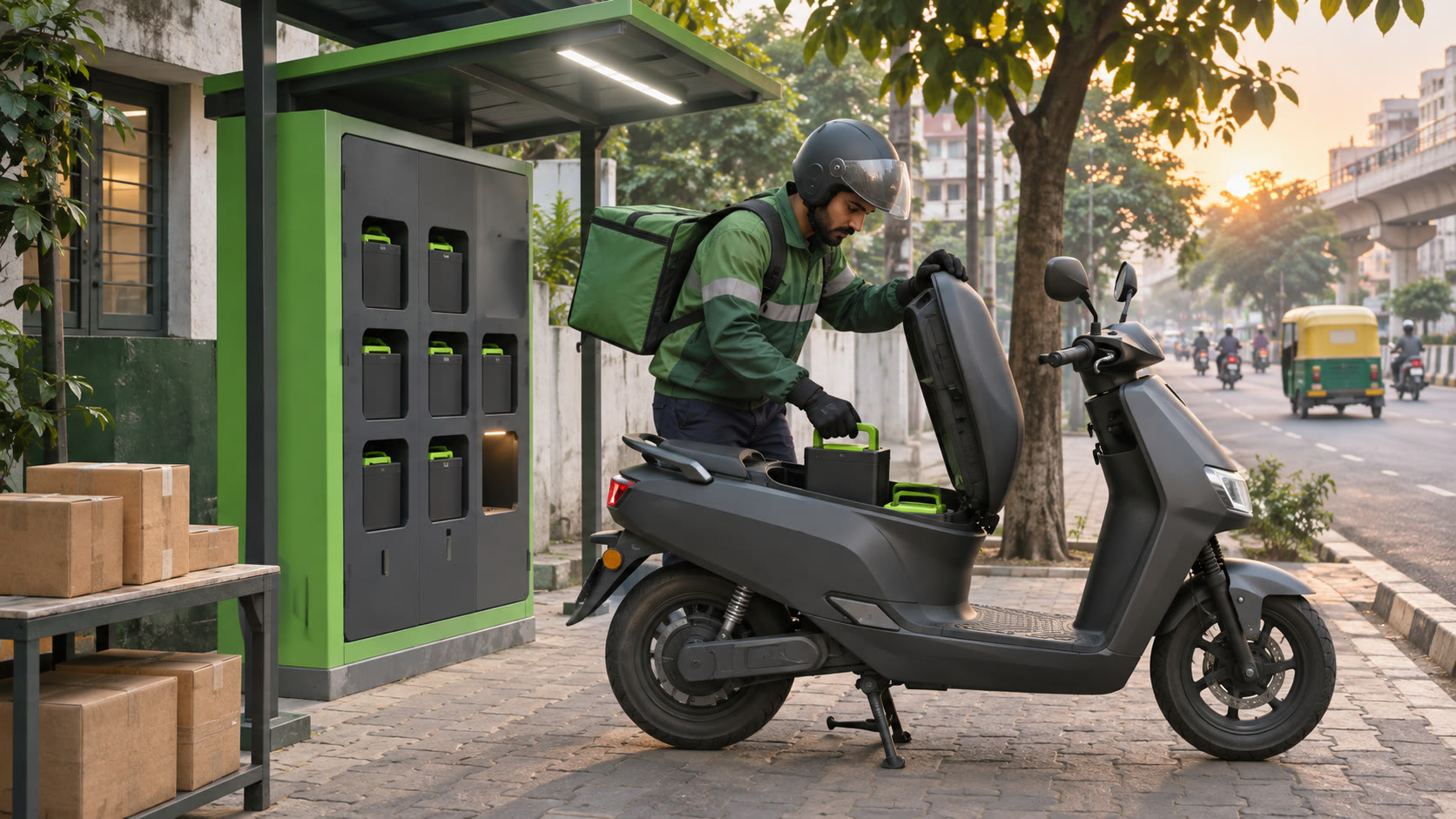
Delivery work puts a two-wheeler on the road for much longer than a normal office commute. That makes fuel, servicing, downtime and the cost of replacing a vehicle more visible in a rider’s daily income. Renting transfers much of the purchase and maintenance responsibility to the operator, while battery swapping can reduce the time spent waiting for a recharge.
ThePrint reported that rental companies were serving delivery workers in Delhi-NCR, Bengaluru, Hyderabad, Mumbai, Indore, Coimbatore and Guwahati, among other markets. It also found that several operators had shifted their original commuter-focused model toward weekly plans, swap support and scooters adapted for commercial use. The spread across metro and smaller cities is important for fleet operators because delivery demand is not limited to the largest urban markets.
There is a concrete example of that expansion in Nashik. Autocar Professional reported on 29 Oct that Yulu launched a delivery-focused service there with an initial fleet of 100 DeX electric two-wheelers through a local partner. The rollout shows how the rental model is being extended through franchise or local operating arrangements instead of relying only on directly managed metro fleets.
The cost comparison is useful, but not universal
Published examples show why riders need to compare like with like. ThePrint reported weekly rental plans of ₹1,500–₹2,100 and cited a Delhi rider spending ₹200–₹300 a day on petrol for a privately owned motorcycle. In a separate report, Business Standard cited Zypp Electric’s chief executive as saying delivery workers typically paid ₹200–₹250 for a day’s rental, while a petrol scooter could use more than ₹450 of fuel a day when covering 80–100 km.
Those figures are reported examples from different operators and usage patterns, not a standard market tariff or a guaranteed saving. A rider should add the rental, battery-swap or charging charge, deposit, penalties, maintenance exclusions and any insurance contribution before comparing it with a petrol vehicle. The fuel cost calculator can help establish a route-specific petrol baseline, while the site’s live fuel prices page can be used to check the current local rate.
What the fleet expansion changes
The companies’ expansion plans point to a more specialised market. Business Standard reported that Yulu intends to add cities and charging capacity, Zypp plans a large increase in its electric two-wheeler fleet and a franchise push into smaller locations, and Baaz is developing vehicles for heavier commercial use. These are company-stated plans and targets, so the useful question is not only how many vehicles are promised but whether a working rider can access one in the area and time slot needed.
For a delivery operator, a vehicle that is available at the start of a shift and quickly supported after a fault can be more valuable than a model with a higher brochure range. For a rider, the same issue affects earnings: a swap station that is too far from the route, a shortage of charged batteries or a slow repair can turn a low rental into an expensive day.
What riders should check before taking an EV on rent
- Total daily or weekly charge: ask whether energy, battery swaps, maintenance, insurance, taxes and roadside support are included.
- Battery access: confirm the locations, operating hours and backup process for swap stations or charging points on the intended route. The state-wise EV station directory is a useful starting point for checking the wider charging network, but the rental company’s own support network may be different.
- Downtime terms: check what happens if the scooter, battery or app fails during a shift, and whether a replacement vehicle is provided.
- Documents and vehicle category: confirm whether the vehicle is a low-speed model or a registered high-speed two-wheeler, and ask who is responsible for the registration, insurance and compliance documents.
- Work compatibility: verify payload, storage, route range, helmet requirements and whether the delivery platform accepts that vehicle and rental arrangement.
- Exit costs: read the deposit, minimum commitment, late-return, damage and early-termination terms before paying.
Policy could keep pushing delivery fleets toward EVs
Business Standard reported that Delhi has set April 2028 as a deadline connected with electric delivery services, and that other states are also taking steps to move delivery fleets toward electric vehicles. Separately, the Delhi Transport Department’s Delhi Electric Vehicle Policy, 2026–2030 (Draft) proposes that from 1 Apr 2028 only electric two-wheelers would be permitted for new registration in the National Capital Territory. Because that document is marked draft, it should not be treated as an effective rule until the government issues a notification.
For companies, the policy direction makes access to compliant electric vehicles more important. For riders, it makes document checks more important: a low operating cost does not remove the need to follow the vehicle’s registration, licence, safety and insurance requirements.
Reader takeaway
Electric two-wheeler rentals are becoming a delivery-work infrastructure business, combining vehicles with battery access, repairs and fleet support. The model may help riders who cannot or do not want to buy a scooter, but the right comparison is the cost of a complete working shift—not rent versus petrol in isolation. Availability, uptime, documents and the route’s charging or swap coverage should be checked before the economics are judged.
Sources
- Business Standard — “Electric two-wheeler rental firms charge up for gig delivery boom” (9 Nov 2026)
- ThePrint — “Rental e-scooters were meant for office-goers. Gig workers now bring up to 90% of business” (15 Oct 2026)
- Autocar Professional — “Yulu launches EV delivery service in Nashik with 100 DeX vehicles” (29 Oct 2026)
- Delhi Transport Department — “Delhi Electric Vehicle Policy, 2026–2030 (Draft)” (2026)