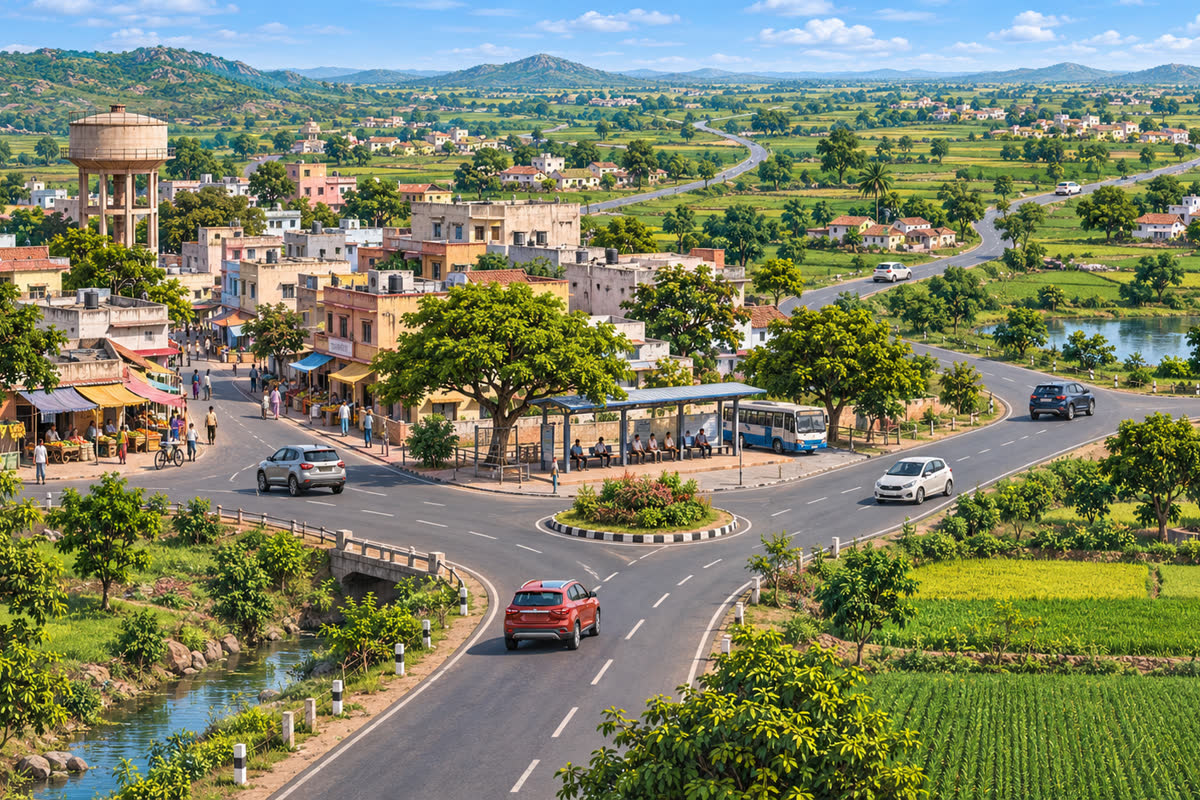
Smaller cities and towns accounted for about 55% of India's incremental passenger-vehicle registrations between January and October 2026, according to JATO Dynamics data reported by Business Standard on 10 Nov 2026. The shift means non-metro buyers are the main source of absolute car-market growth this year, but it does not remove the need to check fuel use, financing cost, service reach and the price of regular trips.
Key takeaways
- Non-metro urban markets added 3,89,401 passenger-vehicle registrations in January–October 2026, more than the combined addition in rural markets and metros.
- Registrations in smaller urban markets reached 26.1 lakh, up 17.5% from 22.2 lakh a year earlier, giving them a 57.3% share of total passenger-vehicle registrations.
- Rural India recorded the fastest percentage growth at 27%, but its 16.7% share was smaller than the non-metro urban market's contribution.
- October registrations fell 18% year on year in non-metro urban markets, although the comparison is affected by Diwali moving from October in 2025 to November in 2026.
- For buyers, the useful comparison remains the complete ownership cost: on-road price, fuel or charging, insurance, service access, finance cost and regular route.
What the January–October data shows
The 55% figure describes the increase in registrations, not the share of all cars already registered in smaller cities. Business Standard's 10 Nov report, based on JATO Dynamics data, said non-metro urban markets added 3,89,401 vehicles in the first 10 months of 2026. Rural markets added 1,61,965 and metros added 1,55,698, so the non-metro urban addition was larger than the other two combined.
Non-metro registrations rose to 26.1 lakh from 22.2 lakh in the same period last year, a 17.5% increase. Those markets accounted for 57.3% of India's total passenger-vehicle registrations during the period. Across India, passenger-vehicle registrations rose 18.4% to 45.6 lakh from 38.5 lakh.
The distinction between growth rate and absolute contribution matters. Rural India grew faster, at 27%, while metros grew 15.1%. However, rural markets accounted for 16.7% of registrations and metros for 26%, whereas non-metro urban markets supplied the largest addition to the market. In practical terms, the expansion is being spread through district centres, emerging towns and other urban markets outside the biggest metros.
Why this matters for car buyers
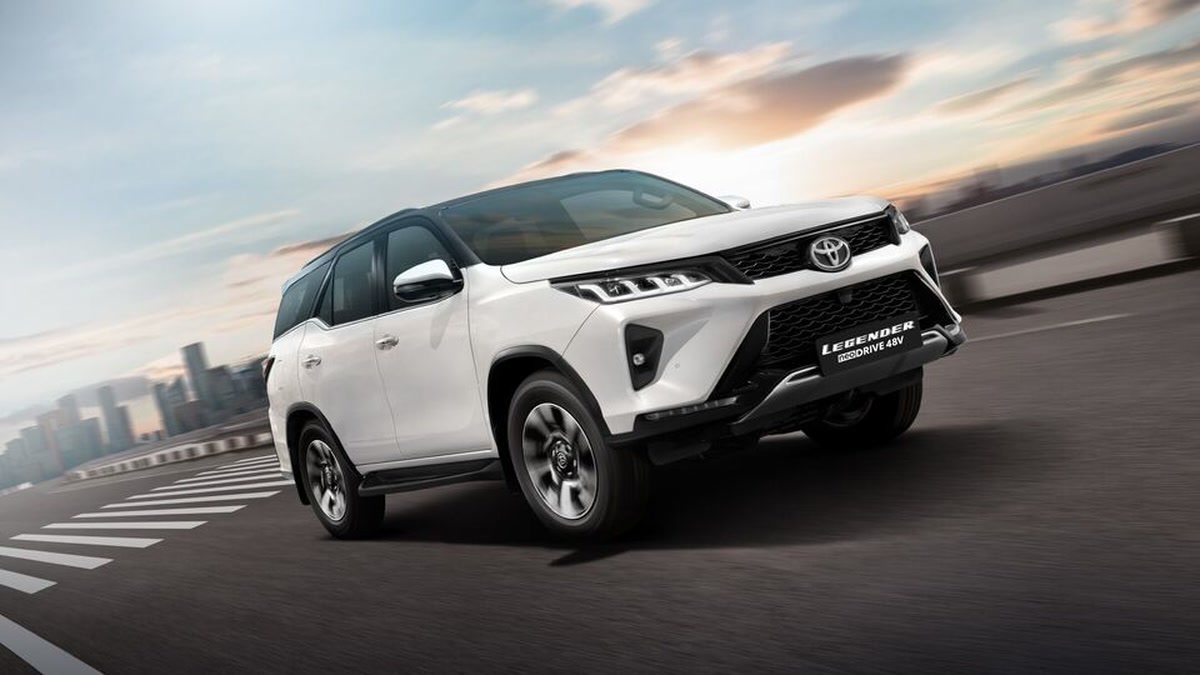
JATO's separate October market release recorded 5.117 lakh passenger-vehicle registrations for the month and found SUVs accounted for 58.6% of that market. Hatchbacks made up 21.1%, MPVs 12.2% and sedans 8.0%. Those figures describe the national market rather than every smaller city, but they show the product mix that dealers outside metros are increasingly expected to support.
Business Standard quoted JATO President Ravi Bhatia as saying that rural India was leading on growth rate, while non-metro urban India remained the biggest engine of absolute expansion. The report also quoted a dealer who said demand in smaller cities had been reasonably strong for SUVs and higher variants, while financing costs and monthly instalments were becoming more important to first-time buyers.
That is a market observation, not a recommendation to choose a particular body style or powertrain. A buyer in a growing town may have more model choices than before, but the nearest authorised workshop, parts availability and delivery timing can still differ from what is available in a metro.
October's fall needs a calendar check
Non-metro urban registrations fell 18% year on year in October, compared with declines of 8.3% in metros and 9.2% in rural markets. Read alone, that could suggest a sharper slowdown outside the biggest cities. The timing of the festivals makes that conclusion premature: Diwali was in October 2025 but fell in November 2026, moving a large part of the purchase and registration cycle into a different month.
The Federation of Automobile Dealers Associations also described October's year-on-year comparison as calendar-distorted in its official October 2026 release and said the November festive print would be the clearer test of demand. The next useful comparison is therefore the combined festive period, followed by whether registrations hold after the Diwali effect fades.
Checks before comparing a car
Calculate the route-level running cost
A national registration trend does not show what a particular commute will cost. Use the live fuel prices for the relevant state or city as a starting point, then use the fuel-cost calculator with the actual distance, mileage and monthly trips. The result is more useful than comparing brochure mileage with a generic monthly estimate.
Separate availability from demand
More registrations in smaller cities can encourage manufacturers and dealers to widen local stock, but the JATO data does not confirm that a specific dealer has a particular variant. Check the written delivery estimate, the exact variant and fuel type, the warranty terms, the nearest authorised service point and the likely time required for routine parts.
Compare the full payment, not only the EMI
Where a purchase is financed, the advertised monthly instalment is only one part of the cost. The comparison should also record the total repayment, processing charges, down payment, insurance treatment and any restrictions attached to the finance offer. Rates and approvals vary by borrower and lender, so the market trend should not be treated as a promise of a cheaper loan or a particular approval outcome.
Test the car against the trips it will actually do
For a family that mostly drives within town, a compact vehicle may have a different cost profile from a larger SUV used for highway travel. The road-trip planner can help compare journey time, fuel use and route conditions before treating a purchase decision as a simple model-versus-model comparison.
What to watch next
November registrations will show how much of October's weakness was only a festival-calendar effect. They will also indicate whether smaller-city demand remains broad-based or becomes concentrated in a few SUV launches and higher variants. A second signal is the relationship between registrations, dealer inventory and financing costs after the festive period, when deferred demand is easier to distinguish from sustained demand.
The reader takeaway is straightforward: India's car-market expansion is no longer a metro-only story. Smaller cities are providing the largest absolute addition to registrations, but a strong market headline does not replace a local ownership calculation. Before comparing models, check the on-road quote, regular fuel or charging cost, insurance, service reach, finance terms and the routes the vehicle will actually cover.
Sources
- Business Standard — Smaller cities drive over half of India's incremental car sales in 2026 (10 Nov 2026)
- JATO Dynamics — India's car market registers 511.7K units in October 2026 (6 Nov 2026)
- Federation of Automobile Dealers Associations — FADA Releases Oct'26 Vehicle Retail Data (6 Nov 2026)
This article is for general information only and is not financial, insurance or legal advice.