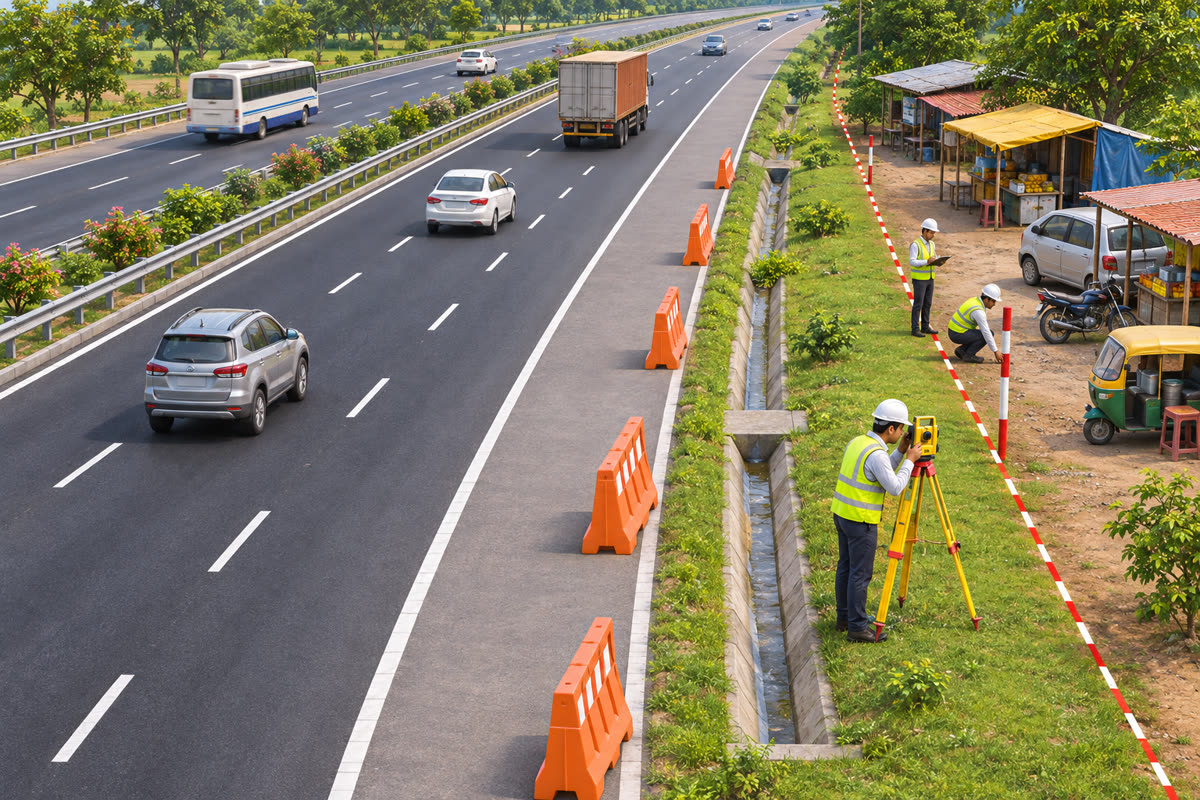
NHAI has begun action against roadside encroachments on the Pune–Bengaluru highway, with notices reported against unauthorised occupation along the corridor. The move follows Supreme Court highway-safety directions and matters to motorists because roadside structures, parked vehicles and blocked drains can affect visibility and traffic movement; it is not a reported toll revision.
Hindustan Times reported on 10 Nov 2026 that the NHAI drive had started and that notices were being issued to occupants carrying out unauthorised activities. The report said the authority would take further action under law if encroachments were not removed. The latest development sits within a wider Pune-region enforcement effort reported by The Times of India after the Supreme Court’s directions.
Key takeaways
- NHAI has started an encroachment enforcement drive on the Pune–Bengaluru highway, according to a same-day Hindustan Times report.
- The reported targets include unauthorised roadside occupation that can obstruct visibility, movement, drainage or the highway right of way.
- The Supreme Court has prohibited new dhabas, eateries and commercial structures within the right of way of national highways and directed action against unauthorised structures.
- The latest reports do not announce a corridor-wide closure or a new toll fee; motorists should watch for local work and access advisories.
What has changed on the corridor
The immediate change is enforcement, not a new highway charge. Hindustan Times said NHAI’s action began on 5 Nov 2026 and that notices had been served on encroachers along the Pune–Bengaluru National Highway. An NHAI official quoted in the report said highway land and the right of way are meant to protect road infrastructure and safe movement, and that further legal action could follow when unauthorised occupation is not removed.
The same report also carried the response of a hotel owner who asked authorities to consider businesses that have operated for years and to give occupants an opportunity to present documents before any demolition or eviction action. That distinction is important: a notice is an enforcement step, not by itself a final finding on every individual property. The report does not say that all roadside businesses on the corridor are illegal or that the entire route is being closed.
The drive is separate from the recent Kini blockade covered in FuelPrice’s earlier Pune–Bengaluru traffic update. That incident concerned a protest-related disruption, while the new report concerns the highway right of way and roadside occupation.
Why the Supreme Court directions matter
In its 13 Apr 2026 order in Suo Moto Writ Petition (Civil) No. 9/2025, the Supreme Court directed that construction or operation of a new dhaba, eatery or commercial structure within a national highway’s right of way should be prohibited with immediate effect. It also directed the removal of new or existing unauthorised structures within 60 days through the procedure under the Control of National Highways (Land and Traffic) Act and the applicable standard operating procedure.
The order covers more than roadside shops. It calls for inspection and survey of highway stretches, recording encroachments and notices, and stronger monitoring of illegal parking. It also says licences, no-objection certificates and trade approvals should not be granted or renewed for sites within highway safety zones without prior clearance from NHAI or the relevant public works authority.
The Times of India reported in September that Pune agencies had already begun a broader process of identifying boundaries, verifying encroachments and issuing notices on several highways, including the Pune–Bengaluru route. It said the work was focused on structures that reduce the carriageway, obstruct visibility, affect pedestrian movement or block roadside drains. The current NHAI action is therefore best read as a fresh corridor-specific step within that wider implementation effort.
What drivers and transporters may notice
For a car or bike driver, removing structures from the right of way can improve sight lines at turns and junctions, reduce sudden lane changes around parked vehicles and reopen space needed for drainage or maintenance. The practical benefit will depend on where notices are enforced and whether occupants remove structures within the allowed process.
There may also be short, localised work zones around surveyed or cleared locations. The current report does not announce a route-wide diversion, so drivers should not assume that the whole Pune–Bengaluru corridor is shut. Local police or highway authorities would need to publish any temporary lane, shoulder or access restriction. Until then, the useful checks are the latest local traffic advisory, safe stopping points and the condition of the route being used.
Truck, bus and fleet operators have an additional concern: roadside loading, parking and informal access points can affect turning movements and heavy-vehicle sight distance. The Supreme Court’s direction separates carriageways and paved shoulders from designated parking or wayside facilities, so operators should treat the highway shoulder as a traffic-safety space rather than an informal stopping lane.
How to plan a trip while enforcement continues
Before travelling, use the road-trip planner to compare the route, expected travel time and practical stopping points. A safety drive does not automatically change the toll payable, but route choices can change the total trip cost; the toll-charge calculator can be used to check the toll component separately.
Drivers should follow temporary cones, barriers and police instructions around any active survey or removal work, avoid stopping on the shoulder, and leave extra space near roadside access points. A local business or stall may be operating while its notice is being processed, so road users should rely on official traffic instructions rather than assume that every structure has already been removed.
What happens next
The next steps are expected to be location-specific: verify the highway boundary, serve or process notices, allow the applicable opportunity under law, and remove structures that remain unauthorised. The Supreme Court order also places responsibility on district administrations, police, NHAI or the relevant land-owning authority and public works agencies to coordinate highway-safety enforcement.
For motorists, the key watchpoint is whether action stays limited to roadside occupation or creates a temporary access restriction at a particular junction, service road or shoulder. A separate toll notification, if any, would have to come from the relevant toll authority; nothing in the current encroachment report announces a toll hike.
Frequently asked questions
Is the Pune–Bengaluru highway closed?
No corridor-wide closure is announced in the latest report. Local restrictions could still be issued if work affects a shoulder, access road or junction.
Does the drive change toll charges?
Not according to the current reports. The action concerns unauthorised occupation and highway safety, not a revised user-fee schedule.
What counts as an encroachment in this context?
Reports refer to structures, stalls, advertising or other occupation within the highway right of way, along with obstructions that affect visibility, drainage, pedestrian movement or safe traffic flow. The legal status of a specific site depends on the authority’s survey and notice process.
Sources
- Hindustan Times — NHAI begins encroachment drive on Pune–Bengaluru highway — 10 Nov 2026
- Supreme Court of India — In Re: Phalodi Accident, Suo Moto Writ Petition (Civil) No. 9/2025 — 13 Apr 2026
- The Times of India — 200 notices on encroachments within highways’ right of way after SC order — 20 Sep 2026
- Press Information Bureau / Ministry of Road Transport and Highways — Restoring Safety by Removing National Highway Encroachments — 29 Jul 2026