EU leaders have called for a coordinated European response to high energy prices, including temporary support for exposed industries, a short-term plan to improve refinery capacity and voluntary energy-demand bundling. The published conclusions from the 15–16 October summit matter beyond Brussels because refinery output and wholesale fuel costs flow through to motorists, hauliers, manufacturers and airlines.
The decision is a policy direction, not an immediate EU-wide fuel-price cap or a guaranteed reduction at the pump. The European Commission still has to design the measures, while national governments will determine how any support works in practice.
Key takeaways
- EU leaders asked for targeted, temporary measures to ease the impact of high energy prices while protecting the Single Market.
- The Commission intends to prolong a temporary state-aid framework for the industrial sectors most exposed to the energy shock.
- A short-term framework is planned to optimise the capacity and efficiency of European refineries.
- Voluntary bundling of energy demand could give participating buyers more coordinated purchasing power, but it is not a compulsory joint-buying scheme.
- The next test is delivery: the Commission must turn the political request into proposals, safeguards and national implementation.
What the summit changed
In its conclusions, the European Council said the current geopolitical environment is affecting global supply chains, energy security, and energy and fuel prices. It said the situation urgently requires a coordinated European response made up of targeted and temporary measures that account for different conditions in member states.
The Council welcomed the Commission’s intention to prolong the temporary state-aid framework for the industrial sectors most exposed to high energy prices. That could help energy-intensive businesses manage a cost shock without creating an open-ended promise of compensation. The wording also matters: this is a support framework, not a blanket payment to every household or driver.
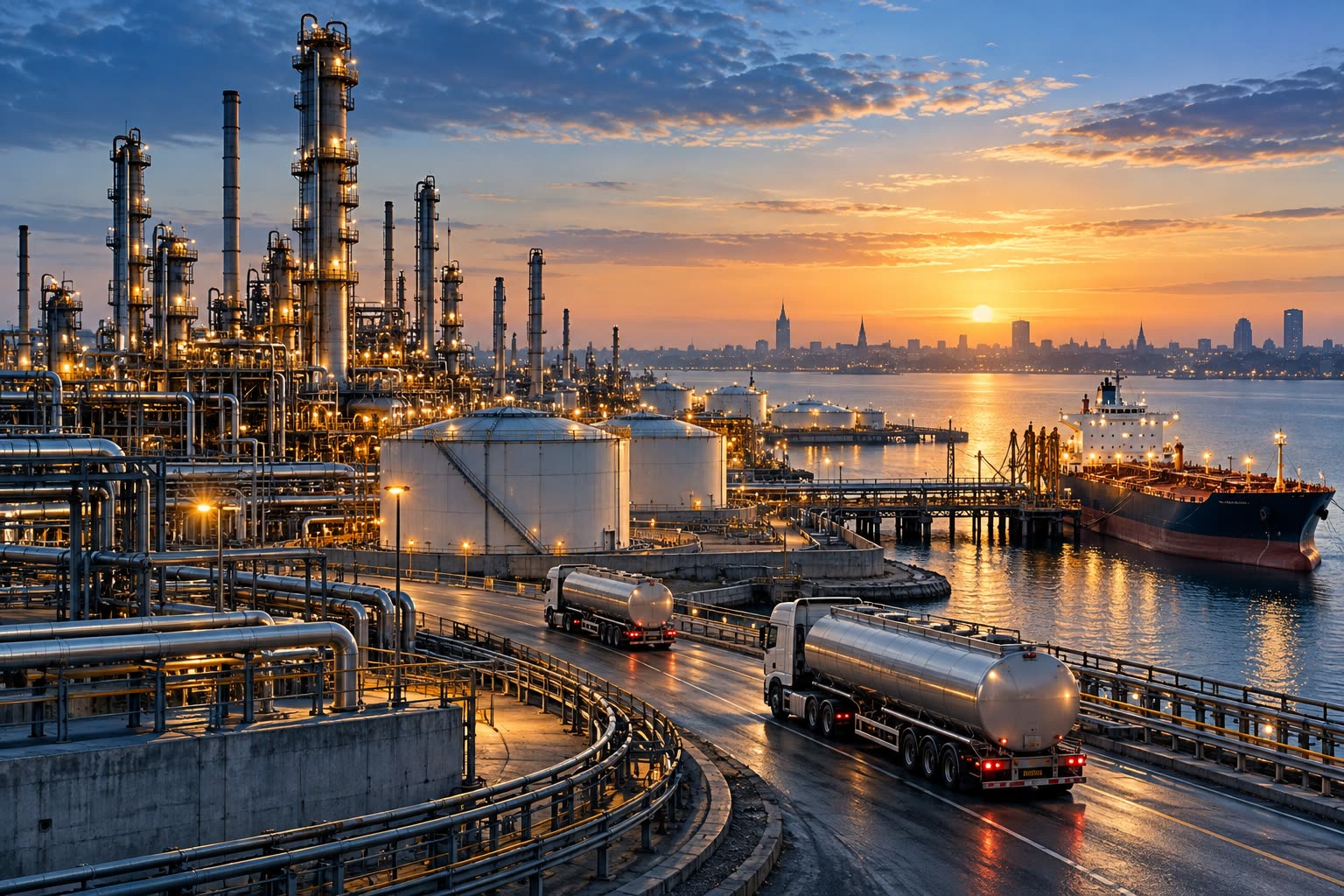
Leaders also welcomed a planned short-term framework to optimise the capacity and efficiency of EU refineries. They did not announce a new refinery, a fixed production target or a retail-price intervention. The immediate focus is better use of existing processing capacity at a time when product availability can be as important as the price of crude oil.
Why refinery policy matters to fuel users
Crude oil is only one part of the price of petrol, diesel and jet fuel. Refineries turn crude into specific products, and the final cost also reflects product demand, plant availability, imports, freight, storage, taxes and local distribution. A disruption or bottleneck in refining can therefore keep diesel or petrol expensive even when crude prices move in the opposite direction.
The proposed framework could help the Commission and national authorities identify where capacity, maintenance schedules or operating constraints are limiting product supply. That is a plausible supply-side benefit, but it is not a promise that retail prices will fall. The Council’s conclusions set a direction and ask the Commission to develop measures; they do not specify a start date, a price target or a volume of additional fuel.
For drivers, the practical effect will continue to vary by country and city. Local taxes, wholesale contracts and the mix of imported and domestically refined products can produce different pump-price outcomes from the same global energy shock. Readers can check current fuel prices before budgeting a journey, rather than assuming that a Brussels policy announcement has already changed a local forecourt price.
What it means for hauliers and industry
Fuel is a direct operating cost for road freight, buses, construction equipment and many industrial processes. A coordinated European response could make supply planning easier if it improves visibility on refinery operations and gives exposed sectors a clearer temporary-support framework. It does not remove the underlying exposure to crude, refined-product and shipping markets.
For a fleet operator, the useful question is not only whether a headline price falls. It is how a change in the per-litre cost affects a defined route, vehicle and load. The fuel-cost calculator can help translate a local price and distance into a trip estimate. Any calculation remains sensitive to vehicle efficiency, traffic, payload, driving conditions and the price actually paid.
The Council also linked short-term relief with the longer-term energy transition. Its conclusions say faster electrification, renewable and low-carbon energy, grids, storage and efficiency are central to reducing exposure to volatile fossil-fuel markets. That does not change the cost of a petrol or diesel journey today, but it explains why the EU is combining refinery measures with policies aimed at reducing fuel demand over time.
What happens next
The Commission’s next steps will determine whether the summit produces a meaningful market response. Watch for the design of the refinery-capacity framework, the conditions attached to extended state aid and the details of any voluntary demand-bundling initiative. The Council also invited the Commission to examine further short-term measures where needed, while taking account of differences in electricity prices between member states.
There is a built-in trade-off. Measures that keep fuel and energy available in the short term can protect households and industry, but broad subsidies or weaker standards can reduce the incentive to cut demand. The conclusions therefore pair temporary relief with a call to keep the energy transition moving and to preserve a predictable carbon market.
Reader takeaway
Europe’s latest response is about coordination, refinery utilisation and temporary protection for exposed businesses—not an instant reset of retail fuel prices. For anyone planning a journey, the relevant follow-up is to track the local pump price, calculate the fuel cost for the actual route and keep an eye on how quickly the Commission turns the summit’s request into enforceable measures. EV owners and prospective buyers can also use the EV charging directory to compare charging availability when evaluating alternatives to liquid fuel.
Sources
- European Council, “European Council conclusions on competitiveness, the next multiannual financial framework and enlargement and reforms” — 16 October 2026
- Euronews, “EU leaders demand joint action to tackle soaring energy prices” — 16 October 2026
- Le Monde, “EU struggles to agree on fuel energy price cuts, leaving its economy in peril” — 16 October 2026
- European Commission, “EU action to address the energy crisis” — updated 8 October 2026
This article is for general information only and is not financial, insurance or legal advice.