The EU's scheduled phase-out of Russian liquefied natural gas (LNG) is moving into its market-impact phase: the long-term-contract prohibition starts on 1 Jan 2027, and S&P Global says the shift could reroute cargoes between Europe and Asia. For drivers, fleets and energy users, this is an LNG-market rule rather than a direct petrol or diesel price change, but it matters because flexible gas cargoes feed power, industry and transport costs across borders.
The practical question is not whether Russian LNG disappears from the world market overnight. It is where those cargoes go, which replacement supplies Europe attracts and how much competition Asian buyers face for shipments that can move between regions. That outcome will depend on winter demand, storage, shipping routes and the availability of non-Russian LNG.
Key takeaways
- The EU's long-term Russian LNG import ban is a confirmed rule, not a proposal; the deadline is 1 Jan 2027.
- S&P Global reports that Europe may compete more aggressively with Asia for flexible LNG cargoes as the deadline approaches.
- Russian cargoes could be redirected to Asian or other third-country markets, but Arctic winter routes and vessel availability may limit how quickly flows can change.
- The EU says its gas-supply security remains stable, while the IEA warns that low storage and disrupted LNG flows leave markets exposed to winter price volatility.
What the EU rule changes
The Council of the European Union formally adopted the regulation phasing out Russian pipeline gas and LNG in January 2026. Existing contracts receive transition periods. The Council's timeline says the prohibition for short-term LNG contracts began on 25 Apr 2026, while the long-term-contract prohibition applies from 1 Jan 2027. The IEA's own phase-out timeline confirms the same sequence.
That distinction matters. The January deadline is not a new political announcement made this week; it is the next major implementation point in an adopted rule. The European Commission has also built monitoring and traceability requirements into the system, so importers must show where gas was produced before it enters the EU. The rules include an emergency mechanism that can temporarily suspend the ban when a declared supply emergency seriously threatens one or more member states.
S&P Global reported on 13 Nov that European companies with long-term Russian LNG contracts are preparing for the change and that the market is already considering how Yamal LNG cargoes may be redirected. The report attributes the market outlook to S&P Global Energy analysts and traders, so these flow changes should be read as an expectation rather than a confirmed shipping schedule.
Why Europe and Asia are linked
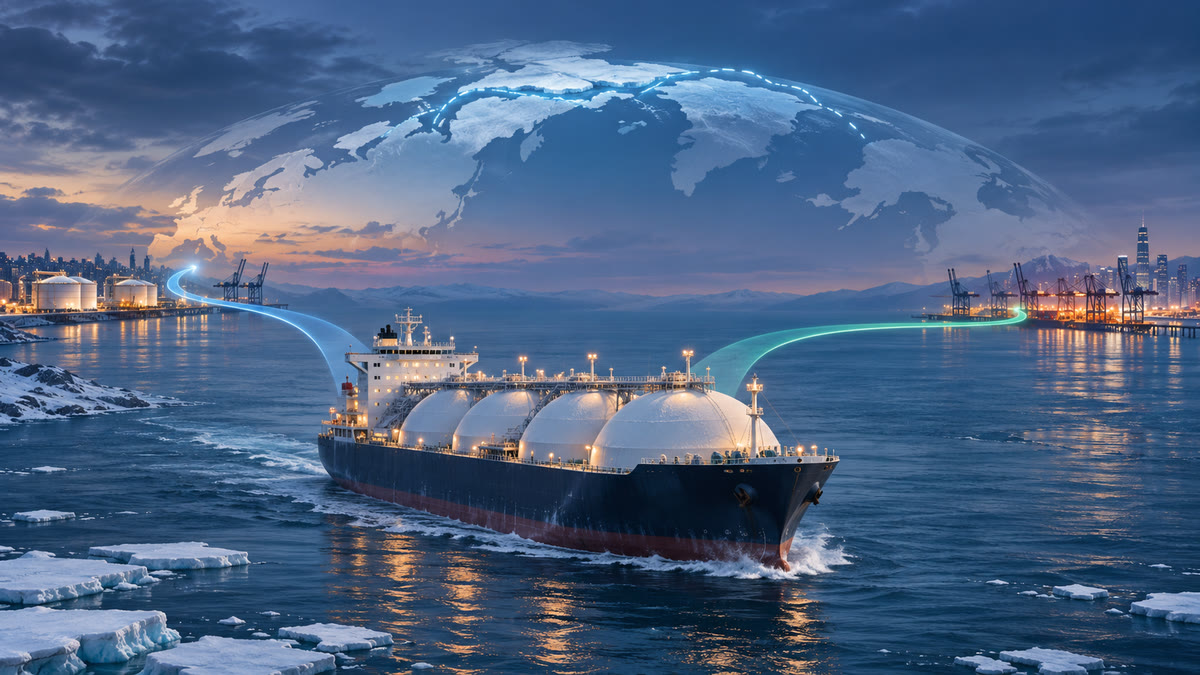
LNG is traded globally, but cargoes are not infinitely flexible. A shipment can move toward Europe or Asia only when the price spread, vessel availability, route length and delivery window make that choice workable. S&P Global says the EU ban could intensify competition for non-Russian cargoes if European buyers replace Russian volumes by pulling more supply from the spot market.
The reverse effect is also possible. If Russian LNG that would previously have gone to Europe is redirected to China or another Asian market, it could reduce the call on other cargoes there. S&P Global cautions that this adjustment may be slow because Arctic winter navigation, specialised vessels and route constraints limit how quickly all displaced volumes can find a new destination.
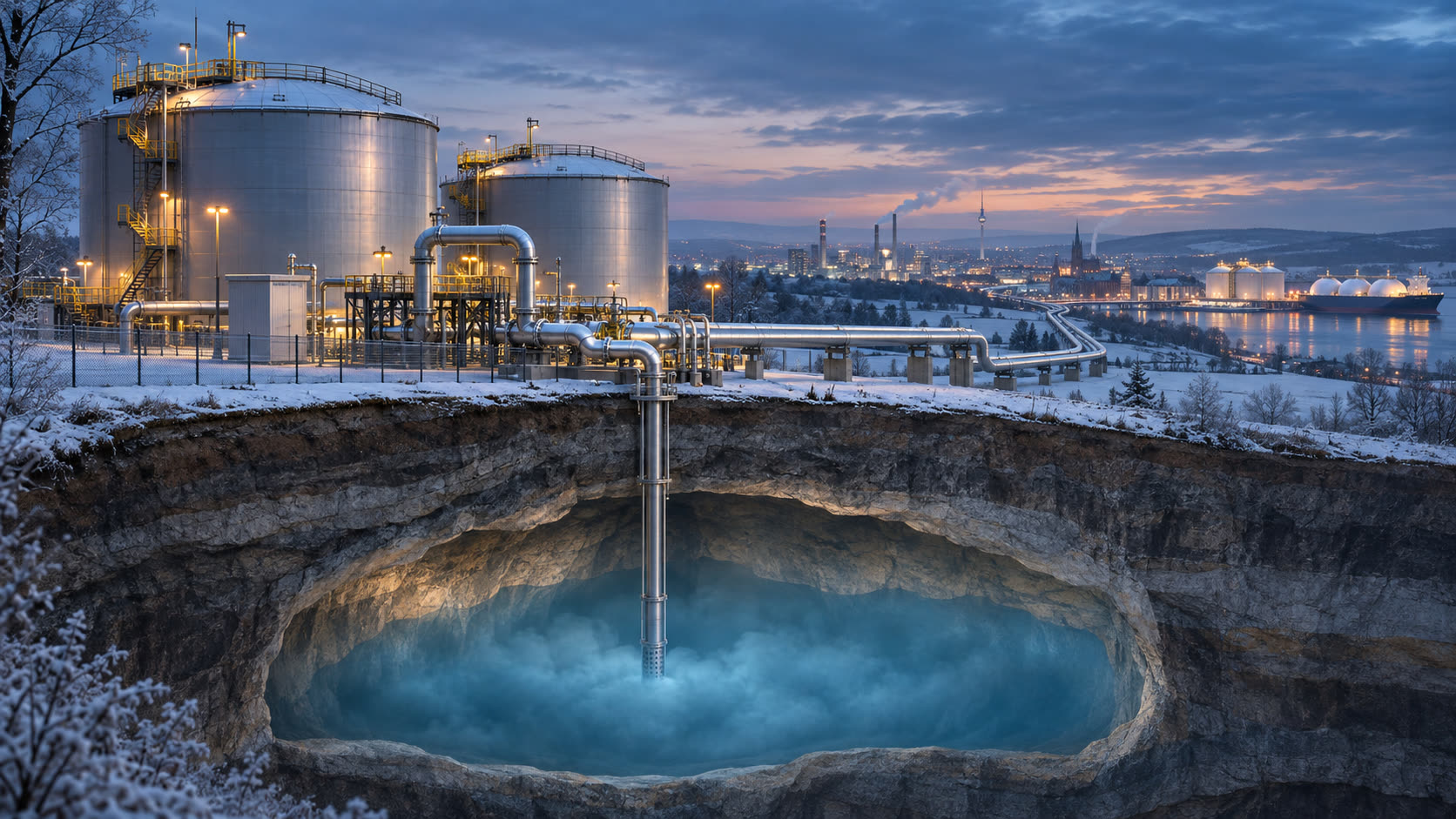
The IEA's Global Gas Security Review 2026 describes Asian spot LNG and European hub prices as increasingly connected because the global market has more destination-flexible contracts. It also says the European Union entered the 2026/27 heating season with its lowest gas-storage buffer in more than a decade. Low European storage and limited storage options in parts of Asia mean that a cold spell or shipping disruption could make buyers compete for the same flexible cargoes.
The EU's official position is more measured. In comments reported by S&P Global, the Commission said security of supply remains stable and that import flexibility and infrastructure can support winter demand, while acknowledging that geopolitical events are keeping prices high. The two points can coexist: physical supply may remain available, but the cost of securing it can still rise when buyers compete for a narrower set of routes and suppliers.
What it means for drivers, fleets and EV users
This is not a rule that changes petrol or diesel prices at the pump. LNG is natural gas cooled into a liquid for transport, and the EU measure is aimed at Russian gas imports rather than road-fuel taxes. Readers looking for a local petrol or diesel update should check the latest fuel prices separately rather than treating the LNG deadline as a direct pump-price signal.
There can still be an indirect cost channel. Gas is used for power generation and industrial production in many markets. If replacement LNG becomes more expensive, wholesale electricity and manufacturing costs can come under pressure in exposed regions; if gas demand falls or alternative supplies arrive, that pressure can ease. The effect is market-specific and does not guarantee a change in any driver's fuel bill.
For a road trip, the useful next step is to separate the energy headline from the vehicle's actual fuel consumption and local retail rate. A driver can use the fuel-cost calculator to test a route with the current petrol, diesel or CNG assumption, then rerun it if local prices change.
EV owners face a different indirect question: how local electricity tariffs and charging availability respond to wider energy-market conditions. The EV charging directory can help locate charging options, but it does not turn a global LNG forecast into a guaranteed charging price. Charging costs vary by country, operator, time of use and contract.
What to watch next
- Implementation: Watch for EU guidance on contract verification, origin checks and the emergency-suspension mechanism as the long-term deadline approaches.
- Russian cargo routing: The key operational question is whether Yamal LNG can reach Asian buyers reliably through the winter and how much cargo can be absorbed outside Europe.
- Winter demand: Weather in Europe and Northeast Asia, storage withdrawals and power-sector gas use will decide whether the policy creates a short-lived adjustment or a sharper spot-market squeeze.
- Replacement supply: Additional LNG from North America, Africa and other producers could soften the impact over time, but new supply does not always arrive where it is needed during a near-term disruption.
The reader takeaway
The EU's Russian LNG phase-out is a confirmed, multi-market energy-policy change whose biggest near-term effect may be on cargo routing rather than on the global gas molecule's total availability. Europe will need to replace some supply, Asia may receive part of the redirected Russian volume, and winter conditions will determine whether those adjustments happen smoothly. For road users, the sensible response is to monitor local petrol, diesel, CNG or charging prices separately while treating LNG developments as a wider energy-cost and supply-risk signal.
Sources
- S&P Global Energy — EU's Russia LNG ban from January to impact Asian supply; demand holds key — 13 Nov 2026
- Council of the European Union — Russian gas imports: Council gives final green light to a stepwise ban — 26 Jan 2026
- International Energy Agency — Global Gas Security Review 2026 — 3 Nov 2026
This article is for general information only and is not financial, insurance or legal advice.