Honda Motorcycle & Scooter India (HMSI) reported 7,34,566 motorcycles and scooters sold in October 2026, up 13% from 6,50,596 a year earlier. For Indian riders and buyers, the result points to firm festive-season demand, but it does not by itself announce a price cut, a new model or faster delivery for every city.
HT Auto, ETAuto and TOI Auto reported the company’s October figures on 1–2 Nov 2026. The company-reported total combines domestic sales and exports, so it is a market signal rather than a count of registrations on Indian roads.
Key takeaways
- HMSI reported 7,34,566 total two-wheeler sales for October 2026, up 13% year on year from 6,50,596 units.
- Domestic sales rose 11% to 6,64,831 units from 5,98,952 units in October 2025.
- Exports increased 35% to 69,735 units from 51,644 units a year earlier.
- April–October FY27 sales reached 41,74,638 units, 15% above the 36,44,151 units reported for the year-ago period.
- The sales report is a demand indicator; it does not set a buyer’s city price, insurance premium, fuel bill or delivery date.
What changed in October
HMSI’s October total was higher than the year-ago figure, with the change made up of both India sales and overseas shipments. The domestic number is the more direct indicator for people shopping for a motorcycle or scooter in India.
| Measure | October 2026 | October 2025 | Year-on-year change |
|---|---|---|---|
| Total sales | 7,34,566 units | 6,50,596 units | +13% |
| Domestic sales | 6,64,831 units | 5,98,952 units | +11% |
| Exports | 69,735 units | 51,644 units | +35% |
These are company-reported unit sales for October 2026 compared with October 2025, as reported by HT Auto, ETAuto and TOI Auto on 1–2 Nov 2026. The exact total is 7,34,566 units, while the commonly used 7.34 lakh figure is a rounded version of the same number.
Why the festive calendar matters
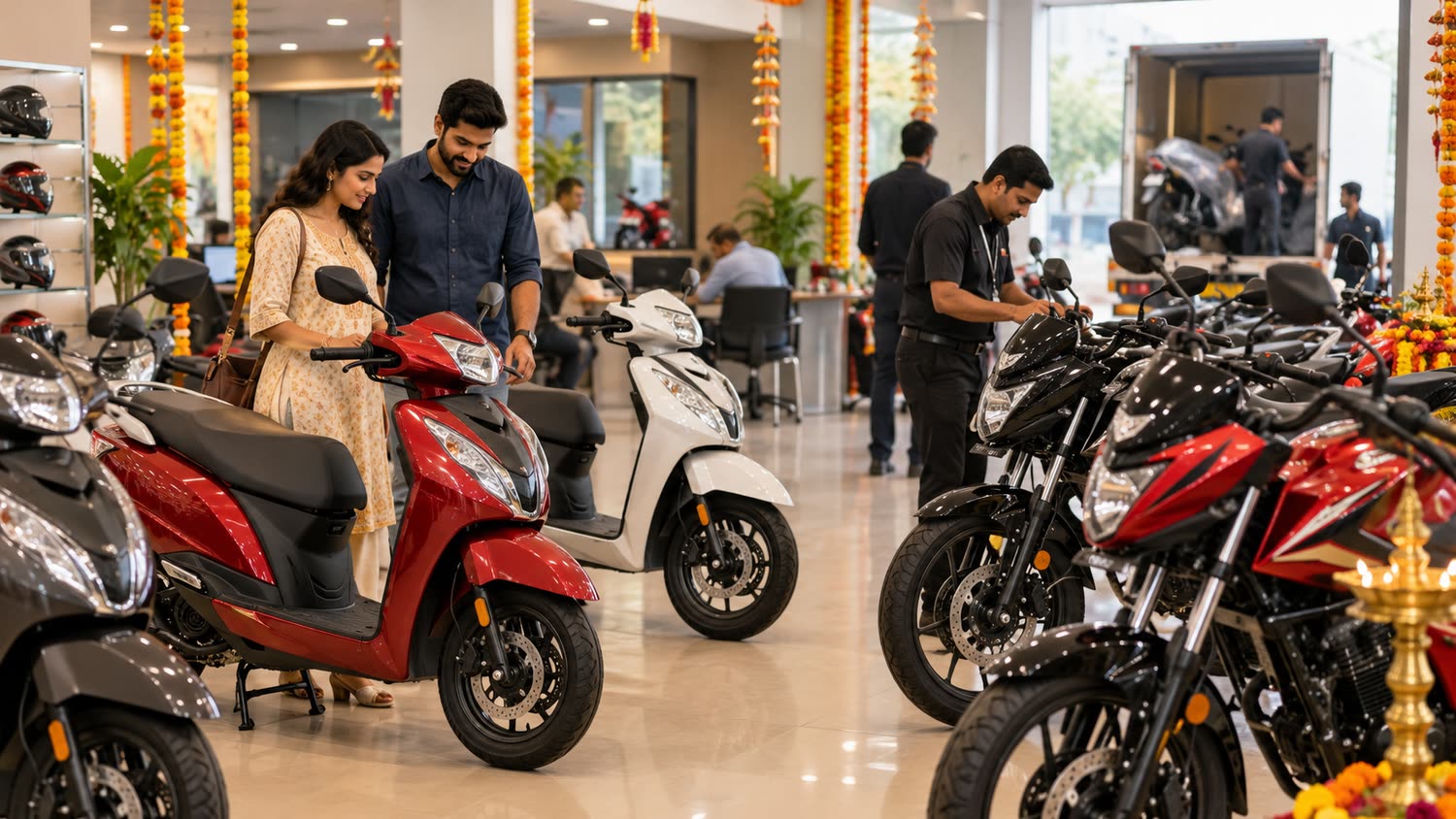
HMSI attributed the October performance to steady festive-season demand, its product range and a dealer network of more than 7,000 touchpoints, according to the reports. TOI Auto noted that Dhanteras and Diwali were still due in November 2026, after the October reporting period.
That timing gives the next monthly release extra importance. A strong November number would show whether demand continued through the main buying days; a softer number would indicate that some festive purchases were brought forward or that the October base was unusually strong. That is a way to read the data, not a forecast from HMSI.
What the sales number means for buyers
Sales momentum is not a price signal
A higher monthly sales figure does not announce a price cut, a new discount or a change in insurance or registration costs. The October reports are about volume. An actual buyer quote can still vary by model, variant, state taxes, dealer charges, accessories, insurance selection and the date of invoicing.
A practical comparison is the written on-road amount against the ex-showroom price, with registration, insurance, accessories and the promised delivery date shown separately. That helps distinguish a genuine vehicle price change from a dealer-level offer or a festive stock-clearing deal.
Inventory and registrations are different
The reported total combines domestic sales and exports, and it does not show how many units are available in a particular city or how many have been registered by retail customers. A rider checking a popular commuter motorcycle or scooter therefore needs local availability and registration information in addition to the national sales headline.
Running cost remains a separate calculation
Sales growth does not change what an existing owner pays at the pump. Fuel cost depends on the fuel type, the current city price, daily distance, traffic and the vehicle’s real-world efficiency. The live fuel-price pages can be checked before estimating a month’s spend, while the fuel cost calculator can turn a rider’s own kilometres and mileage into a trip or monthly estimate.
For a longer ride, the road-trip planner can help separate distance and fuel assumptions from the broader purchase-market story. That distinction matters because a national sales increase is not evidence that every rider’s running cost has fallen or risen.
April–October trend
HMSI reported 41,74,638 total sales for April–October FY27, up 15% from 36,44,151 units in the comparable period. Domestic sales for the same seven months rose 13% to 37,08,903 units from 32,80,990, while exports increased 28% to 4,65,735 units from 3,63,161.
The cumulative figures show that October was part of a broader year-to-date increase, not an isolated monthly comparison. They still do not mean that every month will match October: festive timing, export mix, model availability and the registration cycle can all change the monthly result.
What to watch next
The next useful checkpoint is the company’s November sales report. Readers comparing the two months should keep the measures consistent: domestic sales against domestic sales, total sales against total sales, and company-reported volumes against registration data rather than treating them as interchangeable.
For now, HMSI’s October result is best read as a sign of strong two-wheeler demand during the festive period. It may help explain showroom activity, but it is not a guarantee of a particular model’s availability, a lower on-road price or a change to the cost of owning a motorcycle or scooter.