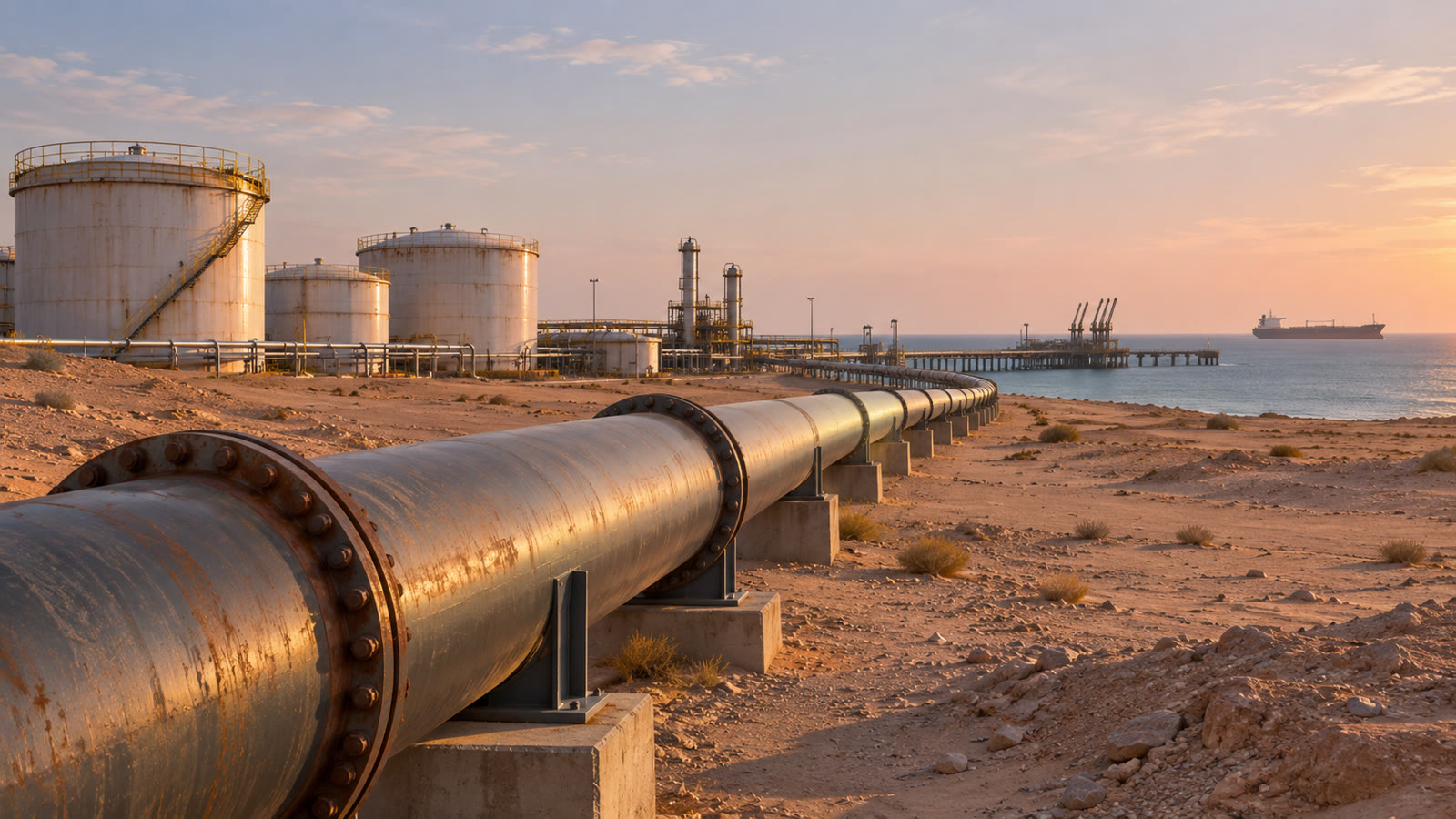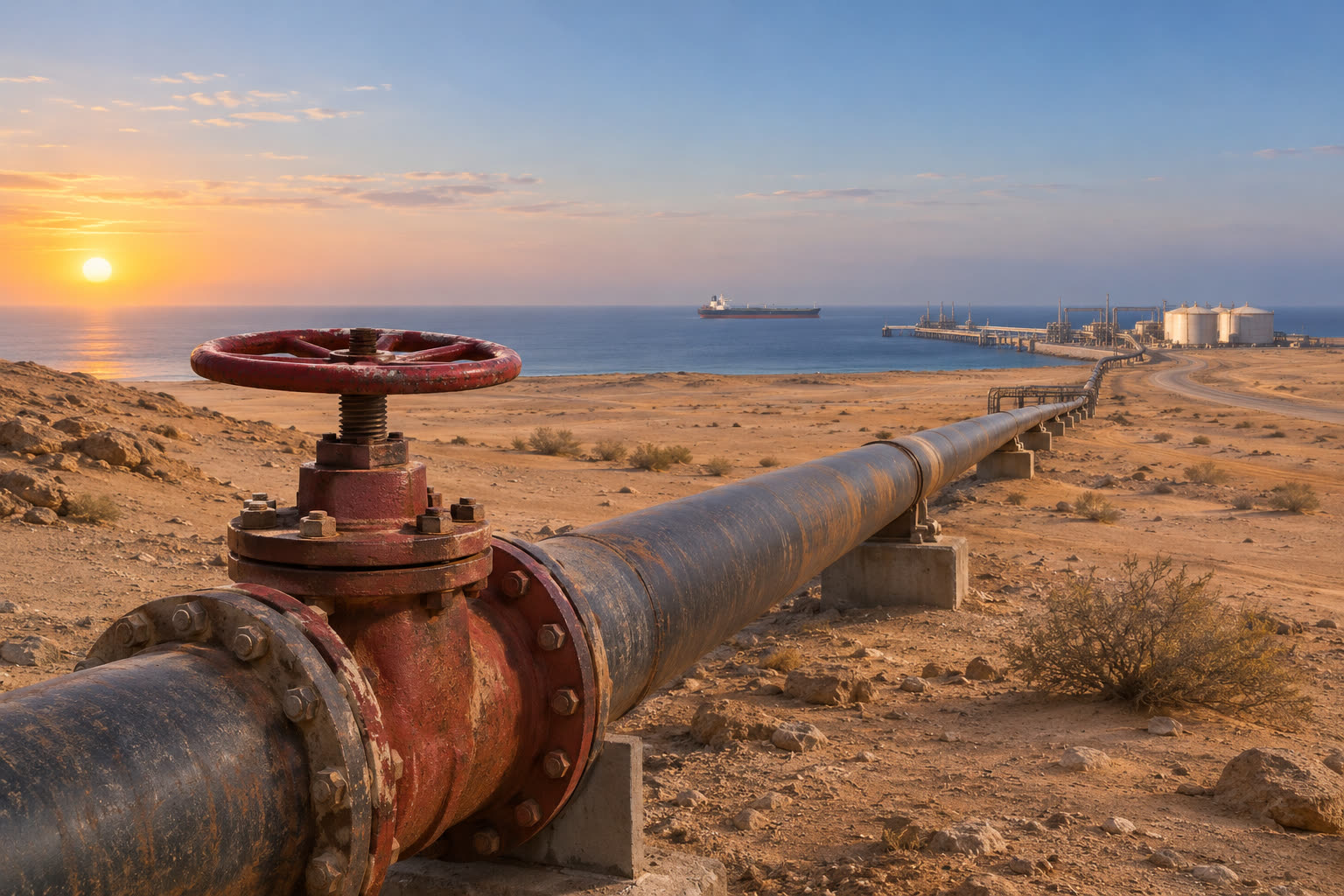
Oil prices moved sharply higher on 25 Nov after Yemen’s Houthi movement claimed it had struck Saudi Arabia’s Ras Tanura refinery and Iran’s Revolutionary Guard said tankers had hit mines in the Strait of Hormuz. Saudi Arabia’s official account said four drones were intercepted over Ras Tanura, while the UK Maritime Trade Operations (UKMTO) confirmed separate tanker incidents but did not identify an attacker or report a refinery shutdown. For drivers, fleet operators and businesses that depend on fuel, the immediate story is a higher supply-risk premium—not a confirmed loss of refining capacity.
Key takeaways
- Brent crude settled 3.5% higher at US$94.61 per barrel on 25 Nov, according to Reuters and The National, after the new Gulf security reports.
- The Saudi Press Agency said the Saudi-led coalition intercepted and destroyed four drones over Ras Tanura on 25 Nov; its initial assessment reported no injuries.
- The Houthi claim that the refinery was hit and fires started was not independently verified. Saudi Arabia’s official statement confirmed interceptions, not damage to the refinery.
- UKMTO said a tanker about 50 nautical miles west of Dubai reported an explosion caused by an unknown projectile on 25 Nov; the crew was safe and no damage or environmental impact was reported.
- US commercial crude stocks rose by 1.1 million barrels to 418.9 million barrels in the week ended 20 Nov, a bearish backdrop that has been competing with geopolitical risk.
What happened around Ras Tanura and Hormuz
Ras Tanura is a major Saudi oil-processing and export complex on the Gulf coast. The Saudi Press Agency reported that air defences intercepted and destroyed four drones there on 25 Nov, with fragments falling during the interception and no injuries in the initial assessment. That is the confirmed part of the Saudi account.
The Houthi movement separately said it had attacked the refinery and caused fires. Reuters and the Associated Press reported the claim, but both accounts made clear that it was not independently verified. The distinction matters: an intercepted attack can raise insurance, freight and security costs without removing barrels from the market, while a confirmed shutdown of processing or loading facilities would create a more direct supply shock.
Shipping authorities also recorded fresh incidents. In UKMTO Warning 222-26, issued for 25 Nov, a tanker master reported an explosion caused by an unknown projectile close to the vessel, about 50 nautical miles west of Dubai. UKMTO said the crew were safe and accounted for, with no damage to the tanker or environmental impact reported.
A Joint Maritime Information Center update published through UKMTO also recorded a separate outbound tanker struck by an unknown projectile east of Khasab, Oman, while transiting the Strait of Hormuz. It said there was no report of environmental impact. The same update said four attacks had been reported in the strait during the period covered and that 17 tankers had been struck there since 1 Nov. Those figures are a maritime-security assessment, not a claim that all of the vessels were carrying crude or that global supply has already been lost.
The latest episode is a materially new development after the earlier reported tanker attacks covered in our earlier Hormuz shipping coverage. It adds a fresh attempt around a major Saudi energy complex and new incidents close to a route used by oil and gas carriers, while leaving the attacker, damage and longer-term flow impact unresolved.
Why crude reacted even as inventories rose
Oil markets price the possibility of future disruption before a supply shortfall appears in official data. A tanker incident can lengthen voyages, increase war-risk insurance and make charterers hesitate to enter the area. Those costs can feed into crude delivered to refineries and into refined products such as gasoline, diesel and jet fuel even when the physical flow has not yet stopped.
That risk premium is competing with a softer market balance. The US Energy Information Administration’s weekly report for the period ended 20 Nov showed commercial crude stocks, excluding the Strategic Petroleum Reserve, up 1.1 million barrels to 418.9 million barrels. Reuters reported the build was smaller than analysts had expected, which helped keep the inventory signal from overwhelming the security news.
Reuters reported that Brent settled 3.5% higher at US$94.61 per barrel on Wednesday, while The National also reported the same settlement and described Thursday trading as volatile. The move does not mean every pump price will rise by the same percentage: retail fuel bills also reflect taxes, refining margins, freight, exchange rates and the time it takes for crude changes to pass through.
What it means for drivers and fleets
For a private driver, a short-lived benchmark move may not appear immediately at the pump. Local prices can move later, move by a smaller amount or remain unchanged if taxes and refinery margins absorb the change. The relevant comparison is the price per litre in the market where the vehicle is filled, not the headline Brent move alone.
For a fleet, carrier or frequent road traveller, the more important watchpoint is persistence. If tanker diversions or higher insurance costs remain in place, fuel surcharges and freight rates can react before retail prices fully reflect the change. A trip budget should therefore use the current local price and the vehicle’s actual consumption; FuelPrice’s fuel-cost calculator can help estimate the fuel component without treating crude as a one-for-one pump-price change.
Readers checking a journey or a household fuel budget can compare current figures through the live fuel-price pages. Those prices are market-specific and should not be replaced with an international benchmark quoted in US dollars per barrel.
What to watch next
The first question is whether Saudi authorities or the operator provide confirmation that Ras Tanura processing and export operations are continuing normally. The second is whether UKMTO and other maritime authorities record more attacks, attempted attacks, diversions or delays around Hormuz. A confirmed outage would be a different market event from an intercepted strike or a near miss.
OPEC+ ministers are due to discuss the group’s 2027 output policy on 29 Nov, according to Reuters and The National. That meeting matters because producers’ supply decisions will be weighed against both the possibility of a global surplus and the risk that Gulf flows remain vulnerable. The balance between those forces is likely to keep crude volatile even if no facility is taken offline.
The practical takeaway is straightforward: the latest move signals renewed uncertainty in the world’s key oil-shipping corridor, not proof of a lasting fuel shortage. For updates on this global lane, readers can follow worldwide fuel news and then check local prices and trip costs before making a budget.
Sources
- Reuters, “Oil prices fall as supply concerns linger after Iran claims mine strikes on ships,” 26 Nov 2026.
- Associated Press, “Israeli strikes kill 10 in Gaza, and other Mideast news,” 26 Nov 2026.
- UKMTO, “Warning 222-26 — Suspicious Activity,” 25 Nov 2026.
- UKMTO/JMIC, “Advisory Update 117,” 26 Nov 2026.
- Saudi Press Agency, “Coalition: Air Defenses Intercept and Destroy Four UAVs in Ras Tanura,” 25 Nov 2026.
- US Energy Information Administration, “U.S. Crude Oil and Petroleum Products Stocks,” data for the week ended 20 Nov 2026.
- The National, “Oil rebounds to $95 per barrel after Saudi refinery attack,” 26 Nov 2026.
This article is for general information only and is not financial, insurance or legal advice.