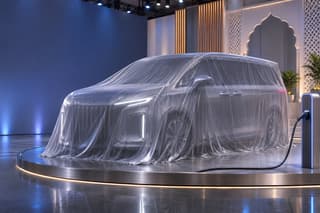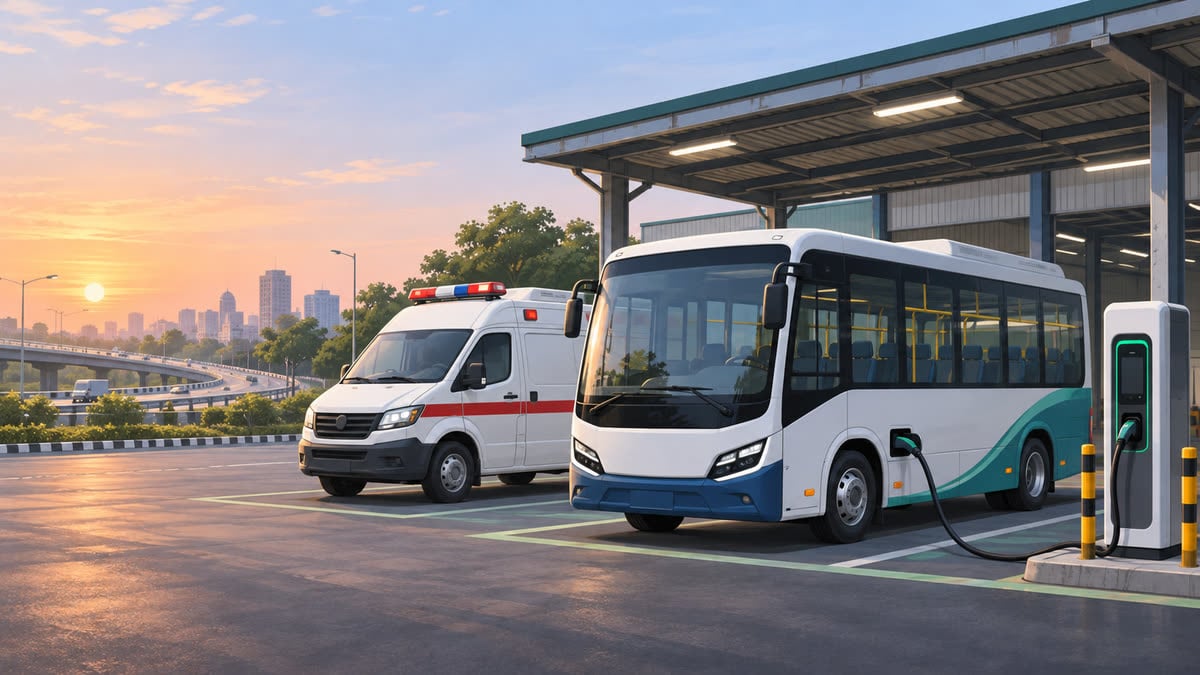
Force Motors plans to launch its electric Traveller platform in the first quarter of 2027, with an electric ambulance expected to be among the first offerings, according to a 7 Nov 2026 report based on comments from managing director Prasan Firodia. The company says the vehicles are developed and in final testing and homologation with the Automotive Research Association of India (ARAI); for fleet operators, the practical questions are still range, charging, uptime and total cost.
Key takeaways
- The Q1 2027 timing is a company plan, not a completed retail launch or delivery date.
- Traveller EVs are undergoing final testing and ARAI homologation; price, battery capacity, range and charging time have not been announced in the latest reports.
- Force Motors says its planned investment is about ₹3,000 crore across manufacturing capacity, engineering, electrification, hybrid powertrains and digital technology.
- The PM E-DRIVE scheme separately provides ₹500 crore to support up to 3,811 e-ambulances, but that allocation does not confirm a buyer discount for this vehicle.
What Force Motors has announced
Force Motors’ own Q2 and first-half FY2026–27 update says it will expand its electric-mobility offering with a Traveller EV range. The company also says its planned investment of approximately ₹3,000 crore will strengthen manufacturing, expand capacity and support a long-term ambition to take output to around 80,000 vehicles. Those are company plans and targets, not current production or sales figures.
In comments reported by The Economic Times and Moneycontrol on 7 Nov 2026, Firodia said the Traveller electric vehicles had already been developed and were in final testing and homologation with ARAI. He put the launch window in the January–March quarter of 2027. An electric ambulance is expected to be part of the initial set of products, while an electric Urbania remains under development.
The wording matters for buyers and operators. Force Motors has not announced a final price, battery size, certified range, charging time, seating layout or order-opening date for the upcoming Traveller EV range in those reports. Until homologation is complete, specifications and the commercial launch schedule can still change.
Why the plan matters to fleet operators
The Traveller platform is used across healthcare, school transport, employee movement, tourism and delivery applications. That gives the announcement a wider effect than a private-car launch: a workable electric minibus could change how institutions plan daily routes, depot charging and vehicle replacement cycles.
School and staff transport may be easier to electrify because vehicles generally return to a known base and follow repeatable routes. Tourism and intercity operations are harder to price because a vehicle may cover different distances each day and cannot assume that a compatible charger will be available at the next stop. The company itself has identified customer economics, range and charging infrastructure as hurdles for this segment.
Operators can use FuelPrice’s road-trip planner to map a regular route and identify the distance and time assumptions that a future EV quote would need to cover. A route that looks suitable on paper still needs a charging plan with a reserve for traffic, weather, passenger load and detours.
How PM E-DRIVE fits in
The Ministry of Heavy Industries’ PM E-DRIVE portal lists e-ambulances as an eligible category and, after the scheme’s 2026 enhancement, says up to 3,811 e-ambulances can be supported with a ₹500 crore allocation. The portal also says the scheme period has been extended to 31 Mar 2028. This is policy support for the category; it is not a promise that every electric ambulance will receive the same benefit or that a private buyer will receive cash at purchase.
Eligibility, vehicle certification, procurement route and operational guidelines determine how the support reaches manufacturers, institutions or public agencies. Fleet managers should therefore wait for the applicable scheme terms and the vehicle’s homologated specification before calculating the effective purchase cost.
What operators should check before comparing it
1. Route energy and charging access
Start with the actual daily kilometres, passenger load, waiting time and overnight parking location. FuelPrice’s state-wise EV charging directory can help identify the public charging network, but a high-utilisation fleet may still need a depot charger and a backup arrangement.
2. Total operating cost
Compare the EV’s eventual tariff, charging losses, maintenance schedule, battery warranty and downtime against the diesel vehicle it would replace. The fuel cost calculator can establish a diesel baseline for a route; electricity demand charges, charger installation and financing need to be added separately when the vehicle’s commercial quote is available.
3. Uptime and emergency use
An ambulance cannot be assessed only on energy cost. Charging turnaround, standby consumption, medical equipment load, service coverage and a replacement-vehicle plan matter just as much. For school and staff fleets, the equivalent checks are shift timing, charging windows and whether a missed charge would disrupt the next morning’s route.
What to watch next
The next useful milestones are completion of ARAI homologation, publication of the Traveller EV variants and specifications, the official price and order process, and clarity on how any PM E-DRIVE support applies. The Q1 2027 target is a forward-looking company plan, so it should not be treated as a guaranteed on-sale date until Force Motors confirms the commercial launch.
For now, the announcement signals that electric mobility is moving into India’s shared and specialised transport market, where route discipline and charging uptime will matter more than headline range alone.
Sources
- Force Motors Reports Strong Q2 & H1 FY2026–27 Performance, Builds Momentum with New Product Portfolio — Force Motors, 29 Oct 2026.
- Force Motors to launch electric Traveller platform and ambulance by 2027, investing ₹3000 cr in EV technology — The Economic Times, 7 Nov 2026.
- Force Motors to launch Traveller electric vehicles in January-March quarter of 2027 — Moneycontrol/PTI, 7 Nov 2026.
- About Us — PM E-DRIVE Scheme — Ministry of Heavy Industries, accessed 8 Nov 2026.