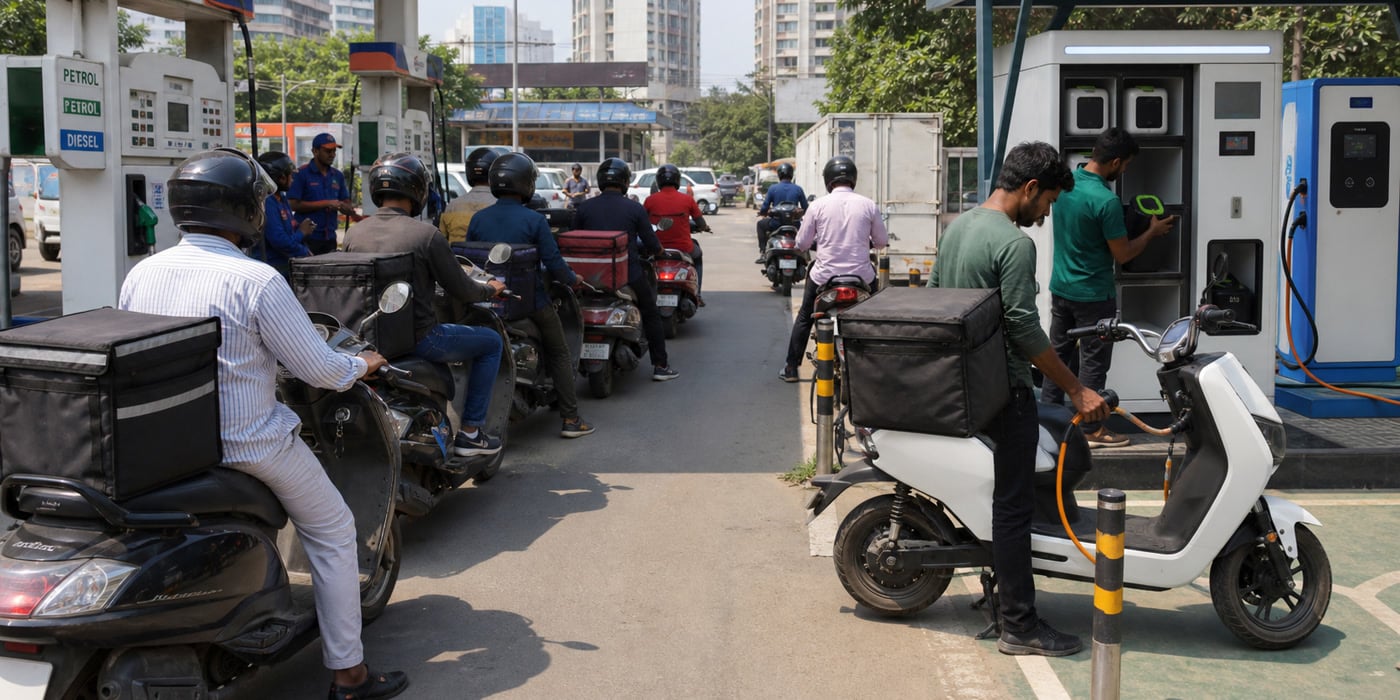
India's latest fuel-price cycle is hitting a workforce that lives by the kilometre: app-based delivery riders. Repeated petrol, diesel and CNG increases have raised daily running costs for food delivery, grocery delivery, quick commerce and app-based mobility workers, but the shift to electric vehicles is still too slow to protect most riders from the pump-price shock.
The core issue is simple. Large platforms have made 2030 electric-fleet commitments, yet Financial Express reported on June 1, 2026 that only about one in 10 delivery partners at major platforms currently use EVs. Most riders still depend on petrol-powered two-wheelers and pay fuel costs from their own earnings. That makes every price revision a direct cut to take-home income unless platform payouts or incentives change quickly.
Fuel hikes are forcing delivery platforms, riders and fleet operators to recheck the real economics of petrol scooters versus rented EVs.What Happened
Fuel-price increases resumed in May after a long retail price freeze. Business Standard reported that petrol and diesel prices rose by Rs 3 per litre on May 15, by 90 paise on May 19, and again by 87-91 paise on May 23. That took the cumulative rise close to Rs 5 per litre in under 10 days. CNG prices also moved up during the same period, adding pressure to other high-mileage users such as autos, cabs and small delivery fleets.
Delivery workers responded quickly because fuel is not an occasional expense for them. Financial Express reported that gig and platform workers called a five-hour nationwide shutdown on May 16 and demanded a minimum payment of Rs 20 per km. The demand reflected a wider complaint: fuel costs change immediately, but platform payout structures, per-order incentives and distance compensation do not always move in the same direction.
The EV Gap
The delivery industry has not ignored electrification. Eternal, Swiggy, Flipkart and Amazon have all announced or participated in EV fleet commitments. Swiggy's own corporate update says it is targeting a 100% electric delivery fleet by 2030, has expanded its EV partner ecosystem, and has scaled its EV delivery fleet sevenfold in a year. Moneycontrol reported that quick-commerce and delivery firms are also tracking state-level rules such as Haryana's move toward cleaner-energy vehicles for aggregators and delivery providers in NCR districts.
But the current base remains small compared with the size of India's app-based delivery ecosystem. Financial Express reported that Eternal's active EV-based delivery partners crossed 100,000 in March 2026, up from 52,000 a year earlier. That is strong growth, but the same report noted that against a combined delivery-partner base of more than 1 million across food delivery and quick commerce, EV penetration is still around 10%. Swiggy had 612,000 monthly transacting delivery partners in Q4 FY26, according to the same report, but did not disclose a current EV penetration rate.
Why It Matters for Riders and Customers
The pain point is not abstract. A petrol two-wheeler used for delivery may cost around Rs 3.5-5 per km to run, based on industry estimates cited by Financial Express, especially when older and heavily used vehicles are involved. EV rental models from fleet operators were estimated at Rs 2.5-2.75 per km including battery swaps, maintenance and insurance. That gap can matter over hundreds of kilometres a week.
However, the cheaper-per-kilometre EV option is not automatically easy for every rider. Many delivery partners work part-time or intermittently. Financial Express reported that Eternal disclosures show delivery partners remain active for an average of 46 days a year. A rider who works occasionally may not want to buy an EV outright, take on a long rental commitment, or depend on battery-swap infrastructure that may not be equally available across all delivery zones.
Cost Comparison
| Metric | Petrol Two-Wheeler | Rented / Shared EV | Why It Matters |
|---|---|---|---|
| Estimated running cost | Rs 3.5-5 per km | Rs 2.5-2.75 per km | A lower per-km cost can protect rider margins when fuel prices rise. |
| Upfront barrier | Existing vehicle often already owned | Rental, deposit, battery access or financing needed | Part-time riders may resist fixed costs. |
| Best use case | Longer, unpredictable food delivery routes | Dense quick-commerce clusters and short trips | EV economics improve when utilisation is high and routes are predictable. |
Why Quick Commerce Is Moving Faster
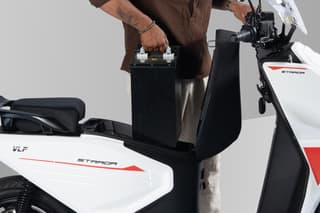
Quick commerce has a structural advantage. Trips are shorter, delivery radii are tighter, and riders often return to or pass near dark stores where charging or battery-swap planning can be easier. Food delivery is less predictable: orders may involve longer distances, restaurant waiting time, return trips without earnings, and different peak-hour patterns. That makes EV uptime, range planning and charging access more difficult for many riders.
This difference explains why platforms may show faster EV adoption in quick commerce than in traditional food delivery. It also explains why the same fuel-price increase does not affect all delivery categories equally. A rider doing short grocery runs from a dense urban hub may recover EV rental value quickly. A part-time food-delivery rider using an existing petrol scooter may still see petrol as the lower-risk option, even if it is costlier per kilometre.
What Changes Now
Fuel hikes raise the urgency for three decisions. First, platforms need clearer fuel-linked payout logic so riders are not forced to absorb every price shock. Second, EV fleet operators need rental plans that work for part-time and low-utilisation riders, not only full-time users. Third, city-level policy should align with charging, swapping and parking infrastructure before imposing aggressive clean-fleet mandates.
Swiggy's official update shows how wide the ecosystem already is: OEMs, fleet operators, charging companies, fleet-as-a-service providers and financiers are part of the delivery EV chain. The next stage is not simply adding more vehicles. It is making the rental tenure, daily cost, service support and charging access predictable enough for riders who currently rely on petrol scooters.
What to Watch Next
- Whether platforms introduce fuel-linked incentives or distance-rate revisions after repeated pump-price increases.
- Whether EV adoption data improves over the next one to two months as riders re-evaluate fuel costs.
- Whether Haryana's clean-fleet rules create a template for other NCR and metro markets.
- Whether fleet-as-a-service operators offer flexible plans for part-time riders.
- Whether quick-commerce EV penetration pulls food-delivery fleets along or remains a separate high-utilisation use case.
Reader Takeaway
The fuel-price shock has exposed a mismatch in India's delivery economy. Platforms are publicly moving toward electric fleets, but most delivery partners still depend on petrol two-wheelers and bear fuel costs themselves. EVs can cut per-kilometre running costs, but only if financing, rentals, charging access and payout structures match how riders actually work. Until that happens, every petrol hike will keep landing first on the rider.
Sources Checked
- Financial Express report on fuel hikes and slow EV shift in delivery fleets
- Business Standard report on petrol and diesel price hikes since May 15
- Financial Express report on gig worker shutdown and Rs 20 per km demand
- Swiggy official update on 2030 EV delivery-fleet target and EV ecosystem
- Moneycontrol report on Haryana clean-fleet rules and delivery platform response