Union minister Nitin Gadkari has asked officials to avoid speeding challans up to 20% above an expressway’s applicable limit, according to reports from NDTV and PTI carried by The Economic Times. The remarks could affect how camera enforcement is handled, but they do not by themselves change posted speed signs or the law.
Key takeaways
- Gadkari made the remarks at the Confederation of Indian Industry’s National Conference on Highways on 27 Oct 2026; NDTV and The Economic Times reported them on 29 Oct 2026.
- He referred to allowing speeds up to 120 km/h on expressways and not issuing a challan until a vehicle is more than 20% above the applicable limit.
- The reported proposal is an enforcement direction or request, not a new nationwide speed-limit notification with an effective date.
- Drivers should continue to follow the posted limit, temporary restrictions and route-specific instructions on the expressway they are using.
What Gadkari said at the highways conference
The CII’s event record confirms that Gadkari addressed its “Highways of India’s Future: Smart, Safe and Sustainable” conference in New Delhi on 27 Oct 2026. NDTV reported that he said authorities had been instructed not to send speeding notices for travel up to 120 km/h on expressways. He also said that, even above 120 km/h, motorists should be allowed a margin of up to 20% before a challan is issued.
The Economic Times, carrying a PTI report on 29 Oct 2026, described the proposal in similar terms: challans should be issued when the applicable limit is exceeded by more than 20%. On a stretch where the applicable limit is 120 km/h, that interpretation would produce a mathematical threshold of about 144 km/h. That figure explains the reported margin; it is not a new legal speed limit for every expressway.
This is not yet a blanket permission to speed
The most important distinction for drivers is between an enforcement instruction and a formal change to the rules. The reports describe Gadkari’s remarks and directions to officials, but do not cite a new MoRTH notification, route-wide sign change or effective date for a 20% tolerance.
The official PIB explanation of the existing framework, published on 21 Dec 2023, says the Ministry of Road Transport and Highways fixed maximum speeds for different vehicle classes and roads through notification S.O. 1522(E), dated 6 Apr 2018. The same release says implementation of the Motor Vehicles Act and related rules is handled by the relevant state governments and Union Territories. That division of responsibility matters because a camera system, state enforcement unit or concessionaire may still apply the limit shown for a particular stretch until a formal instruction is issued and implemented.
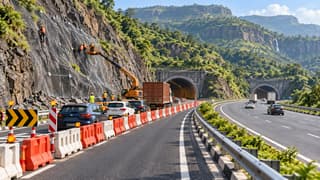
In practical terms, a driver entering an expressway should treat the sign at that location as the controlling instruction. Limits can be lower around interchanges, work zones, tunnels, curves, weather-affected sections or approaches where the road authority has imposed a temporary restriction. A minister’s conference remarks cannot be used as a substitute for checking those signs.
Why the proposal matters to private drivers and fleets
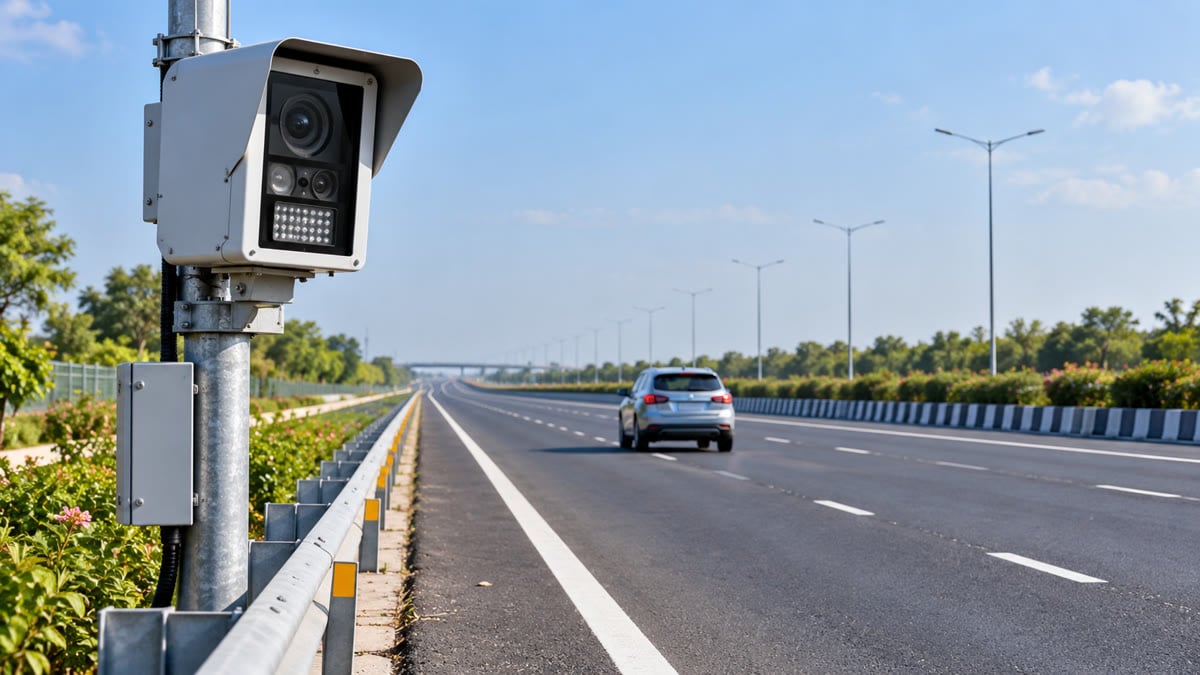
Camera-based enforcement can create a real difference between the speed a driver believes is permitted and the speed recorded by the system. If the proposed margin is adopted consistently, some borderline notices could reduce; if it is applied differently across states or corridors, drivers could instead face uncertainty about which threshold is being used. The reports also connect the discussion with an AI-based Advanced Traffic Management System intended to detect lane-discipline violations and improve highway enforcement.
For fleet operators, the question is not only the speed threshold. Dispatch teams would also need to know which corridors have adopted a revised enforcement procedure, whether the vehicle class is covered and how a disputed notice can be checked. A faster trip is not automatically a cheaper trip: higher speeds can change fuel use, tyre stress and braking demands. Before estimating a journey, use the fuel cost calculator with the vehicle’s real-world mileage rather than assuming that a wider challan margin reduces running cost.
What drivers should check now
- Read the posted speed limit at the expressway entry and again after major interchanges or temporary diversions.
- Do not change cruise-control settings solely because of the reported 20% proposal; wait for an applicable official instruction and follow the sign on the road.
- Keep the route, time and location available if an electronic notice later appears to conflict with the sign or a temporary advisory.
- For a long journey, compare the route and expected stops in the road-trip planner, then check the corridor’s estimated charges through the toll-charge calculator.
What to watch next
The next meaningful development would be a written MoRTH or state/UT order that defines the roads, vehicle classes, measurement method and start date for any revised enforcement margin. Until that happens, the safe editorial reading of Gadkari’s remarks is that they signal a possible change in how speeding is processed, not that every expressway driver has received permission to exceed the displayed limit.
That distinction is especially relevant where road safety, lane discipline and weather conditions are changing faster than a general policy statement can capture. Drivers can follow the discussion without treating a reported proposal as an exemption from the rules in force on their route.
Sources
- NDTV Auto, “Nitin Gadkari Says ‘Don't Send Traffic Fines Up To 120 Kmph’ On Highways” — 29 Oct 2026
- The Economic Times/PTI, “Nitin Gadkari says no challan for speeding up to 20% over the limit” — 29 Oct 2026
- Confederation of Indian Industry, “Highways of India’s Future: Smart, Safe and Sustainable” event record — 27 Oct 2026
- Press Information Bureau / Ministry of Road Transport and Highways, “Provisions of penalty for not driving within Speed Limit on Highways” — 21 Dec 2023
- Ministry of Road Transport and Highways, “Notification S.O. 1522(E) regarding revised speed limits” — 6 Apr 2018