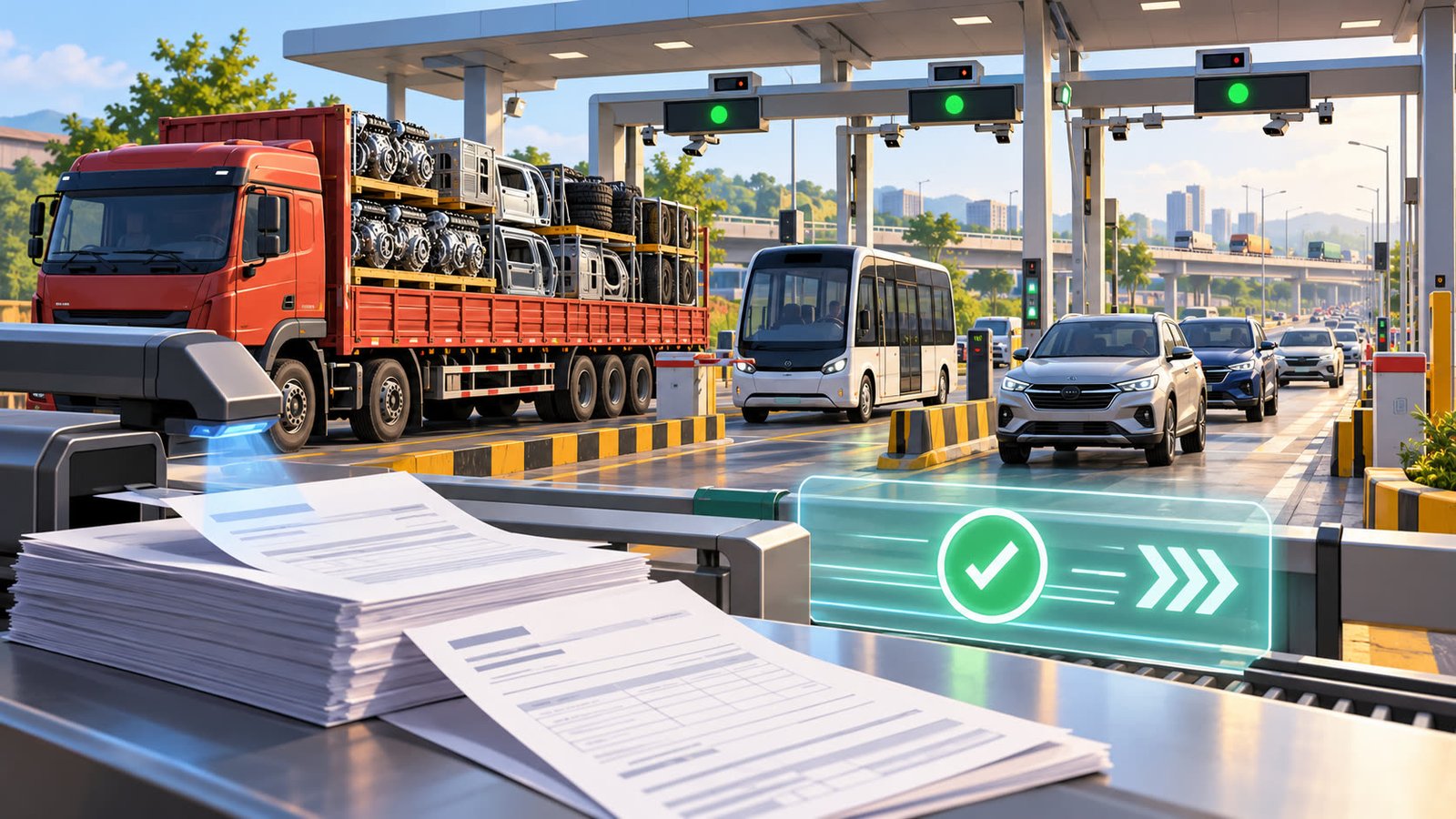
India's 57th GST Council meeting on 8 Oct 2026 recommended a process overhaul that could release refunds faster, widen input-tax credit and reduce non-targeted checks on goods moving between states. For vehicle makers, component suppliers, dealers and fleet operators, that could ease working-capital and transit friction, but it does not change vehicle GST rates today because the recommendations still need legal notifications or amendments.
Key takeaways
- Up to 90% of eligible zero-rated and inverted-duty refund claims could be sanctioned provisionally by the system after risk evaluation; this is a recommendation, not an active entitlement yet.
- Input-tax credit on input services in inverted-duty cases is proposed from 1 Nov 2026. Capital-goods credit is proposed from 1 Apr 2027 and would be spread over 60 months.
- Goods vehicles could be intercepted only on specific intelligence with authorisation from an officer not below the rank of Joint Commissioner; missing e-way bills or origin and destination documents remain exceptions.
- Eligible EV passenger transport and motor-vehicle rental services could have an optional 5% GST route with restricted input tax credit when battery charging is included in the consideration.
- No vehicle GST rate cut or hike was announced in the 57th meeting.
What the GST Council recommended
The Ministry of Finance said the Council met on 8 Oct 2026 and recommended reforms covering registration, returns, refunds, adjudication and the movement of goods. This is a policy recommendation, not a notification. The ministry said the measures will take legal effect only through the relevant circulars, notifications or amendments to law.
That distinction matters to vehicle users. A Council recommendation does not by itself change the GST shown on a new-car invoice, a fleet lease, a repair bill, a FASTag recovery or a road-trip expense. The practical effect will depend on the text and effective dates of the follow-on legal instruments.
Refunds and credit: possible cash-flow relief for auto suppliers
The Council recommended a two-phase, system-based refund process. In the first phase, a full refund claim for excess balance in an electronic cash ledger could be sanctioned automatically. The acknowledgement or deficiency-memo window is proposed to fall from 15 days to 10 days. For zero-rated supplies and inverted-duty cases, 90% of the amount claimed could be sanctioned provisionally after automated risk identification and evaluation, without officer intervention.
The recommendation also covers accumulated input-tax credit. The Ministry of Finance release says credit on input services in inverted-duty cases could qualify for refund for input services availed on or after 1 Nov 2026. Refund of capital-goods credit in zero-rated and inverted-duty cases is proposed for credit availed on or after 1 Apr 2027, with the benefit spread over 60 months.
For auto-component makers, battery suppliers, tyre businesses and other vendors with tax credits locked in the supply chain, a more predictable refund cycle could improve working-capital visibility if implemented. That is an industry cash-flow effect, not a promise of a lower showroom price. Buyers comparing ownership cost can use the fuel-cost calculator to separate running-cost assumptions from any future tax change.
Fewer transit checks: what truck operators need to know
The Council recommended tighter limits on interception under the GST e-way bill framework. A conveyance carrying goods could be stopped only on specific intelligence and with authorisation from an officer not below the rank of Joint Commissioner. The proposal also says that inspection and detention action would generally be handled where the supplier or recipient is located or registered, rather than by a transit state.
The exception is important: where no e-way bill has been generated, or the vehicle has no document showing the origin or destination of the goods, inspection, detention or seizure could still be taken irrespective of jurisdiction. In other words, the proposal is aimed at reducing random checks for documented shipments; it does not remove invoice, e-way bill or vehicle-document requirements.
If the recommendation becomes law, fewer unnecessary stops could make vehicle and component movements more predictable, although the announcement does not guarantee a particular travel-time saving. Fleet planners can still map fuel, toll and timing assumptions with a road-trip planner while waiting for the operational rules.
EV transport and vehicle-lease charges
For passenger transport and motor-vehicle rental services operated with an electric vehicle, the Council recommended an option to pay GST at 5% with restricted input tax credit when the fare includes battery charging. This is a proposed tax route for eligible services; it is not a blanket 5% GST cut on private EV purchases, home charging or every taxi invoice.
The recommendations also seek to clarify how registration charges, road tax, insurance and FASTag charges paid by a lessor are treated when recovered from a lessee. That could make lease and subscription invoices easier to read after the clarification is notified, but it does not automatically waive any of those charges. EV operators can compare route availability through the EV charging directory while checking the tax treatment in their contract and invoice.
What changes now for drivers and buyers?
For a private car, bike or EV buyer, the immediate answer is limited: the 57th meeting did not announce a vehicle GST rate change. Economic Times reported that rates were left unchanged, while Autocar Professional said the industry impact would be concentrated in refunds, input-tax credit, compliance and goods movement rather than a new showroom tax slab.
That means current dealer quotations, fuel prices and notified toll charges remain the reference point until a circular, notification or law amendment says otherwise. The same applies to lease invoices and operator fares: a possible future treatment should not be treated as active until the implementation text is published. For a trip budget, the toll-charge calculator remains useful for the currently applicable toll amount, while any future GST effect can be checked separately.
What to watch next
- Follow-on circulars and amendments that specify when the refund, input-tax credit and e-way bill recommendations start.
- Portal rules for risk-based provisional refunds and the move from the first phase to automated full refunds.
- Clarifications on EV transport services and the treatment of FASTag, insurance and road-tax recoveries in vehicle leases.
- Whether auto makers, suppliers, dealers and fleet operators pass through any verified cost or cash-flow effect, rather than assuming a saving in advance.
Sources
- Ministry of Finance, Recommendations of the 57th Meeting of the GST Council, 8 Oct 2026
- Autocar Professional, GST Council Recommends Faster Refunds and Fewer Transit Checks for Auto Industry, 9 Oct 2026
- The Economic Times, No rate cuts, but big GST relief: 8 reforms on refunds, ITC, registration and enforcement, 8 Oct 2026
This article is for general information only and is not financial, insurance or legal advice.