Himachal Pradesh’s HRTC board has set out a plan for 1,000 electric buses whose prototype target is more than 350 km per charge, alongside 250 new diesel buses. The parallel replacement programme matters because hill routes need dependable capacity while the corporation builds depots and charging facilities for a larger electric fleet.
Key takeaways
- Electric fleet: HRTC plans 1,000 new electric buses, with prototypes being developed for more than 350 km of range per charge.
- Diesel bridge: Officials have been asked to speed up procurement of 250 new diesel buses while the electric fleet is prepared.
- Older buses: The board approved a phased withdrawal of 366 buses, including 12-metre buses supplied under the Jawaharlal Nehru National Urban Renewal Mission.
- Charging network: A new e-bus depot is planned for Kangra; depots at Nadaun, Haroli, Theog and Nahan had already been approved, with Haroli operational.
The details came from the HRTC board meeting held on 25 Sep 2026 and were reported separately by PTI through ETAuto and by Amar Ujala. The plan is a procurement and infrastructure decision, not an announcement that all 1,000 electric buses are already running.
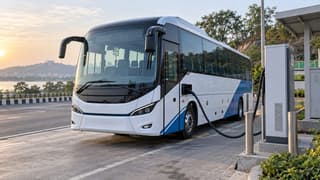
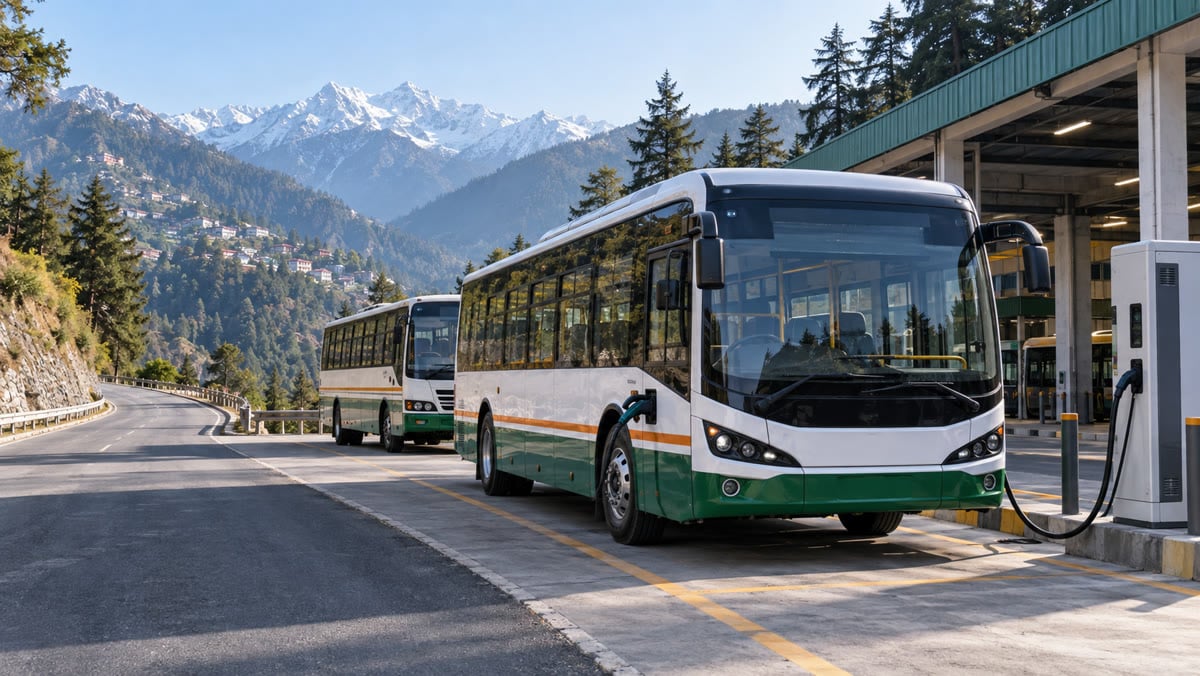
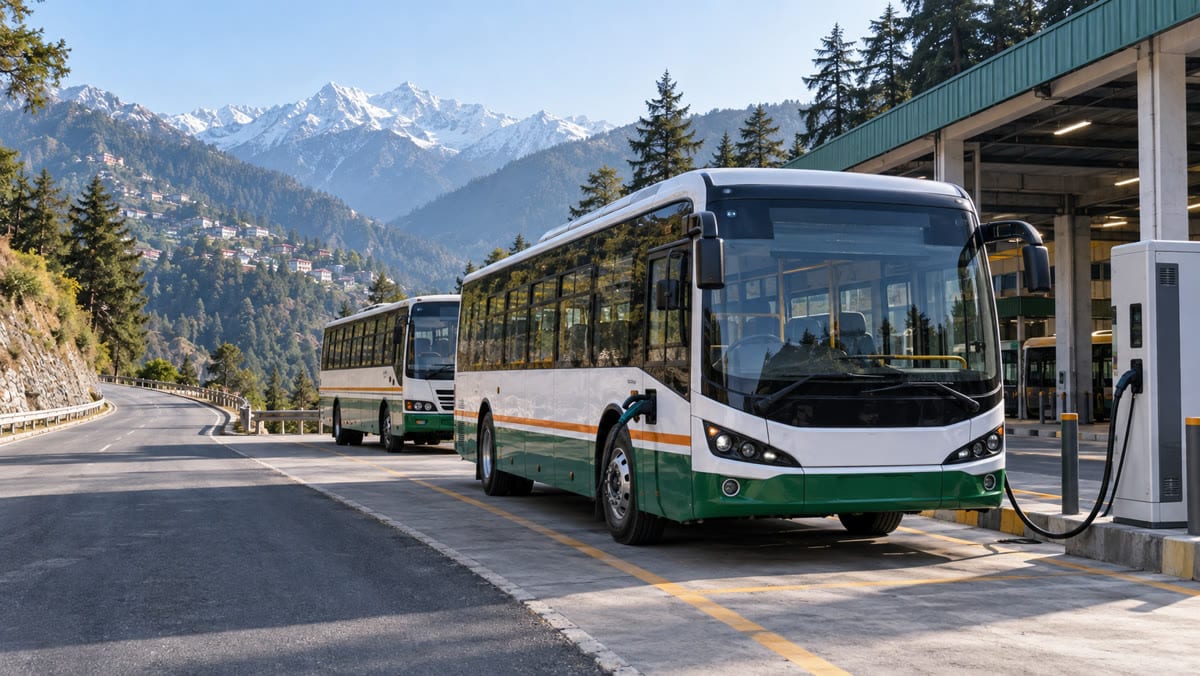 Credit: FuelPrice editorial illustration, generated for this article; not an official HRTC photograph.
What the HRTC board decided
The 164th HRTC board meeting and the 73rd meeting of the Himachal Pradesh Urban Transport and Bus Stand Management and Development Authority were chaired by Deputy Chief Minister Mukesh Agnihotri on Friday, 25 Sep 2026. PTI’s report published on 26 Sep and Amar Ujala’s report published on 25 Sep both said the corporation would move towards 1,000 electric buses and accelerate the purchase of 250 diesel buses.
The electric-bus prototype is to be finalised soon, with a proposed battery range of more than 350 km. That is a target for the planned specification, not a confirmed delivery schedule or a guaranteed real-world distance on every hill route. The practical result will depend on the final bus, passenger load, gradients, weather, heating or cooling use and charging conditions.
The diesel purchase is being handled in parallel. The deputy chief minister directed officials to move the process forward and to convene the Vehicle Purchase Committee within 15 days of the meeting. The board also approved taking 366 HRTC buses off the road in phases. The buses include 12-metre vehicles operating under the JNNURM programme, so the timing of replacement will matter for routes that depend on older high-capacity buses.
Charging comes before range
The charging plan is an important part of the announcement. The board approved a new electric-bus depot in Kangra. Earlier approvals covered Nadaun, Haroli, Theog and Nahan, and the Haroli e-depot had already started operations, according to the two 25 Sep reports.
For a hill transport corporation, a large bus order by itself does not create a dependable service. Depot space, grid connection, charger turnaround, maintenance bays and route scheduling determine whether a bus can complete its daily duty. The proposed 350-km range may support longer intercity duties, but it should not be treated as a promise that every Himachal route will run without an intermediate charging plan. Operators and travellers tracking where the wider network is developing can use FuelPrice’s state-wise EV charging directory as a planning reference.
What passengers should expect now
No launch date, model list or route-wise allocation was announced for the 1,000 electric buses. For passengers, the immediate change is therefore an expectation of fleet renewal rather than a new timetable. HRTC’s board decision says the corporation will replace older buses in phases, and the stated intention is to protect service while new vehicles and depots are prepared.
The deputy chief minister also said no HRTC route would be closed without approval from the managing director, meaning regional managers would not be able to discontinue routes independently. That is a process safeguard, not a guarantee about frequency, punctuality or future route extensions. Travellers should rely on published HRTC schedules once the procurement and allocation details are released. For a road journey that includes bus and car legs, FuelPrice’s road-trip planner can help frame the distance and stop plan.
For long hill journeys, the 350-km target should be read as a specification to verify, not as a fixed operating result. Steep climbs, stop-start traffic, a full passenger load and cabin cooling can change energy use. The key follow-up will be the final prototype data and route trials, including how much reserve the buses retain at the end of a demanding duty cycle.
Why the diesel buses are part of the same story
The 250 diesel buses show that the transition is being staged. HRTC needs replacement capacity while older buses are retired and e-depots are commissioned; an electric-only order without charging readiness could leave gaps in service. The diesel addition also gives the corporation a way to keep less-prepared or longer routes running while electric buses are assigned where their duty cycles fit.
That does not make the diesel plan a reversal of the EV push. It is a parallel fleet decision: cleaner buses for routes and depots that can support them, and conventional buses to maintain capacity during the build-out. Fleet operators comparing the fuel side of different route assumptions can use the fuel-cost calculator with clearly labelled mileage and fuel-price inputs; the result will vary by vehicle, route and operating pattern.
A longer modernisation push
The latest announcement extends a fleet-modernisation programme already described by the state. In an official press note dated 6 Aug 2025, the deputy chief minister’s office said HRTC had procurement under way for 327 electric buses and 250 diesel buses, planned another 500 electric buses, and had approved about ₹110 crore for electric charging stations. That note also said HRTC operated approximately 3,200 buses at the time.
Those were figures and plans reported in August 2025, not a current fleet count. They are useful background because they show that the 25 Sep 2026 decision is a larger follow-on to an existing replacement effort, rather than the first time Himachal has set out an electric-bus programme. The current plan will be judged by what moves from board decision to tender, prototype, depot and scheduled service.
What to watch next
- The prototype and tender documents: bus length, seating, battery size, warranty, charging time and maintenance responsibility.
- The route-wise allocation and a confirmed timetable for the first electric buses.
- Construction and grid-readiness at the new Kangra depot, along with the operating status of the other approved e-depots.
- The retirement schedule for the 366 older buses and whether replacement buses arrive before routes lose capacity.
The reader takeaway is straightforward: Himachal has reported a substantial HRTC fleet plan, but the useful milestone is implementation. Until the state publishes vehicle specifications, depot timelines and route allocations, passengers should treat the 1,000-bus figure as a confirmed policy direction and the 350-km figure as a proposed target—not as an immediate change to every hill journey.
Sources
- ETAuto/PTI — Himachal pushes bus fleet upgrade with 1,000 e-bus plan, 250 diesel buys — 26 Sep 2026.
- Amar Ujala — HRTC BoD: 1,000 new electric and 250 diesel buses to be added to the fleet — 25 Sep 2026.
- Office of the Deputy Chief Minister, Himachal Pradesh — Government to strengthen HRTC with more buses and better services: Mukesh Agnihotri — 6 Aug 2025.