Hyundai Motor India has introduced a usage-based motor-insurance programme for eligible cars connected to its Bluelink platform. The company says participating insurers may offer safe drivers savings of up to 15% on the own-damage portion of the premium at renewal, but that is not a blanket reduction on the full policy price.
Key takeaways
- The programme uses the car’s Bluelink data from the preceding three months to create a driving score.
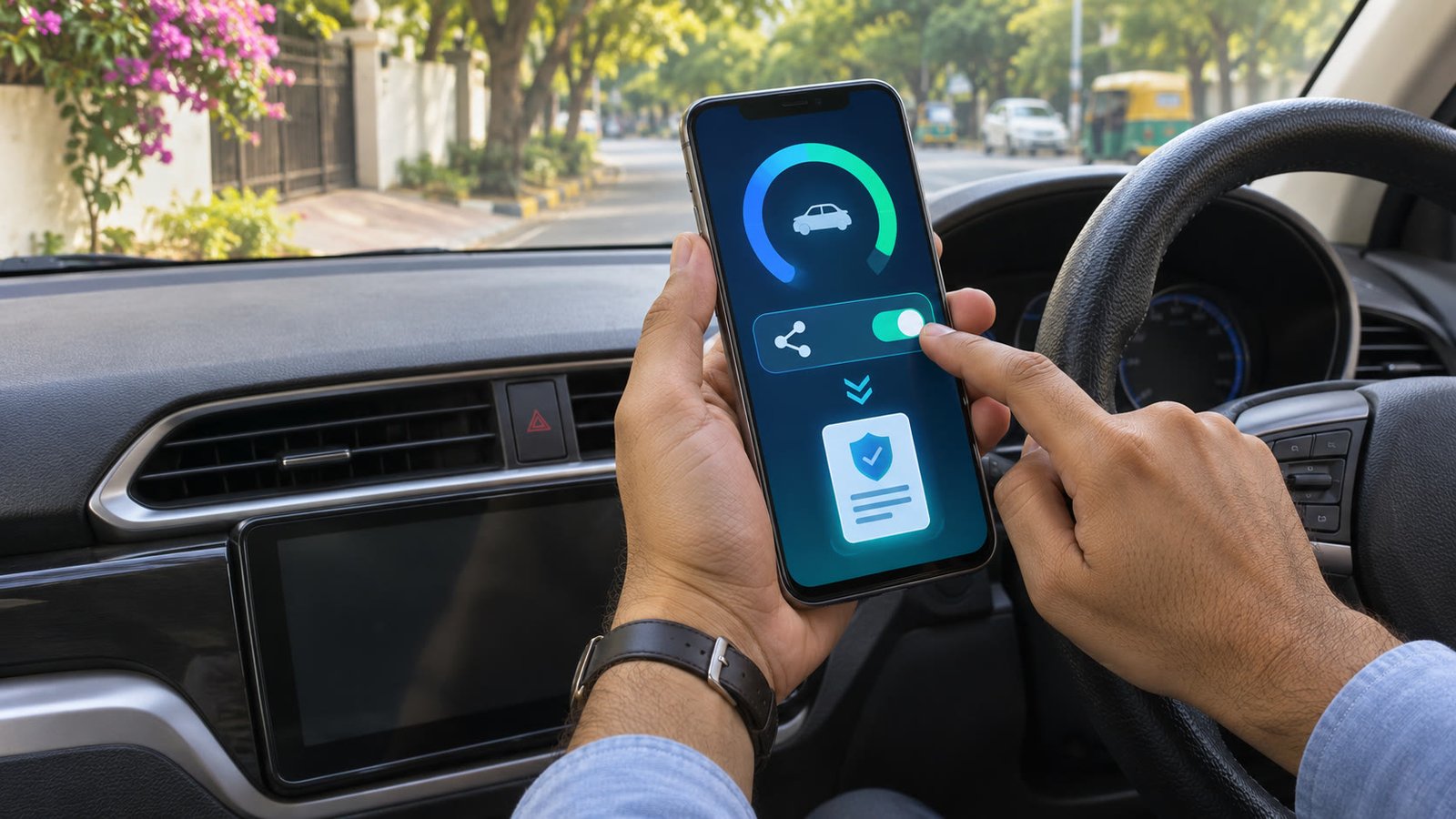
- Customers with renewals due within the next 90 days can view the score in the Bluelink app and choose whether to share it.
- A reported score of 70 or above may make an eligible customer consider benefits, subject to the participating insurer’s underwriting rules.
- The announced maximum is up to 15% of the own-damage component, not necessarily 15% of the complete motor-insurance premium.
- The initial participating insurers reported by the company and media are Cholamandalam MS General Insurance, Go Digit General Insurance and ICICI Lombard General Insurance.
What Hyundai has launched
The new programme links connected-car data with motor-insurance renewal. Instead of using an additional tracking device, the system assesses driving behaviour recorded through the Bluelink platform. The reported inputs include rapid acceleration, rapid deceleration and braking, speed management and engine-idling behaviour.
Hyundai India Insurance Broking will act as the intermediary between Hyundai Motor India and participating insurers. Customers can see their score through the Bluelink app and can choose to share it with an insurer, subject to consent. That consent step is important: the programme is presented as an option for exploring renewal benefits, not as an automatic change to every Hyundai owner’s policy.
The announced eligibility window is also specific. Customers whose insurance renewal is due within the next 90 days can check the score and explore whether they qualify. The score is based on the preceding three months of driving, so a single trip or one isolated driving event is not described as the complete basis for the result.
What the 15% figure actually means
The headline number needs to be read carefully because motor insurance has separate components. The reported potential saving applies to the own-damage part of the premium, which covers loss of or damage to the insured vehicle under the terms of that policy. It does not mean that the entire renewal amount will automatically fall by 15%.
The final benefit remains subject to the underwriting rules, terms and conditions of the participating insurer. The insurer still determines the applicable premium and cover. The programme therefore adds another input to the renewal discussion; it does not replace the policy schedule, exclusions, deductibles, insured declared value or add-on terms that determine what a customer is buying.
For an owner comparing renewal quotes, the useful comparison is the complete bill and the cover behind it: the own-damage premium, third-party portion, deductibles, IDV, add-ons, exclusions and claims conditions. A lower own-damage line can look attractive but may not be comparable if the cover, deductible or IDV changes at the same time. Fuel and insurance are separate running costs, so the fuel-cost calculator can be used to estimate trip fuel spend alongside the insurance renewal figure.
Who may benefit, and who may not
The first phase is aimed at eligible owners of Bluelink-connected Hyundai vehicles whose policy renewal falls inside the reported 90-day window. The programme is not described as a market-wide discount for every car owner, and the coverage of a particular vehicle depends on its connected-car capability and the participating insurer’s terms.
Customers whose score is below the reported 70-point threshold may receive driving tips in the app and could explore eligibility at a later renewal, according to the reports. That is a future possibility rather than a promised discount. The programme also does not say that a lower score will automatically increase a customer’s premium; the available reporting describes the score as an input for potential benefits, subject to insurer underwriting.
The initial partner list matters because the same score may not produce the same outcome across insurers. The first phase includes Cholamandalam MS General Insurance, Go Digit General Insurance and ICICI Lombard General Insurance. Their individual pricing, policy wording and eligibility checks remain relevant to the quote a customer receives.
What to check before sharing a score
The programme makes data sharing part of the renewal choice. A customer can review the score in the Bluelink app and decide whether to share it with a participating insurer. Before accepting a revised quote, the relevant checks are:
- Confirm that the vehicle has an eligible Bluelink connection and that the renewal falls inside the stated window.
- Read how the score was calculated, including the driving period and the behaviours considered.
- Compare the own-damage premium with the existing policy on a like-for-like basis.
- Check the IDV, deductible, exclusions, add-ons and claims conditions alongside any quoted benefit.
- Read the consent and data-use terms before sharing the score with an insurer or intermediary.
The wider renewal decision still involves more than one number. FuelPrice’s guide to reading claim settlement ratios before renewal provides background for comparing insurer information, while the new Bluelink programme adds a driving-behaviour signal to that broader review.
Why this matters for connected-car owners
Hyundai’s announcement turns a connected-car feature into a possible ownership-cost input. The company said in August that more than 0.8 million connected cars were already on Indian roads and that it was targeting one million cumulative connected-car sales by 2027. The new insurance programme gives that installed base a potential renewal use beyond convenience, vehicle status and safety features.
For careful drivers, the appeal is the possibility of a benefit based on observed driving rather than a generic offer. For insurers, vehicle-generated data may provide another way to assess behaviour. For customers, the trade-off is clearer: any potential saving has to be considered alongside consent, data use, policy terms and the fact that the final price remains under insurer underwriting.
The development also follows other recent changes in motor-insurance choices. FuelPrice has separately reported that IRDAI allows occupant cover to be added without cancelling an existing third-party policy. Taken together, these developments point to a renewal process in which customers may see more separately described covers, options and data-linked pricing inputs rather than one undifferentiated premium.
What to watch next
The next useful evidence will be the actual renewal offers generated under the programme: how insurers translate a score into an own-damage quote, which vehicle variants are included, how long consent remains valid and what information customers can access about their data. The current announcement establishes the programme and its reported maximum, but it does not guarantee a particular saving for every eligible owner.
The practical takeaway is simple: treat the 15% figure as a maximum potential benefit on one part of the premium, not as a promised reduction in the total renewal bill. A connected-car score may help explain an insurer’s offer, but the policy’s complete coverage, price and data-sharing terms still need to be read together.
Sources
- Hyundai to offer up to 15% savings on car insurance for safe drivers — The Economic Times, 05 Nov 2026.
- Hyundai Introduces Usage-Based Insurance For Bluelink Customers — Autocar Professional, 05 Nov 2026.
- Hyundai Motor India Introduces Usage-Based Insurance Program For Connected Car Customers — Motoring Trends, 05 Nov 2026.
- Hyundai Motor India Eyes 1 million Connected Car Sales by 2027 — Hyundai Motor India, 10 Aug 2026.
- Connected Car Technology - Hyundai Bluelink — Hyundai India, accessed 05 Nov 2026.
This article is for general information only and is not financial, insurance or legal advice.