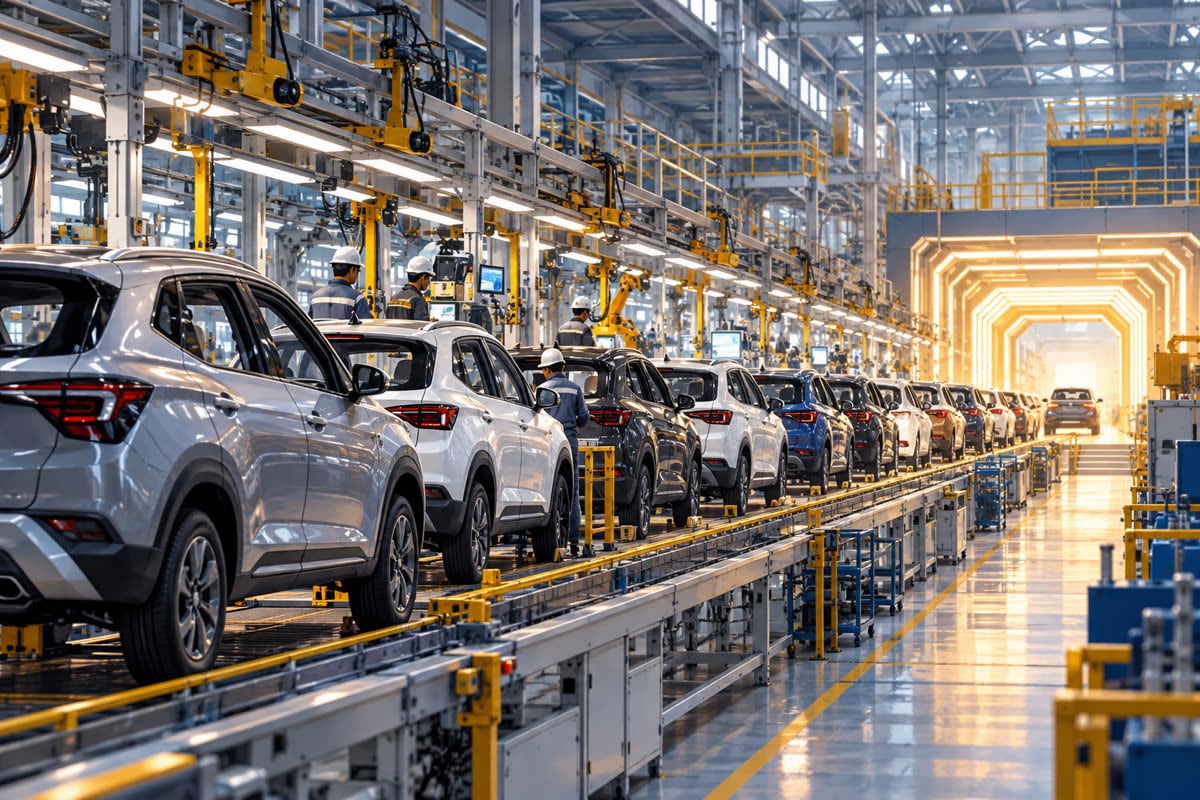
Hyundai Motor India is expected to cross 1 crore (10 million) cumulative vehicle sales in India during 2026, after reported sales of 98,84,960 through the third quarter. The milestone matters to Indian buyers because it reflects the scale of Hyundai’s model, service and manufacturing network, but it does not by itself establish that any car is the right fit or value for a particular buyer.
Yonhap News Agency and Seoul Economic Daily, in reports published on 11 Oct 2026 citing Society of Indian Automobile Manufacturers (SIAM) data, said Hyundai had reached 98,84,960 cumulative India sales through Q3 and was expected to pass 1 crore by the end of the year. The wording is important: the 1 crore mark is still an expected milestone, not a completed crossing confirmed in an official company announcement.
Key takeaways
- Reported cumulative sales reached 98,84,960 vehicles through Q3 2026, leaving a reported gap of 1,15,040 vehicles to the 1 crore mark.
- Hyundai’s SUV sales reached 3,98,937 vehicles in 2025, or nearly 70% of its India total, according to the 11 Oct reports.
- Hyundai’s official 6 May 2026 milestone release said its India sales had crossed 9.6 million and that it had 1,675 service touchpoints across 1,025 cities at that time.
- The company’s official September sales release reported 77,916 total vehicles sold, including exports, its highest-ever monthly total.
- For a buyer, the useful follow-up is to check local service capacity, waiting time, powertrain running cost and the ownership terms of the exact variant.
What the 1 crore figure means
Cumulative sales are a long-term volume measure, not a current market-share or quality score. They include vehicles sold over Hyundai’s India journey since the Santro began local production in 1998, so the number says more about the company’s installed customer base and market presence than about one model or one month’s demand.
The two 11 Oct reports agree on the broad milestone and the Q3 position, while presenting the figure with slightly different rounding. Seoul Economic Daily reported 98,84,960 vehicles; Yonhap described the total as 9.88 million. The unrounded figure is useful for showing the reported gap, but the result remains attributed to SIAM data rather than presented as Hyundai’s own confirmation of a completed 1 crore crossing.
The numbers behind the milestone
| Measure | Reported figure | Date and context |
|---|---|---|
| Cumulative India sales | 98,84,960 vehicles | Through Q3 2026; SIAM data cited by Seoul Economic Daily and Yonhap on 11 Oct 2026 |
| SUV sales in 2025 | 3,98,937 vehicles; nearly 70% | 11 Oct 2026 reports citing SIAM data |
| September 2026 total sales | 77,916 vehicles | Hyundai release dated 1 Oct 2026; domestic sales 57,166 and exports 20,750 |
These figures use different bases. The September figure includes domestic sales and exports, while the cumulative milestone is India sales. They should not be added together. Hyundai’s 1 Oct release also described the September total as 10.8% higher year on year and said it surpassed the previous July 2026 record.
Why SUVs are central to the next phase
Yonhap and Seoul Economic Daily both reported that Hyundai sold 3,98,937 SUVs in India in 2025, roughly 70% of its total sales. That mix helps explain why the company’s India roadmap continues to emphasise SUVs. Hyundai’s 2026 CEO Investor Day roadmap set an aim to raise the SUV share of India sales to 80% by 2030.
That direction matters for buyers because a stronger SUV pipeline can mean more choice in compact, mid-size and electric SUV formats. It can also keep the company focused on ground clearance, cabin space, features and road-use patterns that are common in Indian cities and on mixed-quality highways. It is still a product strategy, not a promise that every upcoming model will suit every budget, route or fuel preference.
What buyers and owners can check now
1. Treat network size as a starting point
Hyundai’s official 6 May 2026 release reported 1,675 service touchpoints across 1,025 cities and more than 50,000 trained service professionals. That is a company-reported network count, not a guarantee of identical service capacity everywhere. Before booking or renewing an ownership plan, check the nearest workshop, appointment lead time, roadside-assistance terms, parts availability and the scheduled maintenance cost for the exact variant.
2. Compare running cost by powertrain
A large sales milestone does not settle the petrol-versus-CNG-versus-EV question. A petrol or CNG buyer can use the fuel cost calculator with their own monthly kilometres and local price, while an EV buyer can check the state-wise EV charging directory before treating claimed range as practical range.
3. Check the complete ownership bill
Variant price is only one part of the decision. Compare insurance, scheduled servicing, tyres, warranty coverage, charging or fuel access and expected usage over the period you intend to keep the vehicle. For a longer trip or family-use comparison, the road-trip planner can help test how the vehicle’s energy cost and route pattern fit actual travel rather than a showroom estimate.
What to watch next
The next hard checkpoint is an official confirmation of whether and when Hyundai crosses 1 crore cumulative India sales. Buyers can also watch how the company’s new-model pipeline, SUV mix and planned production capacity translate into waiting periods and variant availability after the festive season. Hyundai’s official 6 May release said combined Chennai and Talegaon capacity was 9.94 lakh vehicles annually and was planned to rise to 10.74 lakh by 2028; additional capacity can support supply, but it does not guarantee stock at every dealer.
The practical takeaway is simple: the reported milestone is evidence of scale and market reach. Use that as one input when checking service access and long-term support, then compare the exact vehicle’s running cost, safety, equipment, price and ownership terms for your own route.
Sources
- Yonhap News Agency — Hyundai Motor’s cumulative India sales set to top 10 mln vehicles this year — 11 Oct 2026
- Seoul Economic Daily — Hyundai Nears 10 Million Cumulative Sales in India on SUV Push — 11 Oct 2026
- Hyundai Motor India — Highest-ever total monthly sales of 77,916 units in September 2026 — 1 Oct 2026
- Hyundai Motor India — Hyundai Motor celebrates 30 glorious years in India — 6 May 2026
- Hyundai Motor Company — 2026 CEO Investor Day growth roadmap — 26 Aug 2026
- Society of Indian Automobile Manufacturers — SIAM monthly motor vehicle data and statistical services — accessed 11 Oct 2026