Hyundai Motor India and Mahindra & Mahindra reported higher September 2026 vehicle sales on 1 Oct 2026, as manufacturers and dealers prepared for India’s festive buying season. Hyundai reported 77,916 total units, while Mahindra reported 1,14,874 vehicles including exports; the numbers matter for buyers because they indicate manufacturer momentum and potential availability, but they are not a direct count of every car registered with a customer.
The two releases show a market entering its most important buying window with stronger company-reported volumes. Buyers should still separate wholesale or manufacturer sales from retail registrations, and check the exact model, city stock, delivery timeline and total running cost before comparing offers.
Key takeaways
- Hyundai Motor India reported 77,916 total September sales, up 10.8% year on year, including 57,166 domestic units and 20,750 exports.
- Mahindra reported 1,14,874 overall vehicle sales in September, up 15% year on year, including exports.
- Mahindra’s domestic utility-vehicle sales were 64,092 units, up 14%, while domestic commercial-vehicle sales rose 14% to 30,420 units.
- The figures are company-reported sales and include exports in the headline totals; they should not be read as equivalent to retail registrations.
- For a buyer, availability, the on-road quote, manufacturing month and running cost remain more useful than a company-wide growth percentage alone.
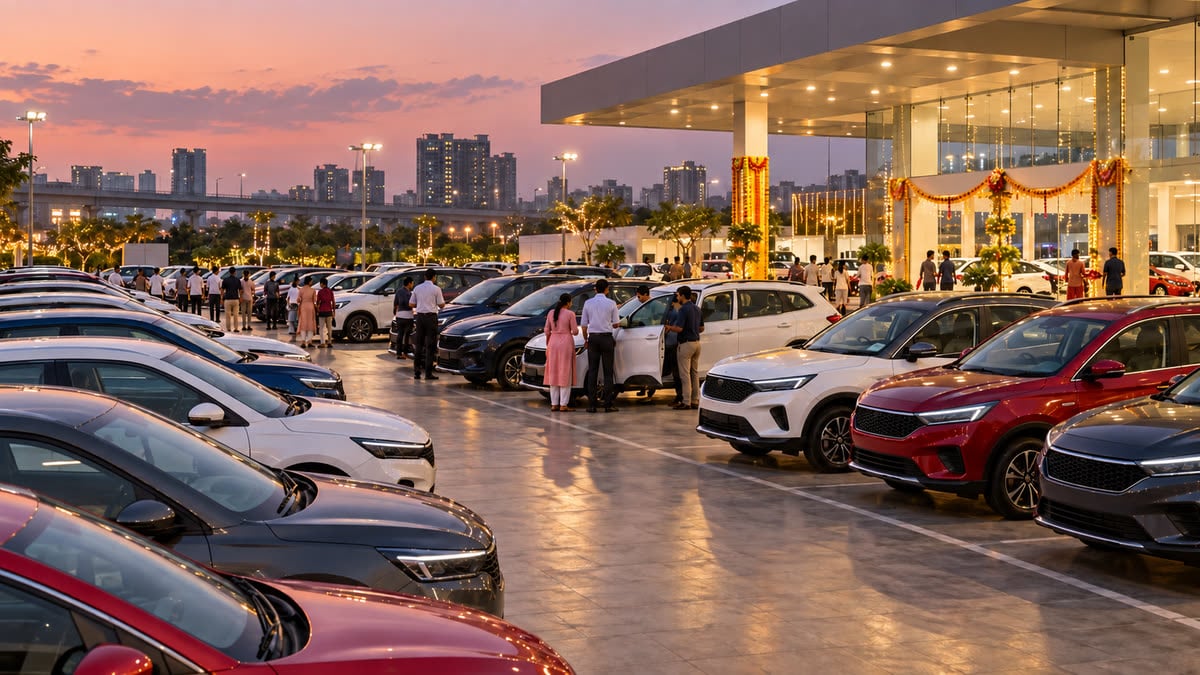
 Representative editorial visual of dealership inventory and festive-season buying activity; AI-generated illustration, not a photograph of a named model.
What Hyundai and Mahindra reported
Hyundai Motor India’s 1 Oct release said its September total sales reached a record 77,916 units, combining domestic sales and exports. The company reported 57,166 domestic units, a 10.9% year-on-year increase, and 20,750 exports, up 10.4% year on year. Business Standard, citing Press Trust of India, independently reported the same figures and described the total as Hyundai’s highest-ever monthly sales including exports.
Mahindra & Mahindra reported 1,14,874 overall auto sales in September, including exports, representing 15% year-on-year growth. Its domestic utility-vehicle sales stood at 64,092 units, up 14%, while domestic commercial-vehicle sales were 30,420 units, also up 14%. Business Standard’s separate PTI report independently carried the same Mahindra figures.
These totals are not a like-for-like league table. Hyundai’s number is a total for its domestic and export sales, while Mahindra’s overall figure combines utility vehicles, light commercial vehicles, three-wheelers and exports. The company releases therefore show how each manufacturer performed against its own September 2025 base; they do not, by themselves, establish market share or the best-selling model.
| Company and measure | September 2026 | Year-on-year change | What the figure includes |
|---|---|---|---|
| Hyundai total sales | 77,916 units | 10.8% higher | Domestic sales plus exports |
| Mahindra overall auto sales | 1,14,874 vehicles | 15% higher | Utility vehicles, commercial vehicles, three-wheelers and exports |
Source: Hyundai Motor India and Mahindra & Mahindra releases dated 1 Oct 2026, corroborated by separate Business Standard/PTI reports dated 1 Oct 2026. The measures are not directly comparable.
Why September sales matter before the festive rush
The September numbers arrive just before the period when vehicle purchases typically gain attention from buyers, dealerships and manufacturers. The Economic Times reported that Indian automakers were sending more vehicles to dealers ahead of the festive season, when promotions, new launches and financing offers often influence purchase timing. That context helps explain why dispatches and company sales can rise before the final retail-registration data is available.
Mahindra said its September performance was helped by early festive buying, continued infrastructure activity and steady freight movement, while also noting that fuel and input-cost pressures persist. Hyundai said it expects customer enthusiasm to continue during the festive season. Those are company statements, not a guarantee that every segment or model will see the same demand.
For buyers, the practical implication is to treat the sales figures as a market-temperature signal. A strong manufacturer total can coexist with long waiting periods for a popular variant, excess stock of another trim or different availability across cities. It also does not automatically mean that a particular car will receive a price cut or that a dealer’s quoted offer is the lowest total cost.
What buyers should check now
Separate availability from sales headlines
Ask which exact variant and fuel type is physically available, whether the quoted vehicle is already allocated, and what delivery date is written on the order documents. Check the manufacturing month and year, the warranty start point and the items included in the on-road quote. These checks are more specific to a purchase than a company-wide September growth rate.
Compare the running-cost effect
Fuel type and local prices can change the monthly ownership picture even when two cars sit in the same price band. Use the fuel cost calculator with your expected distance and mileage, then verify the current rate on the live fuel prices page. This keeps the comparison tied to your actual driving rather than to a general sales trend.
For an electric vehicle, the relevant check is access to dependable charging along regular routes, not only the model’s headline range. FuelPrice’s state-wise EV charging directory can help map available charging points before a buyer treats a sales or booking trend as evidence of local readiness.
Keep trip use in view
A buyer who expects frequent highway travel should also consider luggage, passengers, charging or refuelling stops and route length. The road-trip planner can help turn those assumptions into a realistic travel pattern before comparing the ownership cost of petrol, diesel, CNG or electric options.
What to watch next
The next useful evidence will be October retail registrations, dealer inventory and the model-level sales disclosures that show whether September’s manufacturer volumes translated into customer deliveries. The distinction matters because a vehicle moving from a factory to a dealer is not the same as a completed retail sale.
For now, Hyundai’s record September total and Mahindra’s double-digit growth show a firm start to the festive-season supply cycle. They do not settle the decision for an individual buyer. The better takeaway is to use the headlines to understand market momentum, then compare the exact vehicle’s availability, on-road price, fuel or charging cost and after-sales terms in the buyer’s city.
Sources
- Hyundai Motor India, “Highest-ever Total Monthly Sales of 77,916 Units in September 2026”, 1 Oct 2026
- Mahindra & Mahindra, “Mahindra Auto clocks 64092 SUVs ... in September 2026”, 1 Oct 2026
- Business Standard/PTI, “Hyundai Motor India sales rise 10.8% YoY to record 77,916 units in Sep”, 1 Oct 2026
- Business Standard/PTI, “M&M sales rise 15% YoY to 115K vehicles in September”, 1 Oct 2026
- The Economic Times, “Indian automakers post higher September sales as dealers stock up for festive season”, 1 Oct 2026