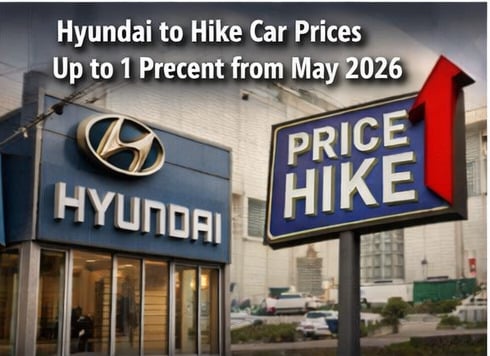
Hyundai Motor India has announced that it will raise car prices by up to 1 percent from May 2026, adding another reminder that the auto market’s demand recovery is still being tested by cost inflation. While a 1 percent move may sound modest on paper, the timing matters. It arrives at a moment when fuel uncertainty, raw-material pressure and geopolitically driven input costs are already making buyers and manufacturers more cautious.
This is also the company’s second price increase of the year, which tells us the pressure is not episodic. It is recurring. That is often the more important message in pricing announcements: not only that costs are up, but that cost pressure is proving stubborn enough to force repeated action.
Key points
- Hyundai will raise car prices by up to 1 percent from May 1, 2026.
- The hike will vary by model and variant.
- This follows earlier price revisions in the year.
- The move reflects ongoing input-cost and commodity pressure.
Why automakers keep raising prices
Vehicle pricing is usually the final visible stage of a much deeper cost story. Long before a carmaker announces a price hike, it is already dealing with more expensive materials, freight, utilities, currency movements and supplier contracts. What Hyundai’s move shows is that enough of those pressures remain persistent that the company is no longer willing to absorb them fully within its margins.
This is important because the Indian market remains highly price-sensitive. Carmakers do not raise prices casually. They do so when cost absorption begins to look harder to sustain or when repeated partial increases appear less risky than one larger repricing later.
What it means for buyers
For buyers already planning to purchase a Hyundai vehicle, the practical implication is straightforward: acting before the May increase may save money. Even when the hike is limited to 1 percent, the rupee impact can still feel meaningful, especially on higher trims and on financed purchases where EMI sensitivity matters.
The deeper issue, though, is psychological. Repeated price hikes across brands can create a sense of urgency among buyers in the short term, but they can also weaken medium-term confidence if households begin to feel that both running costs and purchase costs are moving in the wrong direction at once.
What it means for the market
Hyundai’s price increase does not exist in isolation. It adds to a broader pattern in which automakers are reassessing the limits of cost absorption. That matters because when one major mass-market player reprices, it strengthens the case for others to do the same. In that sense, price hikes can sometimes spread across the market not just through cost pressure, but through competitive permission.
The result is a more inflationary vehicle market where buyers face a double squeeze: higher ex-showroom prices and uncertainty about future fuel and maintenance costs. That makes model selection, variant choice and purchase timing much more important than before.
Why the fuel backdrop still matters
Even though Hyundai cites input and commodity costs, the fuel backdrop remains a major part of the wider environment. Higher crude does not only affect pump prices; it also affects transport, energy-linked inputs and broader inflation sentiment. So while the price hike is not being presented as a pure fuel story, fuel volatility still sits in the background as an important amplifier.
That is why these pricing announcements feel more consequential in 2026 than they might have in a calmer commodity environment. Buyers are not evaluating them in isolation. They are evaluating them in an atmosphere of larger cost uncertainty.
What to watch next
Watch whether other mass-market carmakers announce similar moves before or soon after May, and whether Hyundai’s hike affects showroom behaviour in April. Also watch for whether this remains a measured 1 percent adjustment or becomes part of a more frequent pattern through the year.
FuelPrice view: Hyundai’s announcement may look small in percentage terms, but it carries a larger message. The industry’s cost problem has not gone away, and the burden is slowly moving back toward the buyer.