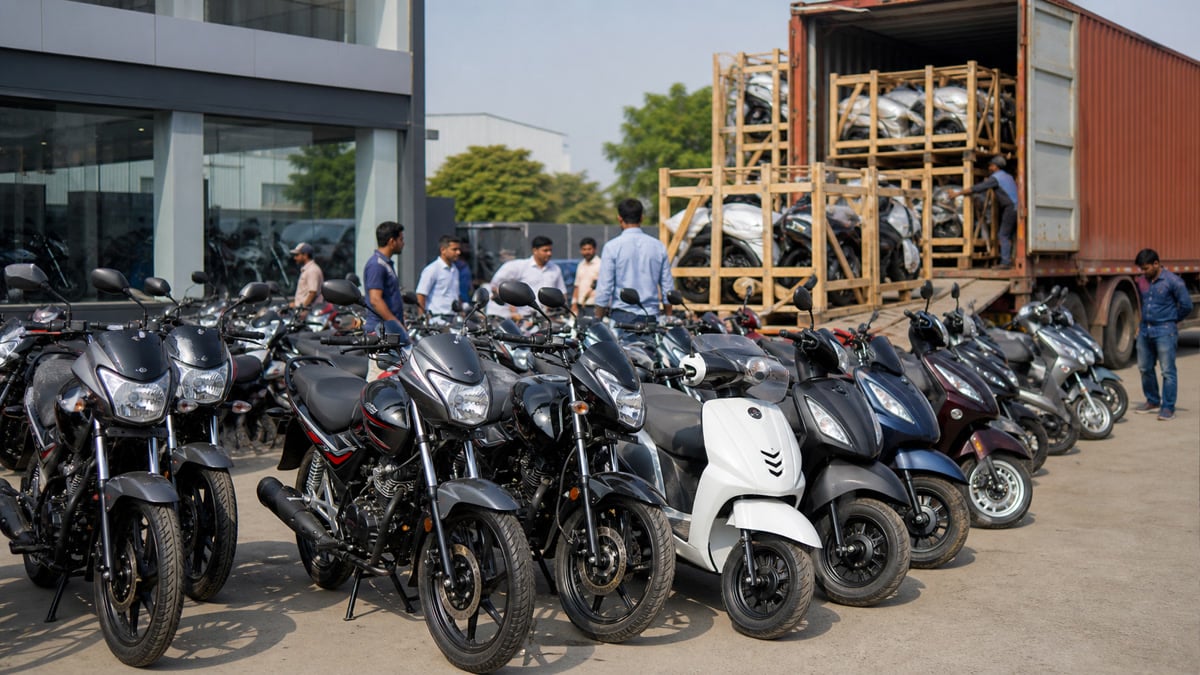
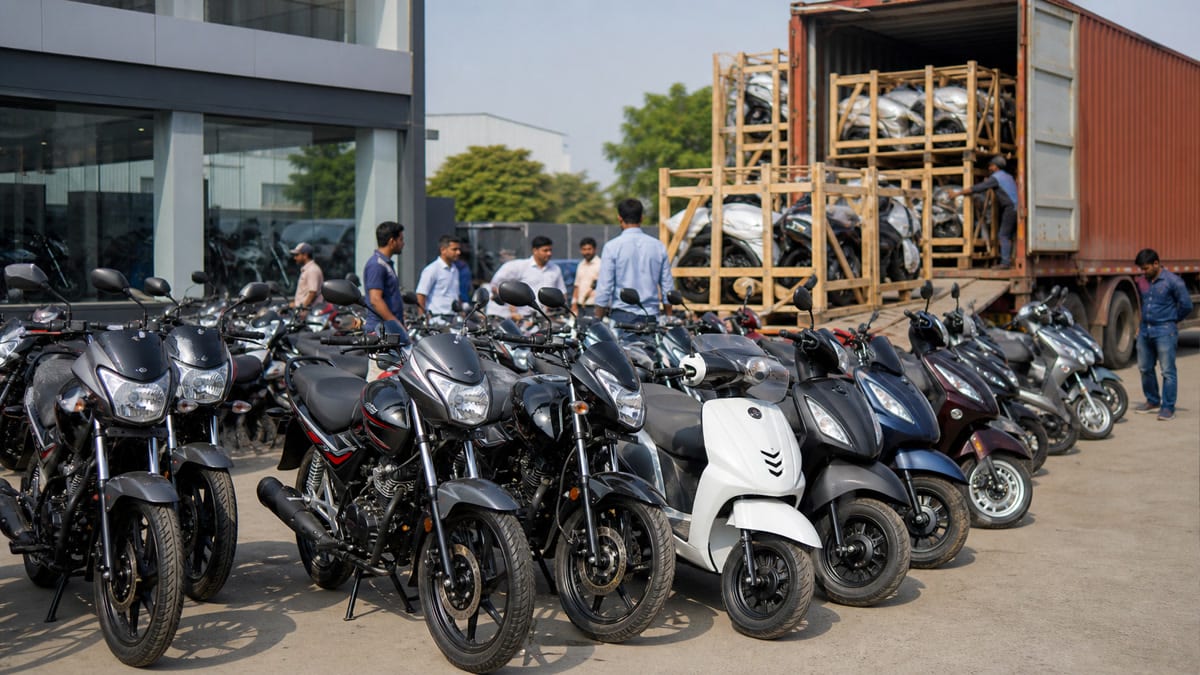
 Suzuki Motorcycle India's May 2026 record reflects domestic two-wheeler demand, export movement and stronger dealer-level activity.
Suzuki Motorcycle India posted its highest-ever monthly sales in May 2026, delivering 1,32,244 units and setting a new domestic dispatch record. The company's official update says domestic dispatches stood at 1,10,028 units, while exports reached 22,216 units. Total sales grew 3% from 1,28,897 units in May 2025.
For FuelPrice readers, this is not only a company milestone. Two-wheelers are India's most fuel-sensitive mobility category, and a record month from a large scooter and motorcycle maker shows that practical petrol mobility remains strong even as electric options are growing. The update also matters for dealerships, service networks, spare-parts suppliers and export logistics because demand is visible across both domestic and overseas channels.
What happened in May 2026?
Suzuki Motorcycle India said May 2026 was significant because it delivered both the company's highest-ever overall monthly sales and its highest-ever domestic sales figure. Domestic dispatches increased 2% year-on-year from 1,07,780 units in May 2025 to 1,10,028 units in May 2026. Exports rose 5% from 21,117 units to 22,216 units.
The company also reported spare-parts sales revenue of INR 953.60 million in May 2026, up 14% over the previous year. This is a useful detail because a growing two-wheeler parc supports service demand, parts revenue, workshop traffic and dealer economics beyond the initial vehicle sale.
| Metric | May 2026 | May 2025 | YoY change |
|---|---|---|---|
| Domestic dispatches | 1,10,028 | 1,07,780 | 2% |
| Exports | 22,216 | 21,117 | 5% |
| Total sales | 1,32,244 | 1,28,897 | 3% |
| Spare-parts revenue | INR 953.60 million | Year-earlier baseline | 14% |
Why this matters for fuel-conscious buyers
The record comes at a time when Indian two-wheeler buyers are increasingly practical about total ownership cost. Scooters and commuter motorcycles are judged on mileage, service cost, reliability, resale value, finance terms and dealer access. A strong month for Suzuki indicates that buyers are still committing to petrol two-wheelers where the value equation works.
That does not mean electric scooters are irrelevant. It means the market is now more layered. Many urban users are weighing EVs for low running cost, while a large base still prefers petrol scooters and motorcycles for range confidence, quicker refuelling, wider service reach and predictable maintenance. Suzuki's May record shows that conventional two-wheelers continue to have deep demand when products and after-sales support match buyer expectations.
Dealer expansion adds context
Suzuki Motorcycle India also highlighted network expansion, including entry into Ladakh with a dealership in Leh and new commercial outlets in Ludhiana, Bhatinda and Sirsa. This matters because two-wheeler growth is not only driven by big-city demand. Service access, spare parts availability and local dealer confidence influence buying decisions in smaller cities, hill regions and highway-linked markets.
For users in remote or emerging markets, a dealership is more than a sales point. It affects test rides, service reliability, warranty handling, genuine parts access and resale confidence. Expansion into a region like Ladakh is especially relevant for rugged-road usage, tourism-linked mobility and owners who need reliable support in high-altitude operating conditions.
Exports and spare parts show a wider industry signal
The export number is important because overseas demand gives manufacturers a second growth stream beyond the domestic retail cycle. Higher exports can support factory utilisation, logistics movement, supplier planning and port-linked transport. For component makers, a stable export pipeline often improves production predictability.
The 14% growth in spare-parts revenue is also worth watching. It suggests an expanding installed base and better after-sales monetisation. For customers, a stronger parts business can be positive if it improves availability and service turnaround. For dealers, it adds revenue stability even when new-vehicle retail demand fluctuates month to month.
What changes now?
For buyers, the immediate impact is confidence in product availability and after-sales coverage, especially in markets where dealership expansion is visible. For dealers, record dispatches mean stronger inventory movement but also a need to manage service capacity. For the broader auto sector, Suzuki's data reinforces that two-wheeler growth is not limited to one brand or one sub-segment.
The next signal will be June dispatches and retail registrations. If domestic sales remain above the 1.10 lakh mark and exports keep expanding, Suzuki Motorcycle India's May record may look less like a one-month spike and more like a step-up in operating scale.
Final takeaway: Suzuki Motorcycle India's May 2026 record is a strong signal for fuel-conscious mobility. Petrol scooters and motorcycles continue to draw steady demand, exports are expanding, and after-sales revenue is rising. For readers tracking two-wheeler ownership costs, the key takeaway is that practical petrol mobility remains highly competitive even as EVs gain space in urban markets.