Hyundai Motor Company and TVS Motor Company have formally moved from concept-stage collaboration to commercialization planning for electric three-wheelers in India. In an official announcement dated 20 April, 2026, TVS said both companies signed a joint development agreement (JDA) focused on design, engineering and market rollout for next-generation passenger and cargo electric 3W products.
This is a high-niche but important mobility story because India’s three-wheeler segment sits at the intersection of urban transport, local logistics, and daily fuel expenditure. Any serious OEM-level push in electric 3W has immediate implications for driver operating costs, fleet profitability, intra-city delivery pricing, and long-term petrol/CNG dependency in dense corridors.
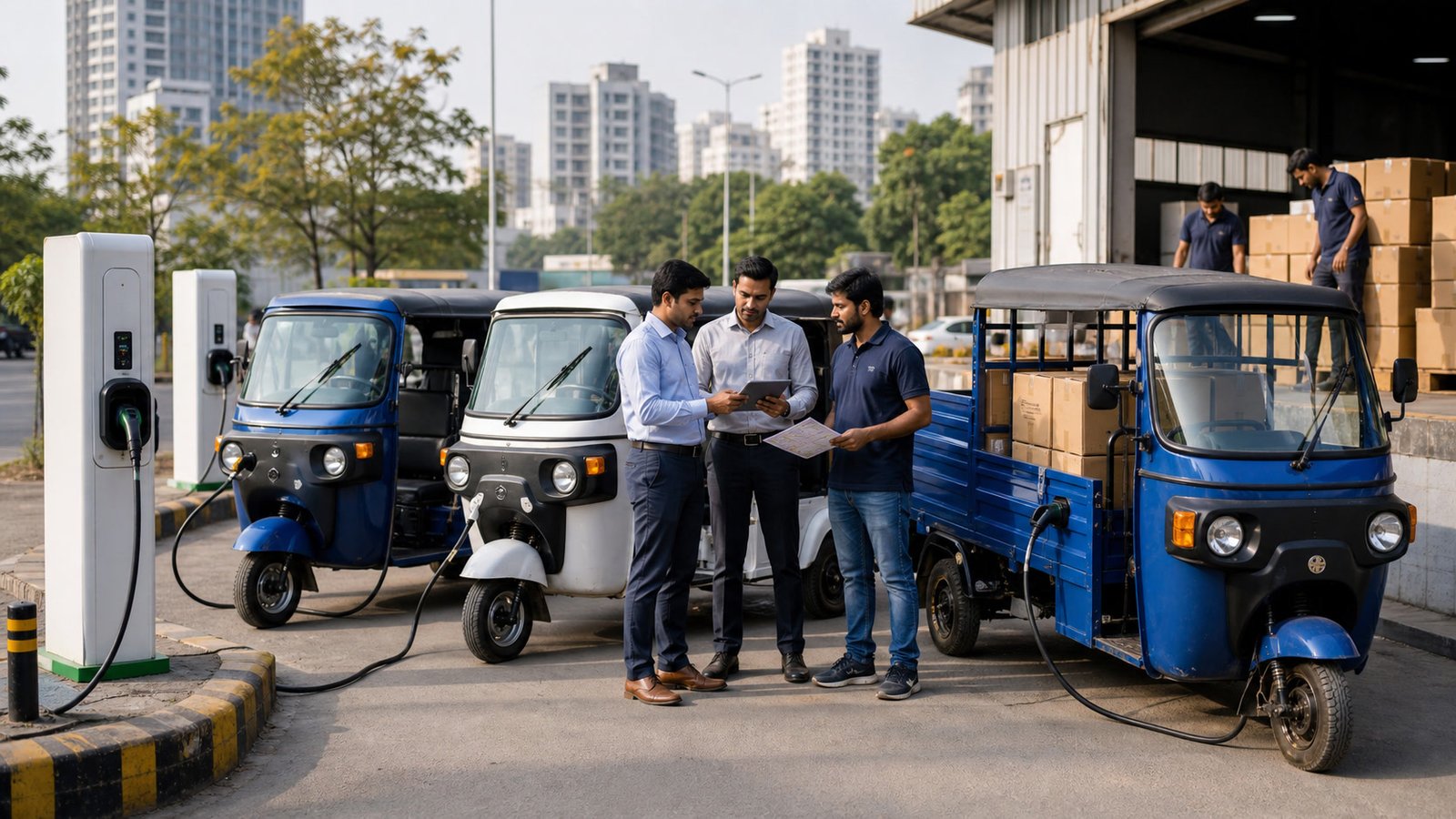
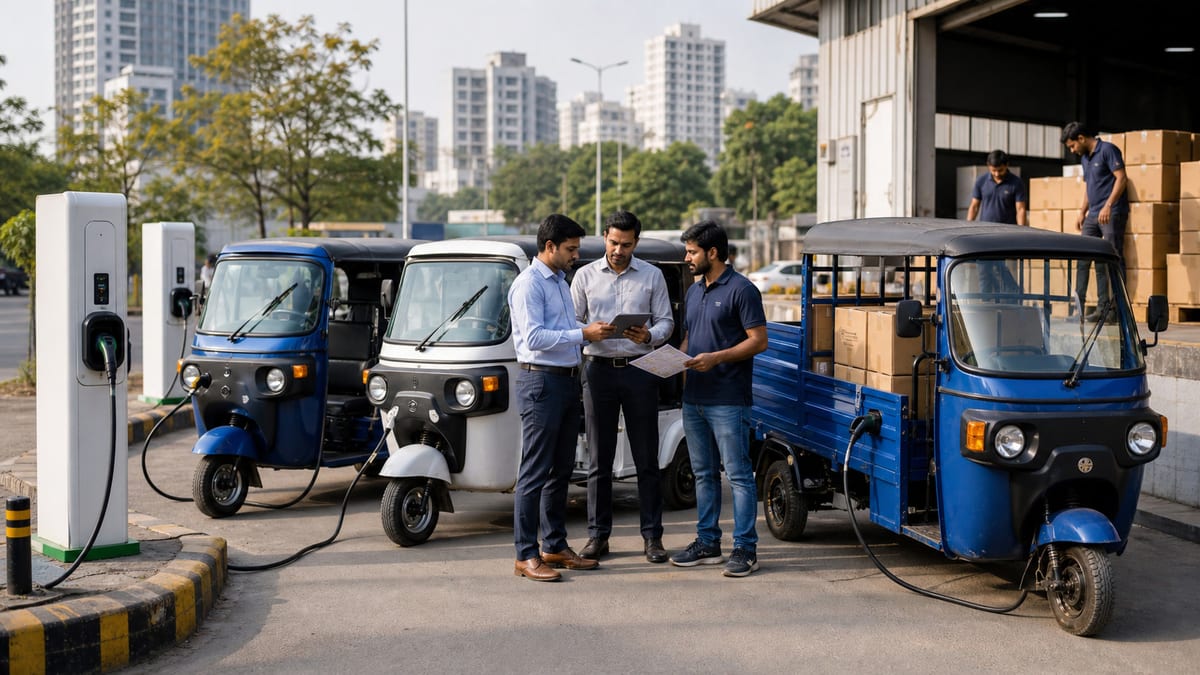 Editorial representation of commercial e-3W rollout planning in India with charging-linked passenger and cargo operations.
What Was Announced
Under the announced framework, Hyundai will contribute advanced design, engineering and technology inputs, while TVS will lead manufacturing, localization pathways, and go-to-market execution in India. Official disclosures indicate the initial target is the domestic market, with potential to evaluate global opportunities later based on product acceptance and regulatory fit.
Critically, this is not being positioned as a one-off product experiment. The communication describes a structured platform-level collaboration around electric three-wheel mobility, which usually implies longer product cycles, component ecosystem investments, and differentiated variant planning for both passenger and cargo use-cases.
Why This Is Important for Fuel and Mobility Users
India’s 3W economy is highly utilization-driven. Vehicles often run long daily duty cycles in shared commutes, feeder routes, and last-mile goods movement. In such use patterns, per-kilometre energy cost and downtime matter more than headline brochure numbers. Electrification in this segment can materially lower route-level running costs where charging access and utilization density are viable.
For FuelPrice readers, the practical significance is straightforward:
- Drivers and owner-operators: better product quality and scale-backed platforms can improve uptime and route confidence.
- Small logistics businesses: more credible electric cargo 3W options can improve delivery margins where fuel bills are volatile.
- Urban passengers: cleaner 3W fleets can reduce local emissions and improve ride consistency in short-haul corridors.
- Fuel retailers and planners: sustained e-3W adoption can gradually rebalance petrol/CNG demand in high-density city clusters.
Market Context: Why Timing Matters
The announcement arrives at a time when three pressures are converging in the transport ecosystem: operating-cost sensitivity among drivers, cleaner-fleet expectations from cities, and tighter competition in last-mile delivery services. Partnerships between a global OEM and a strong domestic two- and three-wheeler manufacturer can accelerate transition speed because they combine technology depth with local manufacturing execution.
It also changes the competitive benchmark for the e-3W segment. Rival manufacturers may respond with faster product refresh cycles, stronger battery warranties, and more aggressive financing or fleet packages. That is usually positive for users, because adoption friction drops when hardware quality, service support, and financing clarity improve together.
What Changes Now for Stakeholders
| Stakeholder | Likely near-term change | Why it matters |
|---|---|---|
| 3W operators | More launch options in passenger and cargo EV formats | Potentially better route economics and uptime predictability |
| Fleet buyers | Improved confidence in scale-backed platforms | Lower perceived risk in electrifying urban operations |
| City mobility ecosystem | Higher pressure for charging-readiness and parking discipline | Infrastructure quality determines real adoption pace |
| Fuel demand mix | Gradual micro-shift in urban short-haul energy use | Long-term planning impact for fuel and mobility businesses |
What to Watch Next
Investors, operators and policy observers should focus on execution markers rather than announcement headlines. The key watchpoints are product reveal timelines, battery strategy, after-sales network readiness, and financing availability for high-utilization users. If commercialization moves quickly with a strong service backbone, the impact could extend beyond retail sales and reshape route-level economics in multiple metros.
Another critical indicator will be localization depth. Higher local value-add can improve cost control and supply continuity, both of which are essential for commercial buyers who cannot afford long downtimes or expensive replacement parts.
Final Takeaway
The Hyundai–TVS JDA is an industry-grade signal that India’s e-3W market is moving from fragmented experimentation toward platform-led scaling. For drivers and fleet owners, the upside is potential improvement in running-cost stability and product reliability. For the broader fuel and mobility ecosystem, this is a meaningful structural development in how short-haul urban transport demand may evolve over the next few years.