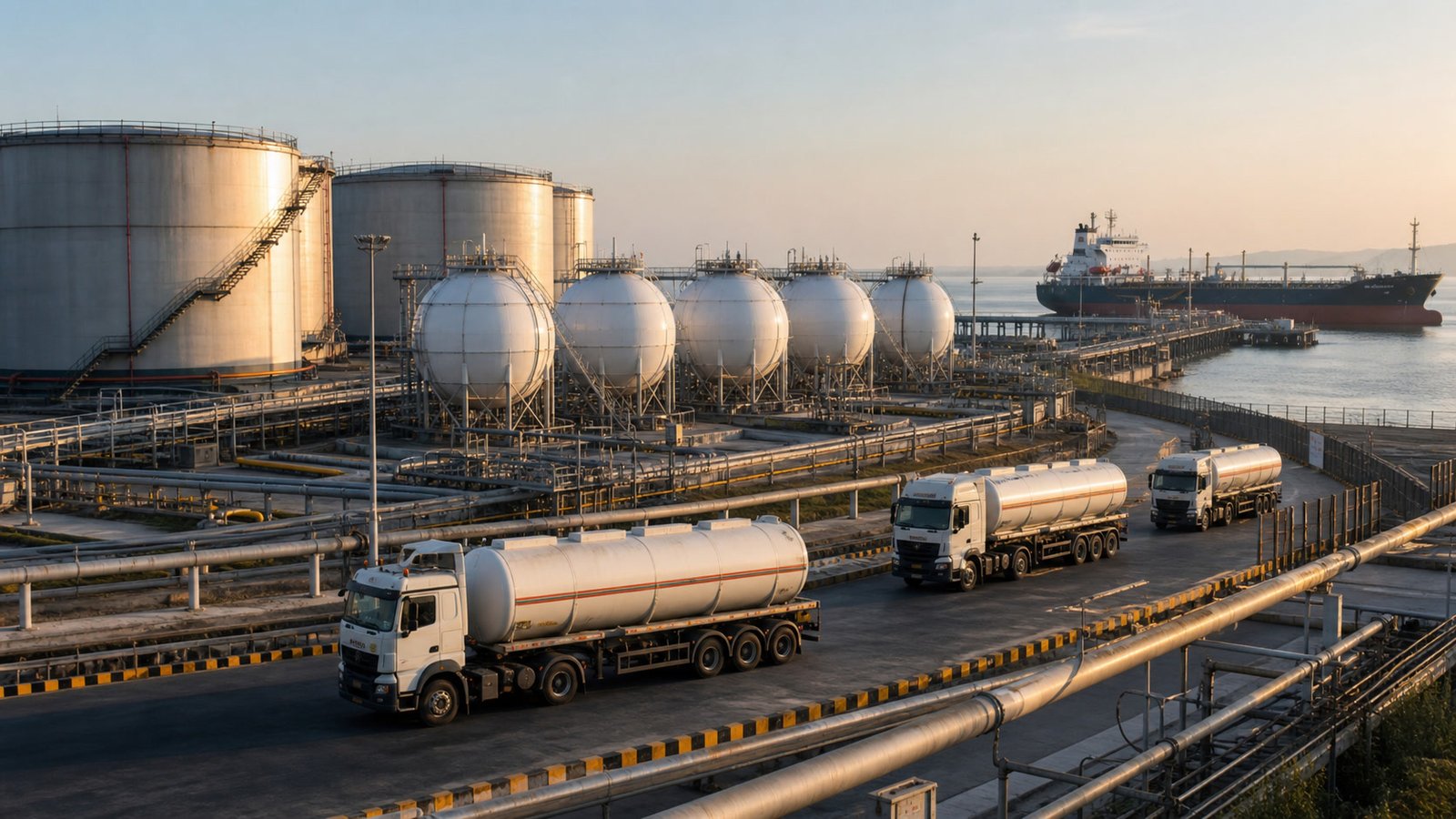
India's latest energy-security message is aimed at calming a familiar fear: if geopolitical stress deepens, will the country face a physical fuel shortage? On June 14, 2026, Times of India reported that petroleum minister Hardeep Singh Puri said India currently has more than 60 days of crude oil, LPG and natural gas stocks and does not foresee any energy supply crunch. For FuelPrice readers, that is more than a reassurance headline. It speaks directly to pump-side anxiety, LPG refill confidence, freight planning and inflation expectations at a time when shipping and crude-market nerves can spread quickly.
The practical value of the statement is simple. A stock cushion reduces the risk of sudden scarcity, panic buying and supply dislocation if international routes turn volatile. But it does not automatically mean petrol, diesel or LPG will become cheaper tomorrow. That distinction matters. Fuel users often treat supply and price as the same problem, when they are related but not identical. India can be comfortable on physical inventory and still face price pressure from global crude, freight, insurance, refinery economics and the rupee.
What exactly has been said now
The June 14 TOI report said Puri's current assessment is that India has more than 60 days of crude, LPG and gas stocks and therefore does not expect an energy supply crunch despite concerns linked to the Iran conflict. That is the latest public signal.
It also fits a broader pattern of recent official messaging. On June 8, 2026, Economic Times reported that Puri had put India's fuel reserves at 76 days and said the country could comfortably handle a supply disruption through the Strait of Hormuz for about a month, helped by diversified sourcing and energy infrastructure. ET also noted that India has 24 refineries with combined capacity of about 5.6 million barrels per day. Earlier, on May 12, 2026, TOI had reported Puri saying India had crude and LNG reserves for 69 days and LPG stocks for 45 days. On March 26, 2026, ET separately cited a government statement saying India's fuel situation was fully secure and under control with around 60 days of fuel stock cover.
Put together, these numbers do not describe one neat single bucket. They refer to slightly different combinations of crude, fuel, LPG, LNG and operational or strategic stocks across different dates. But the direction is clear: the government has been consistently trying to tell consumers, transporters and markets that India is not entering a shortage phase.
Why this matters even if pump prices do not fall immediately
For motorists, the first benefit is psychological and operational stability. If inventories are comfortable, the risk of dry pumps, rationing behaviour or local panic queues comes down. That matters for daily commuters, interstate drivers, taxi operators and fleets, because even a rumour-driven supply scare can disrupt routines faster than any formal price revision.
For LPG users, the message matters differently. Households do not think in barrels or refinery runs; they think in refill availability and delivery timing. A stronger stock position lowers the immediate probability of a sudden cooking-gas disruption. For businesses using commercial LPG or industries dependent on gas-linked supply chains, the reassurance is similar: procurement risk may remain elevated globally, but domestic availability is not being flagged as a near-term emergency.
For logistics and freight operators, stock cover is important because physical continuity is often more valuable than a temporary price dip. A transporter can plan around higher fuel cost more easily than around uncertain availability. If crude or product availability is secure, route planning, dispatch confidence and contract fulfilment become easier even in a noisy global market.
| Current signal | What it means for users | What it does not guarantee |
|---|---|---|
| More than 60 days of crude, LPG and gas stocks, per TOI on June 14 | Lower immediate risk of a physical supply crunch | No automatic cut in petrol, diesel or LPG prices |
| 76 days of fuel reserves, per ET on June 8 | Better ability to absorb a temporary external disruption | No guarantee that global crude volatility will disappear |
| 69 days of crude and LNG reserves, 45 days of LPG, per TOI on May 12 | Suggests multiple buffers across fuels, not only crude | Does not remove refill or freight-cost pressure if disruption is prolonged |
| 24 refineries with about 5.6 million barrels per day capacity, per ET | Supports domestic processing flexibility and product supply management | India still depends heavily on imported crude feedstock |
Why supply comfort and price comfort are different things
This is the part readers should not miss. A healthy stock position protects against immediate shortage risk, but retail prices still sit downstream of several moving parts. If global crude remains expensive, tanker insurance rises, shipping routes become longer or the rupee weakens, the landed cost of energy can still increase. Oil marketing companies then have to decide how much of that pressure to absorb and how much to pass on, while taxes and policy choices also shape the final number consumers see.
So when the government says there is no energy supply crunch, the correct interpretation is: availability looks secure for now. It is not the same as saying the pump-price cycle has ended. FuelPrice readers should treat the current announcement as a supply-security indicator, not as a retail-pricing promise.
Who benefits most from this reassurance
- Private motorists: lower risk of local availability disruptions and panic-fuel behaviour.
- LPG households: stronger confidence that refill access is not entering a shortage phase.
- Truckers and fleet operators: better planning continuity even if fuel cost stays volatile.
- Factories and supply chains: a helpful signal that domestic energy logistics remain functional.
- Markets and policymakers: stock comfort helps reduce fear of a sudden imported energy shock feeding quickly into inflation.
The inflation angle matters because fuel is not only a transport input. It affects freight costs, food distribution, industrial output, aviation economics and consumer sentiment. When the government repeatedly stresses stock comfort, it is trying to prevent a supply narrative from amplifying into a wider inflation or market-panic narrative.
What still needs watching
Despite the reassuring tone, three risks remain. First, the external route risk does not vanish. The Strait of Hormuz and surrounding West Asia shipping environment still matter to India's energy bill even if domestic inventories are currently comfortable. Second, the duration of any global disruption matters. A short disturbance is one thing; a long period of higher freight, insurance and crude prices is another. Third, the stock figures themselves should be read as dynamic. They change with imports, refinery runs, demand and replenishment.
That is why the next indicators to watch are not only stock statements. Readers should track global crude direction, tanker-route stress, rupee movement, refinery maintenance trends and whether retail petrol, diesel or LPG pricing starts to respond. If those signals worsen, a physically secure market can still become a more expensive one.
Background: why this message keeps returning
The recurring nature of these statements tells its own story. In March, the government pushed back against shortage claims. In May, the minister highlighted 69 days of crude and LNG reserves and 45 days of LPG stock. In early June, the message became 76 days of fuel reserves and confidence about handling a Hormuz disruption. By June 14, the line had consolidated into a more consumer-friendly reassurance: India has more than 60 days of crude, LPG and gas stocks and does not expect a crunch.
That consistency suggests the government understands the political and economic sensitivity of fuel-security perception. In India, energy anxiety travels quickly from markets to households. Repeated reassurance is therefore not only about barrels and storage. It is also about preventing demand-side panic and preserving confidence in transport and household-energy continuity.
The reader takeaway is clear. India's current stock cushion is meaningful because it lowers the near-term risk of an actual supply shortage across crude, LPG and gas. That is good news for motorists, freight operators and households. But readers should keep their technical expectations in order: supply security helps availability first, and pricing only indirectly. If global oil, shipping and currency pressures stay high, retail fuel costs can still remain uncomfortable even when the storage position is strong.
Sources: Times of India June 14, 2026 report, Economic Times June 8, 2026 report, Times of India May 12, 2026 report, Economic Times March 26, 2026 report.