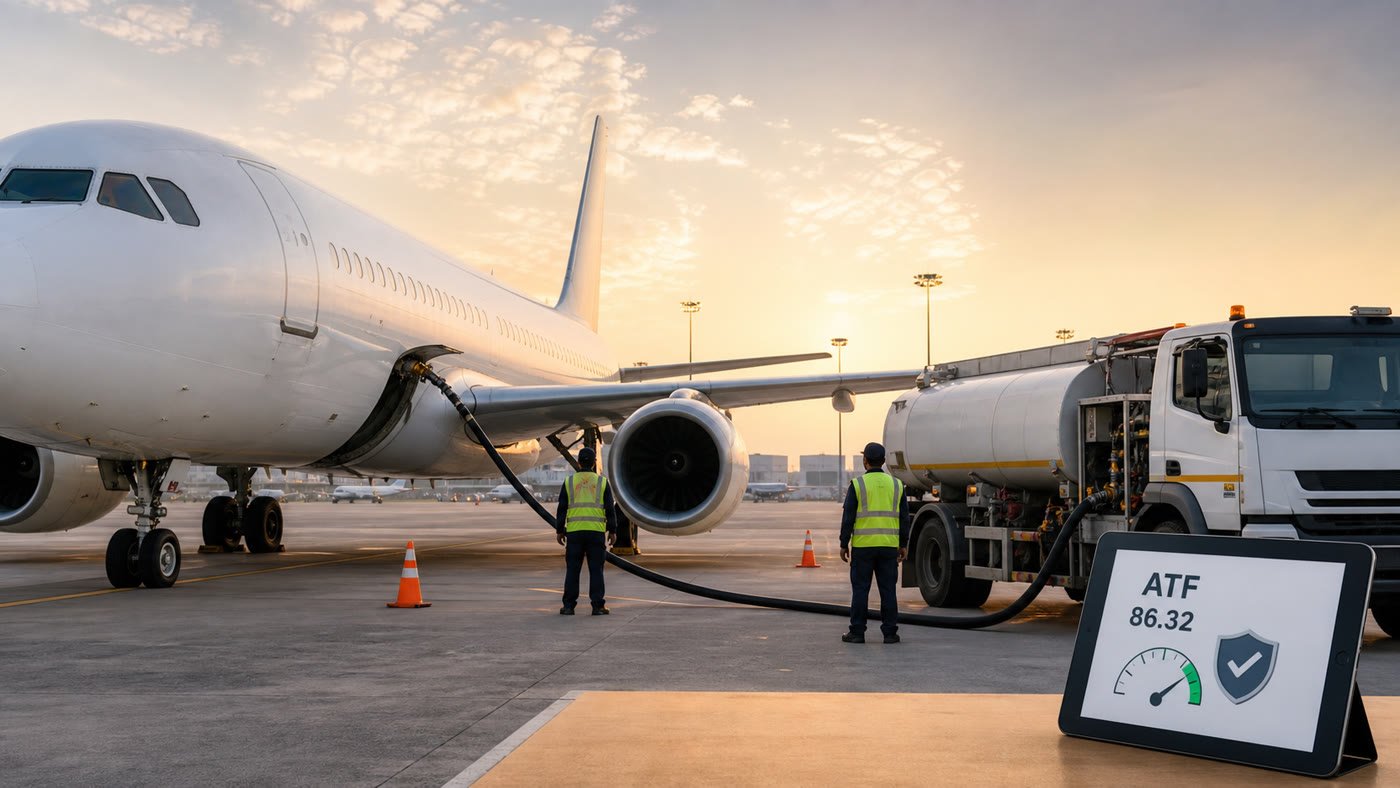
India's new aviation turbine fuel price stabilisation mechanism is a fuel-policy story with a direct passenger angle. The government has moved from a temporary capped-price arrangement to a voluntary fixed-price system for scheduled Indian airlines, backed by up to Rs 10,000 crore in interest-free support for oil marketing companies. The immediate objective is to stop extreme ATF volatility from quickly turning into higher airfares, weaker airline schedules and losses for fuel suppliers.
The key numbers are now clearer. Government officials said the free-on-board benchmark under the scheme is fixed at Rs 86.32 per litre for domestic operations and Rs 104.49 per litre for international operations. After airport charges, oil company margins and taxes are added, the effective selling price is expected to be about Rs 115 per litre in Delhi, around Rs 114.5 per litre in Mumbai and about Rs 139 per litre in Chennai. Airline participation is voluntary, but carriers that opt in will operate under memorandum-of-understanding terms with oil marketing companies.
Why the ATF shield was needed
The pressure point is simple: fuel is one of the largest cost lines for airlines. Business Standard and DD India reported that ATF typically accounts for about 40 percent of airline operating expenses and can rise to nearly 60 percent during periods of extreme fuel volatility. Government-linked reports also put the recent international ATF move in sharp terms: prices rose from around Rs 60.50 per litre in March 2026 to about Rs 142 per litre in May 2026 amid the West Asia crisis.
Without a buffer, this kind of fuel shock usually works through the aviation system in three ways. Airlines face pressure on cash flow and route economics. Oil marketing companies face under-recoveries if prices are capped below international parity. Passengers face the risk of fare increases or fewer flight options if carriers cut less profitable routes. The stabilisation fund is designed to smooth that shock rather than permanently subsidise jet fuel.
How the mechanism works
Under the approved structure, the government provides a one-time interest-free advance of up to Rs 10,000 crore to oil marketing companies through the Ministry of Petroleum and Natural Gas. When the prevailing import parity price of ATF exceeds the benchmark under the scheme, oil marketing companies can be compensated for the difference. When international prices cool, the differential amount is to be recovered and returned to the Consolidated Fund of India through a true-up mechanism.
This makes the design different from a normal open-ended subsidy. The government has presented it as a temporary, self-correcting stabilisation arrangement. It can remain in force for up to 36 months or until the support amount is recovered, whichever comes earlier, with monitoring and reconciliation handled through official oversight involving civil aviation, petroleum and expenditure authorities.
Key details for airlines and flyers
| Point | Confirmed detail | FuelPrice impact view |
|---|---|---|
| Fund size | Up to Rs 10,000 crore | Supports OMC cash flow while keeping airline fuel pricing predictable. |
| Domestic benchmark | Rs 86.32 per litre at FOB level | Creates a base fuel-cost reference for domestic flight operations. |
| International benchmark | Rs 104.49 per litre at FOB level | Matters for overseas routes already exposed to fuel and routing pressure. |
| Passenger angle | Designed to reduce fare shock from fuel spikes | May limit sudden fare pressure, but does not guarantee cheap tickets. |
What changes now for air travel users?
For passengers, the scheme does not mean every ticket will become cheaper. Airfares depend on demand, competition, aircraft availability, airport charges, taxes, route length and booking timing. The practical benefit is different: if fuel prices jump suddenly, airlines have a more predictable ATF cost base and may have less pressure to pass the full shock to flyers immediately. This matters most on price-sensitive domestic routes and regional connectivity routes where small fare increases can reduce demand.
For airlines, the advantage is planning certainty. Fuel-cost swings make it difficult to price forward bookings, maintain marginal routes and manage working capital. A fixed benchmark can help carriers plan capacity and schedules with less fear of an overnight fuel shock. For oil marketing companies, the fund reduces the strain of supplying ATF below import-parity economics during a crisis period.
The risk: fixed price cuts both ways
The scheme is voluntary, but it is not a free option with only upside. Reports quoting Ministry of Civil Aviation officials say airlines opting in will need to pay the agreed fixed rates even if international rates fall later. Once an airline signs the MoU, exit is tied to clearing outstanding dues. That lock-in matters because a carrier must decide whether stability is worth giving up some benefit if global ATF prices decline faster than expected.
This is why the scheme should be read as a risk-management tool, not a guaranteed profit booster. Airlines with high fuel exposure, longer routes and weaker balance sheets may value cost predictability more than short-term price optionality. Airlines expecting a quick fall in global jet fuel may be more cautious. Passengers should watch not only the policy announcement but also airline participation, route announcements and fare behaviour over the next few weeks.
What to watch next
- Which scheduled Indian airlines sign MoUs under the stabilisation mechanism.
- Whether fare increases moderate on fuel-sensitive domestic and international routes.
- How OMC compensation and recovery claims are reported under the true-up mechanism.
- Whether ATF prices cool enough for recovery to begin before the 36-month limit.
- How regional and UDAN-linked connectivity is protected if global fuel volatility continues.
The clear takeaway is that India's ATF stabilisation fund is a fuel-cost shock absorber for aviation. It protects neither airlines nor passengers from every cost pressure, but it gives the sector a temporary fixed-price framework at a time when jet fuel has moved sharply and unpredictably. For FuelPrice readers, the policy matters because it shows how fuel volatility now affects not just petrol pumps and truck freight, but also airfares, airline route planning, airport activity and the wider travel economy.
Sources checked
Sources: DD India; Business Standard/PTI; Financial Express; The New Indian Express; Hindustan Times.