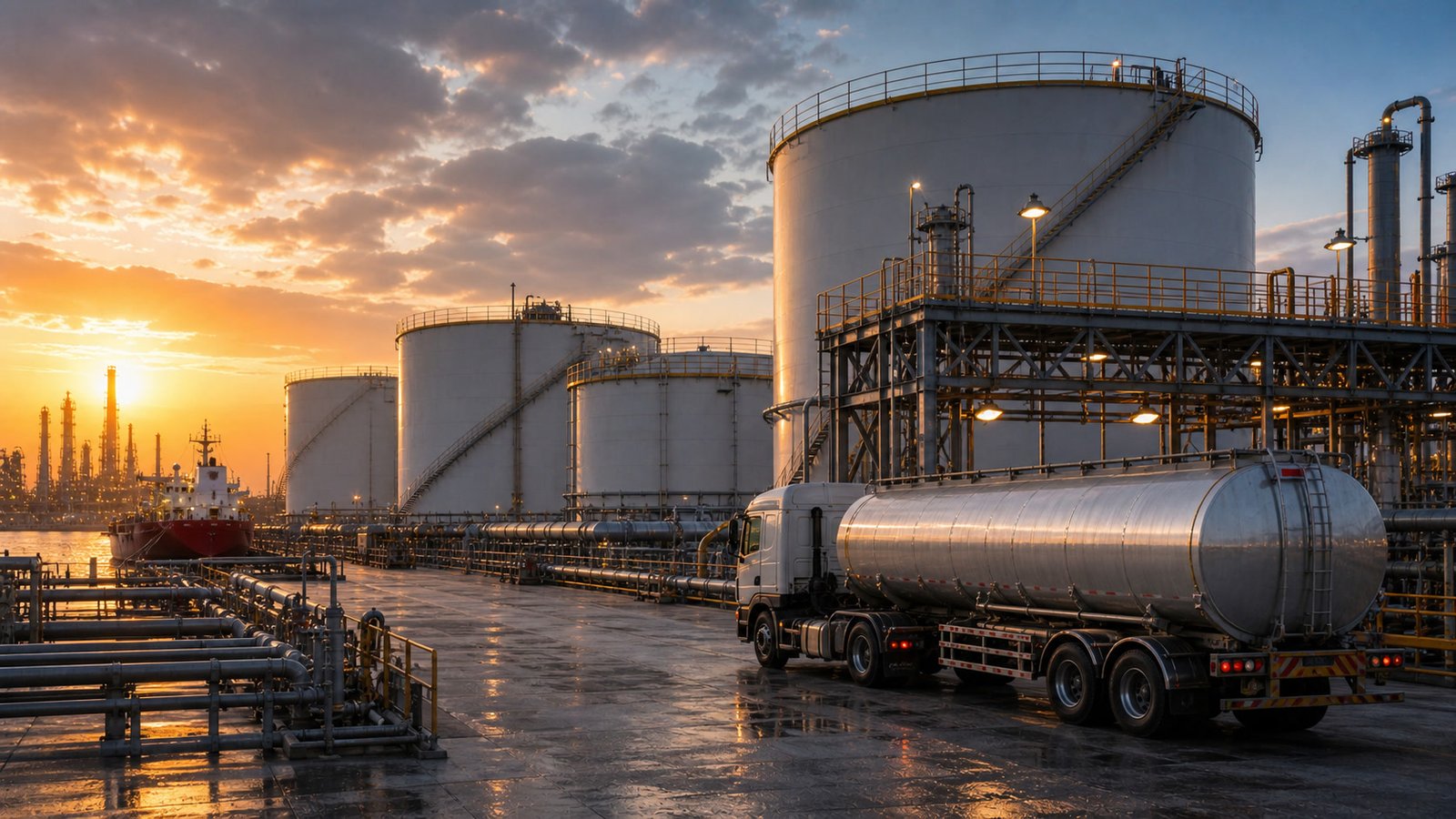
India is reportedly studying a China-style fuel-security move that could force domestic refiners to hold significantly larger crude oil inventories. That sounds technical, but the implications are practical. If the country carries more crude in storage, it gets more breathing room when global supply is shaken by wars, shipping disruptions or sudden price spikes. In other words, the policy is about resilience first and price stability second.
The timing matters. The recent US-Iran conflict reminded markets how quickly geopolitical tensions can turn into shipping risk, insurance risk and refinery-risk. When crude supply is tight or uncertain, countries that already have a deeper buffer can continue operating more smoothly. That is the logic India appears to be considering now, according to The Times of India and The Economic Times.
For FuelPrice readers, this is not a story about a pump-price revision tomorrow. It is a story about whether India should manage fuel security the way some large oil consumers do: by asking refiners to keep a bigger inventory cushion instead of relying only on spot purchases and market calm. If the idea moves from discussion to policy, it would affect refiners, logistics operators, import planning and the broader fuel supply chain.
What India is reportedly considering
According to TOI's report, India may push domestic refiners to maintain more crude oil in reserve, taking a leaf from China's approach to energy security. ET's report says the country is weighing a policy that would require refiners to build and maintain larger crude inventories as a safeguard against future supply shocks. The idea is not simply to buy more oil for the sake of stockpiling. It is to create a deliberate buffer that can be tapped when the market gets rough.
That distinction matters. A larger inventory mandate changes how the system is run. Refiners would need more tankage planning, more working capital, tighter procurement schedules and possibly better coordination with import terminals and storage facilities. It would also change how much crude is kept in the pipeline at any given time, which matters when markets are volatile and freight timing is critical.
In plain language, India would be telling its fuel system: do not live hand-to-mouth in a world where wars can interrupt shipping overnight. Keep more fuel in the cupboard.
Why the policy is being discussed now
The immediate trigger appears to be geopolitical risk. The US-Iran conflict exposed how quickly a regional shock can raise concerns about supply, freight insurance and replacement barrels. India imports most of its crude, so even a temporary disruption can cascade through the economy. Refiners, marketers, transport companies, airlines and industrial users all feel the effects when the import chain becomes less predictable.
This is why inventory policy is more than an accounting exercise. If refiners are required to hold larger stocks, India can absorb a shock longer before it shows up in the real economy. That matters because fuel is embedded in nearly everything: trucking, rail support services, shipping, aviation, factory logistics, construction equipment and agricultural movement. A deeper reserve gives policymakers more time to react before a crisis becomes a consumer-price event.
It also gives the government more leverage in negotiations and procurement. A country with a stronger inventory position can avoid panic decisions and smooth out import timing. That does not make India immune to global crude spikes, but it can reduce the speed and severity with which those spikes hit the domestic system.
What this means for motorists and freight users
Motorists should read this carefully: larger crude inventories do not automatically mean lower petrol or diesel prices. The retail pump still depends on crude costs, refining margins, taxes and distribution costs. What bigger stockpiles can do is help prevent extreme volatility. If India has more buffer oil in reserve, it may be less vulnerable to sudden shortages or abrupt global supply squeezes that can push prices up sharply in a short period.
For truckers, fleet owners and logistics operators, that stability is valuable even if it is invisible on the fuel pump board. Freight businesses hate uncertainty more than high prices. A managed inventory buffer can reduce the chance of sudden procurement chaos, emergency buying or short-term supply gaps that force transporters to pay more at the wrong time. In a tight logistics ecosystem, predictability is often worth as much as a minor price cut.
Airlines, manufacturers and large diesel users also benefit if inventory buffers are strong enough to smooth supply. Aviation turbine fuel, industrial fuel demand and diesel usage all depend on a steady chain from import to refinery to distribution. Larger crude stocks do not eliminate cost pressure, but they can buy time for the market to adjust instead of reacting in panic.
| Stakeholder | Possible effect | Why it matters |
|---|---|---|
| Refiners | Need more storage, cash and procurement planning. | Inventory mandates change operating costs and capital needs. |
| Motorists | No immediate pump-price cut or hike from the proposal alone. | The benefit is reduced volatility, not instant savings. |
| Freight and logistics | Better supply visibility if buffers are well managed. | Predictable diesel supply helps route planning and cost control. |
| Government | More resilience in a geopolitical shock. | Buys time to respond before a crisis hits consumers. |
The trade-off: resilience costs money
There is no free lunch in inventory policy. Holding more crude means more working capital tied up in storage, more infrastructure pressure and more coordination with shipping and port systems. Refineries and marketing companies would need to carry the cost of that buffer, at least initially. If the state mandates larger inventories, the industry will likely ask who pays for the extra storage, the extra borrowing and the extra insurance.
Still, that cost has to be weighed against the cost of a shock. A few extra weeks of crude in the system can be worth far more than the carrying cost if a supply interruption threatens freight movement, industrial output or airline schedules. That is why crude inventory policy is often treated as strategic infrastructure rather than a pure business decision.
The China comparison also matters because it signals the direction of thinking. China has historically used large reserves and aggressive stock-building to give itself strategic cushioning. India may not copy that model exactly, but it appears to be asking the same central question: how much buffer is enough when global oil markets are becoming less predictable?
What to watch next
The most important next step is whether the discussion becomes a formal policy note, a guideline or a mandate. Watch for signals from the petroleum ministry, refiners and storage operators. Also watch whether any proposal focuses on state-owned companies first, private refiners first, or both. The size of the target inventory and the timeline will tell you whether India is planning a modest safety margin or a major structural shift.
For now, the reader takeaway is clear: this is a fuel-security story with a direct mobility angle. India is not just reacting to the last crisis; it is considering how to make the next one less painful. If the policy is adopted, it could make the country’s fuel system more robust, even if the short-term cost is higher inventory carrying expense for refiners and marketers.
Sources: Times of India: crude inventory story, Economic Times: oil pool policy report.