Nearly 43% of Indian two-wheeler buyers surveyed by Boston Consulting Group (BCG) are actively considering an electric two-wheeler for their next purchase, up from 30% in 2024, according to BCG's report published on 26 Oct 2026. The finding matters to riders because interest is widening faster than actual adoption: electric two-wheelers accounted for 9.9% of overall two-wheeler sales in April-August 2026, so range, service and battery assurance remain practical purchase questions.
The report does not predict that 43% of buyers will immediately switch. It combines a 2026 survey with sales data through August 2026, making it a useful read on intent and market direction rather than a substitute for registration data or a model-level ownership test.
Key takeaways
- BCG found 43% of surveyed Indian two-wheeler consumers were actively considering an electric two-wheeler in 2026, compared with 30% in 2024.
- Electric two-wheelers made up 9.9% of overall two-wheeler sales in April-August 2026, up from 5.5% in FY24.
- Electric scooter penetration rose to 24.1% in the same April-August 2026 window, compared with 16.8% in FY24.
- The share of consumers rejecting an electric two-wheeler fell from 38% in 2024 to 29% in 2026.
- Rough-road ability, city-to-highway use and long-term durability remain the main ownership questions highlighted in reporting on the study.
What the BCG report measured
BCG's Electric in Charge: How India's Electric Two-Wheelers Are Moving into the Mainstream is based on a quantitative survey of 1,600 current two-wheeler owners and prospective buyers conducted in 2026. The sample covered metro and non-metro India, and BCG combined the survey with Vahan and Society of Indian Automobile Manufacturers data through August 2026.
That design helps explain why the report is more useful than a simple monthly sales headline. It looks at how people describe their next purchase, what existing owners say about using an electric two-wheeler and how those views sit alongside recorded market penetration. Stated interest and completed purchases are related, but they are not the same measure.
Interest is rising, but it is not the same as sales
| Measure | Earlier reference | Latest BCG window |
|---|---|---|
| Consumers actively considering an E2W | 30% in 2024 | 43% in the 2026 survey |
| Consumers rejecting an E2W | 38% in 2024 | 29% in the 2026 survey |
| Electric two-wheeler share of sales | 5.5% in FY24 | 9.9% in April-August FY27 |
| Electric scooter penetration | 16.8% in FY24 | 24.1% in April-August FY27 |
Source: BCG's 26 Oct 2026 report, with the sales comparison based on data through August 2026; the figures were also reported by The Economic Times, India Today and Autocar India.
The comparison shows why the buyer signal should be read carefully. Electric two-wheelers are gaining share, but the 9.9% sales measure remains below the 43% of surveyed consumers who are considering one. The two figures have different denominators and time windows, so they cannot be treated as a conversion rate. Together, however, they point to a market where interest is ahead of routine adoption.
Two new rider groups are shaping the opportunity
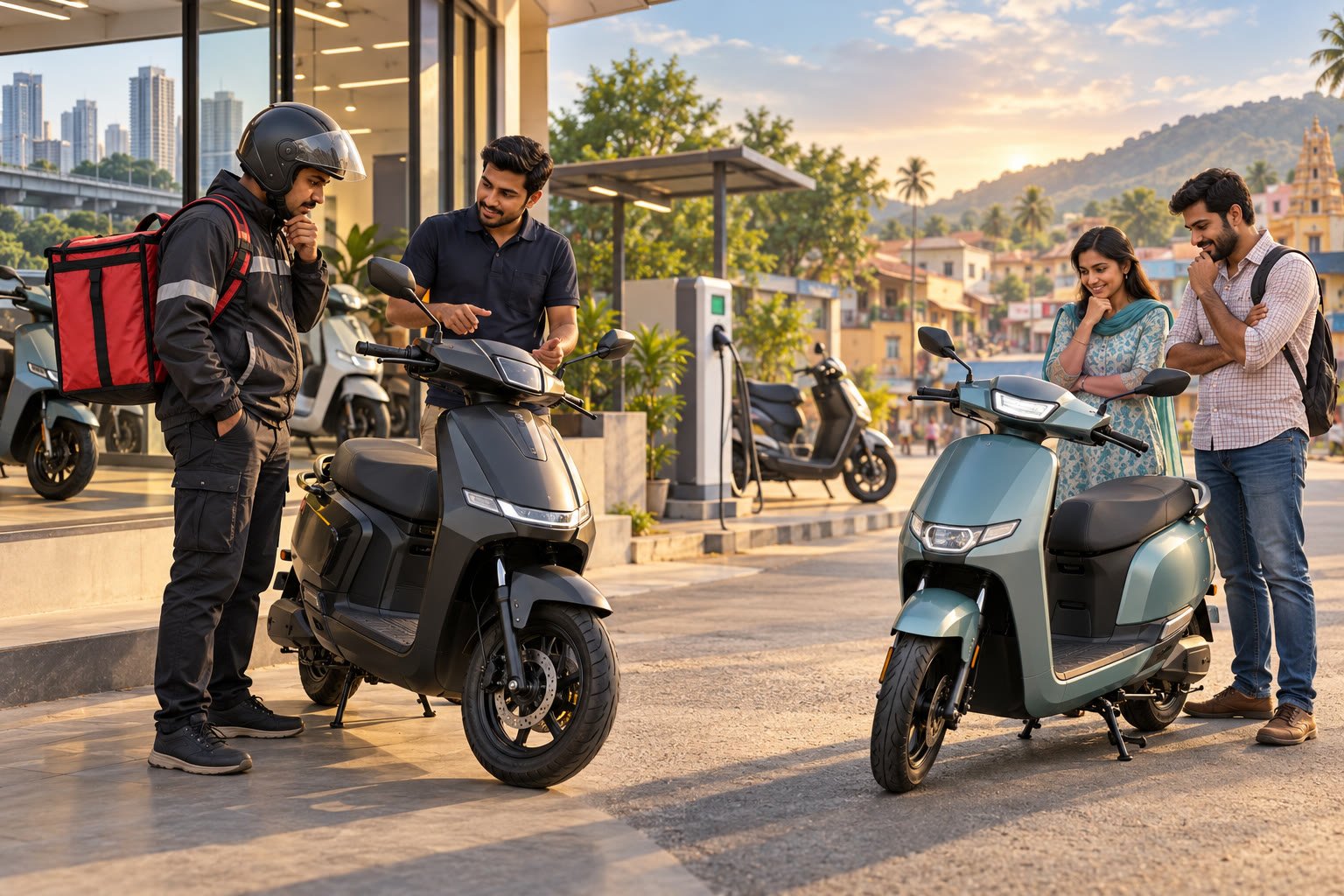
BCG identifies 10 demand spaces based on how people travel, why they travel and how far they typically go, rather than relying only on age, income or city tier. Two new groups highlighted in coverage of the report are full-time quick-commerce and food-delivery workers, and younger Gen Z commuters in non-metro markets.
For delivery riders, affordability, speed and manoeuvrability can matter more than a premium feature list. Their vehicle may face long daily duty cycles, repeated stops and tight turnaround requirements. That makes usable range, charging downtime, battery warranty and the local repair network part of the earning equation, even when the headline running cost looks attractive.
For non-metro younger buyers, the priorities are different. A vehicle needs to cope with rougher roads and longer trips while still offering the styling and digital features that make an electric model appealing. A model that works well on short urban commutes may not offer the same confidence on a mixed city-to-highway route.
What existing owners like—and what still worries buyers
BCG's findings, as reported by The Economic Times and India Today on 26 and 27 Oct 2026, say owners rate electric two-wheelers positively for low running and maintenance costs, comfort, storage, manoeuvrability and digital features. Perceptions of performance, appearance and brand trust have also improved as more established manufacturers and models enter the segment.
The gaps are more practical than ideological. Rough-road capability, city-to-highway suitability and vehicle longevity remain concerns, while safety, ease of service and battery range still need to be made clearer to many potential buyers. The durability question is especially important because a large part of the current fleet has not yet been owned long enough to provide a long-term comparison with petrol two-wheelers.
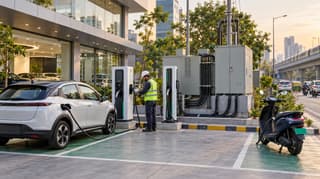
That is where the state-wise EV charging directory can help frame a route question, but a directory cannot replace a check of the exact scooter's charging time, connector, home-parking setup or service coverage. Charging availability is one part of the ownership system; the vehicle's support after a fault is another.
What this means for a two-wheeler buyer now
The report's main value is that it changes the question from “Are people interested in electric?” to “Which riders can use an electric two-wheeler reliably?” A short-distance commuter with predictable parking and charging may face a different decision from a delivery rider, a household sharing one scooter or a buyer who regularly travels between towns.
For a petrol-versus-electric comparison, the fuel cost calculator can establish the combustion-fuel baseline from distance, mileage and a dated fuel price. The result is only one part of total ownership: purchase price, electricity tariff, charging losses, service, insurance, tyres, battery coverage and resale all affect the final comparison.
Battery protection deserves its own line in the comparison. Buyers can use the EV battery warranty guide to understand why years, kilometres, state of health and exclusions matter. A longer headline warranty is not automatically equivalent to broader protection, and warranty terms should be read for the exact model and battery pack.
For riders who combine commuting with weekend travel, the road-trip planner can help map the route question separately from the purchase question. It is useful to ask whether the scooter's usable range and charging stops fit the actual trip, rather than assuming that a claimed range figure will remain unchanged with passengers, gradients, traffic or weather.
Checks to make before comparing electric scooters
- Match range to the real route: compare daily kilometres, traffic, load and weather with the manufacturer's test conditions and leave room for charging access.
- Confirm charging practicality: check whether home or workplace charging is possible, how long a full charge takes and what happens if public charging is unavailable.
- Read battery coverage: note the time, kilometre limit, minimum state-of-health promise, exclusions and whether roadside support is included.
- Check service depth: find the authorised workshop, parts availability and expected turnaround in the city or district where the scooter will be used.
- Keep resale and insurance visible: ask how battery condition, software support and accident repairs are treated rather than assuming every electric model has the same ownership profile.
What to watch next
The next useful evidence will be October registration data, new model availability, service-network expansion and whether buyers' stated interest keeps translating into repeat purchases. Manufacturers will also need to show how they address rough-road durability, battery assurance and support for riders whose routes extend beyond the city.
The report's message is not that petrol two-wheelers are about to disappear. It is that electric two-wheelers are moving into the mainstream consideration set, and the deciding factors are becoming more specific. For Indian riders, the practical choice will depend less on a broad EV-versus-petrol debate and more on the fit between a particular vehicle, its battery support, its charging access and the route it must serve.
Sources
- Boston Consulting Group — “Electric in Charge: How India’s E2Ws Are Moving into the Mainstream” — 26 Oct 2026
- The Economic Times — “Nearly half of Indian two-wheeler buyers eye EVs: BCG report” — 26 Oct 2026
- India Today — “43% of Indian two-wheeler buyers consider EVs for their next purchase: Report” — 27 Oct 2026
- Autocar India — “43 percent of Indian two-wheeler buyers now open to an EV: BCG” — 27 Oct 2026