India had 52,718 public electric-vehicle charging stations as of July 2026, including 16,561 stations equipped with fast chargers for cars, according to a Ministry of Heavy Industries reply posted on 21 Jul 2026. A fresh Fortune India report on 20 Oct 2026 says the next challenge is less about announcing more plugs and more about making public charging reliable, compatible and viable on highways.
That distinction matters to Indian drivers. A national station count is useful evidence that the network is expanding, but it does not tell an EV owner whether a particular charger will be working, compatible with the vehicle, accessible at the planned time or backed by another stop on a long route.
Key takeaways
- The government count is a July 2026 snapshot of public charging stations, not a live guarantee of availability.
- Of the 52,718 stations, 16,561 were equipped with fast EV chargers for cars; the overall total should not be read as 52,718 quick-stop sites.
- Fortune India reports that reliability, interoperability, grid access and the economics of non-metro locations are now central infrastructure questions.
- EV buyers and road-trip users need a route-level check covering charger type, connector, live status, payment and a backup stop.
What the July government count tells us
The Ministry of Heavy Industries said in its written Lok Sabha reply that the figures came from the BHEL portal. The release counted 52,718 public charging stations nationwide and identified 16,561 public stations equipped with fast EV chargers for cars. Both figures are dated to the government snapshot available in July 2026.
The release also described public-charging support under the FAME-II and PM E-DRIVE programmes, particularly for cities and highways. It referred to the Ministry of Power's 2024 guidelines, which are intended to support a connected and interoperable charging network. These are useful signs of policy support, but they do not turn a national infrastructure count into a promise about an individual station.
The most important reading of the two figures is the difference between total public stations and the subset equipped with fast chargers for cars. A driver looking for a short intercity stop needs more information than the national total: charging speed, connector compatibility, access hours, payment method and whether the site is operational when the vehicle arrives.
Why highway charging is harder than the headline number
Fortune India's 20 Oct 2026 report describes India's charging challenge as a shift from rollout to execution, economics and reliability. It notes that charging sites depend on land, parking access, transformer connectivity and dependable electricity. Those constraints can make a charger easy to install on paper but harder to operate consistently in the places where an intercity driver needs it.
The report also points to multiple charging technologies and connector configurations. That matters because a station can be nearby without being useful for every vehicle. The vehicle's inlet, the charger's rated output and the network's access and payment arrangements all have to line up before a stop can be treated as dependable.
Geography adds another layer. A city can have several charging options close together while a highway corridor has long gaps between usable sites. Fortune India says deployment remains concentrated in metros and selected highway corridors, with low utilisation outside metros and high upfront costs slowing private investment. For drivers, the practical result is that a growing national network may still feel uneven on a specific journey.
What this means for EV owners, buyers and fleets
City users may experience a different problem from highway users
For an owner who can charge at home or at work, public infrastructure may be occasional support rather than a daily dependency. A commuter can therefore have a workable routine even when the wider network is still developing. That does not remove the need to check a public charger before a holiday or intercity trip.
Buyers should separate running cost from route confidence
An EV comparison that looks only at energy cost can miss the value of time spent charging, the need for a detour and the possibility of a backup stop. The station count is a useful national context, but a buyer should test the routes the vehicle will actually run. A model with a suitable range and a compatible charging network may fit one household's use better than another's, even in the same city.
Fleets need uptime and redundancy
For delivery, taxi and commercial operators, a delayed charging session can affect the next assignment. Fleet planning therefore needs more than a map pin: it needs confidence in the charger's operating status, the vehicle's connector and power requirements, payment access, queue risk and an alternative location. The same principle applies to private drivers on a route where the next station is far away.
Checks before relying on a public charger
FuelPrice's state-wise EV charging directory can help create an initial list of stops. Treat that list as a planning starting point, then verify the station through the relevant operator before departure.
- Match the hardware. Check the vehicle's connector and maximum charging capability against the charger type and rated output shown for the site.
- Check current access. Confirm the latest availability, operating hours, payment method and any access restrictions. A directory listing is not the same as a live service guarantee.
- Build a backup. Identify another compatible charger before leaving the first stop, especially on a corridor with large gaps or limited mobile coverage.
- Plan the time as well as the distance. Charging time, queue conditions and a possible detour affect the trip even when the energy cost looks favourable.
The road-trip planner can help organise distance, stops and travel time around the vehicle's real route. When comparing an EV with a petrol or diesel vehicle for a particular journey, the fuel cost calculator can provide the conventional-fuel baseline; charging time and electricity charges still need to be added separately.
What changes now, and what to watch next
The latest figures do not announce a new national charging fee, vehicle inspection requirement or EV-owner deadline. They show a network that is expanding while the user experience remains uneven. For drivers, the immediate change is a better way to interpret the headline: station growth is progress, but route reliability is the more useful question before a long trip.
The next indicators to watch are consistent uptime, better coverage beyond major metros, interoperable access across networks, suitable fast-charging capacity and clearer live information for drivers. Fortune India's reporting suggests that infrastructure quality and commercial viability will determine whether the network can keep pace with EV adoption.
Reader takeaway: India's 52,718 public charging stations are an important infrastructure milestone, but they are not a guarantee that every route has a working fast charger. For an EV purchase or road trip, use the national count as context and make the final decision from the exact corridor, vehicle compatibility and backup options.
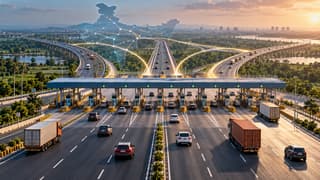
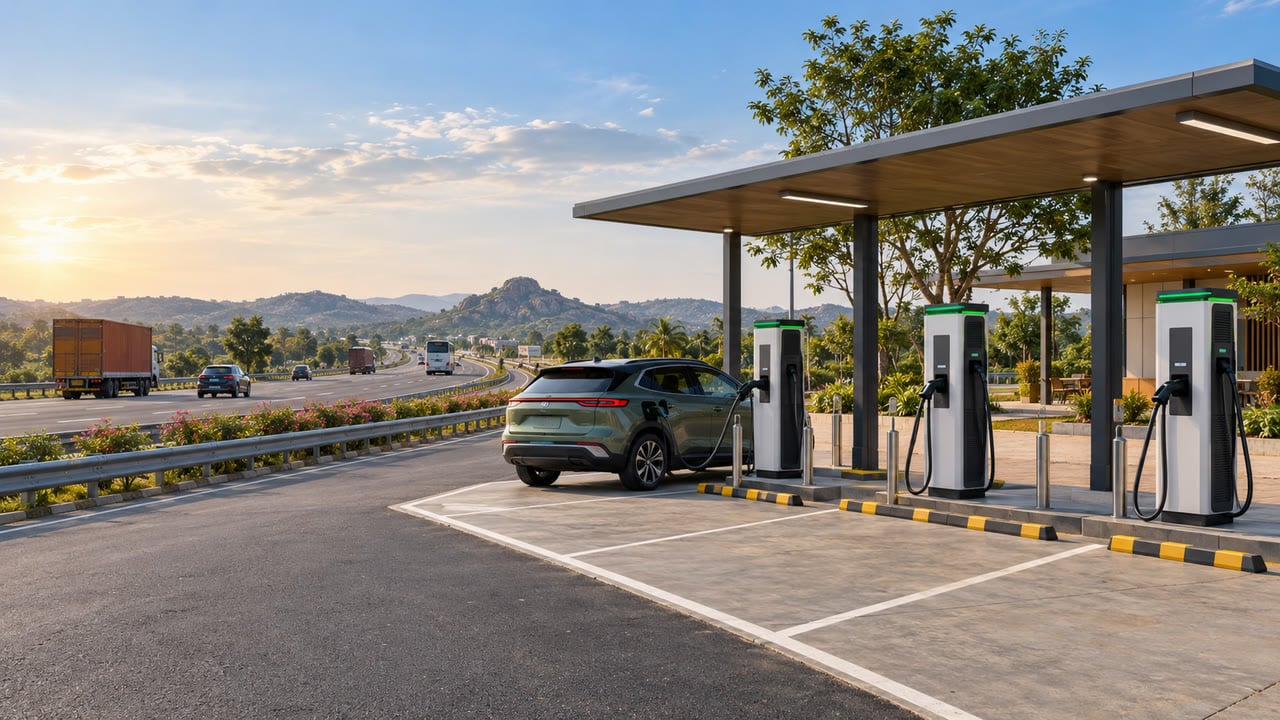
Image note: This is a generated editorial illustration of an Indian highway EV-charging hub. It is not a photograph of a specific station, vehicle or charging operator. Credit: FuelPrice editorial illustration.