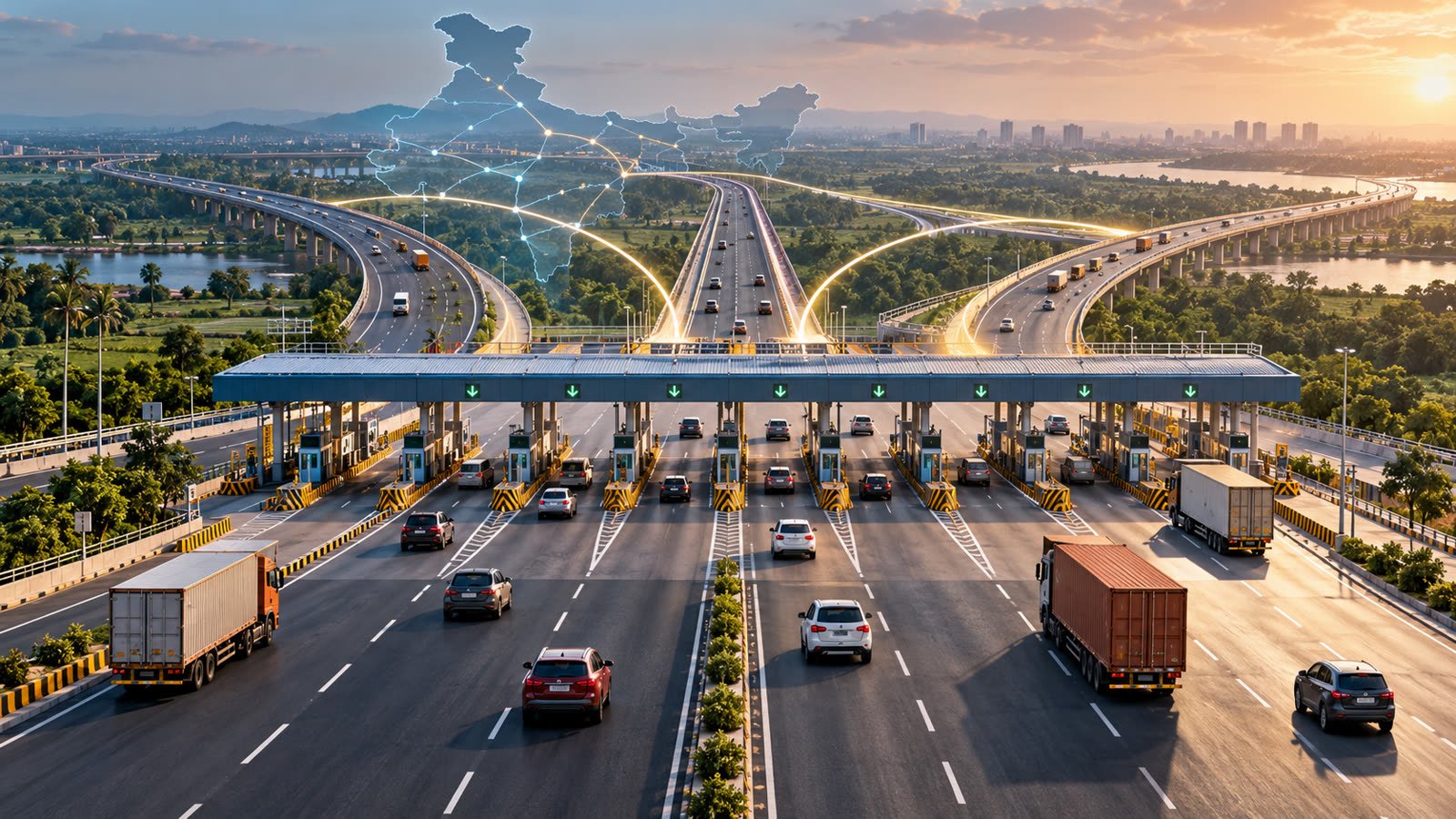
NHAI is preparing a second Public Infrastructure Investment Trust (InvIT) phase that could bring a new pool of operational national-highway assets into a monetisation programme. An Indian Masterminds report on 20 Oct 2026 put a possible launch in December, while Moneycontrol had separately reported that NHAI was identifying fresh road assets; an official e-tender confirms that NHAI is procuring transaction-advisory services for InvIT-mode asset monetisation.
For drivers, this is not a toll-hike announcement. It is a financing structure around operational road assets, so a reported Public InvIT plan does not by itself change what a FASTag user pays at a toll plaza.
Key takeaways
- Public InvIT 2.0 is reported to be in preparation, with a December 2026 launch described as likely rather than confirmed.
- The official eProcurement record lists an NHAI request for transaction-advisory services for projects to be monetised through the InvIT mode.
- The reported second phase is expected to add more operational NHAI road assets; the specific corridors have not been disclosed.
- There is no new toll fee or FASTag rule in the reported plan. Any change in user charges would need a separate, corridor-specific or fee-rule communication.
What has been reported
Indian Masterminds reported on 20 Oct that the Centre is likely to launch the second phase of its Public InvIT programme in December 2026. The report, citing a senior government official, said NHAI and two other public-sector infrastructure companies are expected to offer assets for monetisation. It described the expected coverage as roads and highways, railways and power, but said the other two PSUs and the individual assets were not yet identified publicly.
Moneycontrol had reported on 17 Sep that the Centre was preparing a second Public InvIT phase and that NHAI was identifying a fresh set of road assets. The newer report adds a possible December window, but that timing should remain labelled expected: the public sources reviewed for this article do not show a final launch notification or a list of highway stretches for the new phase.
There is, however, an official process signal. The Government eProcurement portal lists NHAI as the organisation behind a request for proposal for empanelment of transaction-advisory services for projects to be taken up for asset monetisation through the InvIT mode. The record shows tender reference NHAI/13013/InvIT/2026-27/TA/RFP and tender ID 2026_NHAI_279196_1, with technical bid opening marked as in progress on 18 Oct 2026.
How the highway InvIT model works
An InvIT pools investment into infrastructure assets that generate income. In the highway context, the relevant assets are generally operational road stretches with established toll collections. The trust structure can unlock capital from those assets, while the public authority can use the proceeds to support further infrastructure development. It does not mean that every road placed in an InvIT becomes a new toll road, nor does it automatically create a new charge for motorists.
NHAI’s first public vehicle, Raajmarg Infra Investment Trust (RIIT), provides the current reference point. Moneycontrol reported that its initial public offering was worth ₹6,000 crore and opened on 11 Mar 2026. The same report said NHAI accepted a ₹9,500 crore offer from RIIT for monetisation of five highway sections across four states. Indian Masterminds also reported the ₹6,000 crore March IPO and the five-section first phase.
The wider policy pipeline is much larger than one InvIT issue. NITI Aayog’s National Monetisation Pipeline 2.0 sets an overall monetisation potential of ₹16.72 lakh crore across sectors for FY 2026–27 to FY 2029–30, while highway assets account for about ₹4.14 lakh crore in the highway-sector table. Those are pipeline estimates, not an amount that will be charged to road users or raised in the next issue.
What changes for toll and FASTag users now
Nothing in the reported Public InvIT 2.0 plan changes a driver’s immediate payment at a fee plaza. Toll rates, exemptions, payment modes and dispute processes continue to depend on the applicable National Highways Fee rules and official notices for the relevant corridor. A separate fee notification would be needed for a user-charge revision.
For a planned journey, drivers can still use the toll-charge calculator to estimate the route’s current toll burden. Combining that figure with the fuel-cost calculator gives a more realistic trip budget when a route has several fee plazas.
Fleet operators and frequent highway users should distinguish three separate developments: an asset being selected for monetisation, a change in the agency responsible for operations or maintenance, and a revision in the fee payable by each vehicle class. Only the third directly changes the toll line in a trip budget. Until NHAI or the Ministry of Road Transport and Highways publishes corridor details, the reported plan is best treated as a financing and governance development.
What to watch next
- Launch confirmation: NHAI, the ministry or the Centre may confirm whether the expected December window is retained.
- Asset list: the names, concession periods and operating status of the highway stretches will show which routes are involved.
- Operating responsibility: documents should clarify how maintenance, incident response and service standards will be monitored after monetisation.
- Separate fee notices: any toll revision, exemption change or FASTag process update should appear in its own official communication rather than be inferred from the InvIT plan.
Reader takeaway
Public InvIT 2.0 could help recycle revenue from existing highways into new infrastructure, but its immediate effect on a driver is limited. There is no toll or FASTag action to take solely because the reported plan is being prepared. For route planning, the road-trip planner remains the useful place to compare distance, stops and the current journey cost while the asset list and launch date are still pending.
Sources
- Indian Masterminds — Centre Targets December Launch for Public InvIT 2.0, NHAI and Two Other PSUs to Offer Infrastructure Assets — 20 Oct 2026
- Moneycontrol — NHAI readies Public InvIT 2.0 to widen road asset monetisation — 17 Sep 2026
- Government eProcurement System — NHAI InvIT transaction-advisory services tender status — 18 Oct 2026
- NITI Aayog — National Monetisation Pipeline 2.0 — Feb 2026