India's petrol and diesel market has entered a new phase on July 1, 2026. The Centre has withdrawn the temporary restrictions that had blocked commercial buyers from purchasing fuel at retail outlets and had capped diesel sales at 200 litres per customer or vehicle per day. That means transport operators, institutional users and other commercial buyers can once again purchase petrol and diesel from ordinary retail pumps without the June emergency limits.
This is not a routine paperwork update. It is the rollback of a supply-protection measure that was imposed only weeks earlier, on June 12, 2026, when the Ministry of Petroleum and Natural Gas notified the Motor Spirit and High-Speed Diesel (Temporary Regulation of Supply through Retail Outlets) Order, 2026. At that point, the government was trying to prevent black marketing, hoarding and local shortages during a period of stress in global energy trade linked to the conflict in West Asia and supply-chain disruption around oil movement.
For FuelPrice readers, the real value of this story lies in understanding what changed, why it matters, and what it says about India's current fuel-risk environment. The rollback does not directly cut pump prices for everyone. Instead, it restores normal fuel access at a time when the government appears more comfortable about domestic supply conditions. That matters for transport fleets, industrial users, backup-power operators, construction contractors and even regular motorists who were indirectly affected by unusual pump queues and supply anxiety during the June restrictions.
What changed from July 1, 2026
According to Reuters, Economic Times and Moneycontrol reports published on June 29, 2026, the government order lifting the curbs takes effect from July 1. Under the June emergency regime, commercial buyers could not freely buy petrol and diesel from retail stations, and diesel sales at public retail outlets were capped at 200 litres per customer or vehicle per day. From July 1, those restrictions are removed, which effectively restores standard retail fuel access.
| Rule position | June emergency phase | From July 1, 2026 |
|---|---|---|
| Commercial buyers at retail pumps | Restricted from normal retail purchases | Normal retail purchase access restored |
| Diesel sale limit | 200 litres per customer or vehicle per day | Cap removed |
| Policy objective | Protect domestic supply, curb hoarding and prevent local shortages | Return to normal market access after supply conditions improved |
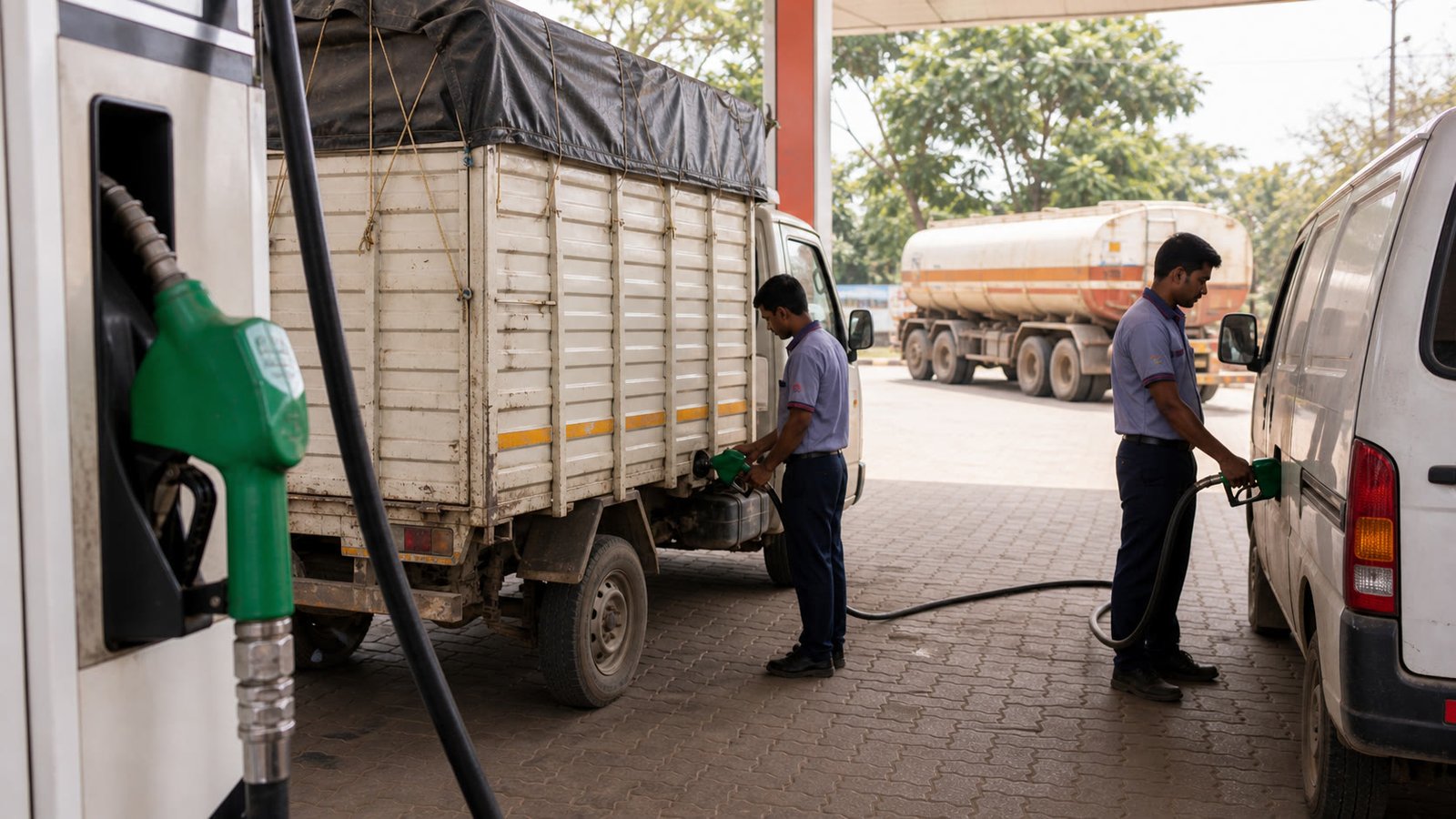
The immediate significance is practical. A commercial vehicle operator no longer has to navigate the June cap at the pump. A buyer who previously had to split diesel purchases, reroute vehicles or depend on alternate arrangements can now refuel through the ordinary retail channel again. That lowers friction, even if it does not guarantee lower prices.
Why the government imposed the curbs in June
The June restrictions were not introduced in a vacuum. The official PIB note issued on June 12 said the temporary control order was designed to curb black marketing and hoarding of diesel and to ensure availability for retail consumers. Reports at the time also pointed to a widening gap between retail and bulk fuel economics, which encouraged some large buyers to move toward ordinary fuel pumps. That kind of shift can distort demand at the retail level because pumps built for vehicle refuelling suddenly face quasi-bulk demand behaviour.
Reuters reported when the restrictions were first imposed that India had barred commercial fuel buyers from purchasing petrol and diesel from retail stations and capped daily diesel purchases to prevent local shortages. In plain terms, the government was trying to stop a situation where supply stress abroad translated into panic, opportunistic buying or a sudden crowding-out of ordinary retail consumers at home.
That context matters because the rollback should not be read as proof that fuel risk has disappeared. It means the government believes the immediate supply position has improved enough to remove the extraordinary controls well before the original 90-day outer window discussed when the control order was notified.
Who benefits most now
- Transport operators: trucks, vans and commercial fleets regain simpler retail refuelling without the June diesel cap.
- Industrial and institutional users: buyers who faced operational inconvenience can once again access retail supply more normally where business models permit it.
- Construction and site operators: fuel planning becomes less fragmented because repeated pump visits and volume splitting are no longer necessary.
- Ordinary motorists: they may not get cheaper fuel from this decision alone, but they benefit if pump operations become less distorted by emergency controls and supply anxiety.
The clearest winner is the user whose day-to-day movement depends on diesel availability more than on headline fuel prices. A logistics operator loses money when vehicles wait, detour or refuel inefficiently. Even if the per-litre rate is unchanged, normalising access reduces time loss, scheduling friction and transaction complexity.
What this says about the wider fuel market
This rollback is also a confidence signal. It suggests New Delhi is less worried, at least for now, about an immediate mismatch between domestic availability and retail demand. That aligns with the broader cooling seen in some crude-related stress indicators after the sharp anxiety created by West Asia disruptions. It also fits with other recent fuel developments, including softer expectations around crude and selective price relief in parts of the downstream market.
Still, users should separate three different issues: availability, access and price. This order mainly changes access. Availability appears better, which is why the rule was lifted. But price behaviour will still depend on crude costs, shipping stability, taxes, refinery economics and how retailers respond. A commercial buyer should not assume that the lifting of a cap means a broader structural decline in fuel costs.
What to watch next
The next watchpoint is whether improved supply conditions hold through July. If global oil transport stress returns, governments can move quickly from normal market rules back to supply-management mode. That makes it important for businesses to avoid reading this as permanent immunity from future intervention.
Fuel users should also watch how retail pump traffic behaves in the first week after the rollback. If commercial demand normalises smoothly and queues remain stable, that will support the government's decision. If supply pressure reappears in pockets, states, dealers or oil companies may have to respond operationally even without a fresh national restriction.
The reader takeaway is clear. India's July 1 rollback is important because it restores normal petrol and diesel access for commercial buyers and removes the 200-litre diesel cap imposed during the June emergency phase. For transporters and other heavy users, that means easier refuelling and fewer operational workarounds. For the broader market, it is a sign that the government sees less immediate supply risk, but not a guarantee that fuel volatility is over.
Sources: PIB June 12, 2026 control-order note, Economic Times June 29, 2026 report, Moneycontrol June 29, 2026 report, Reuters via MarketScreener June 29, 2026 dispatch.