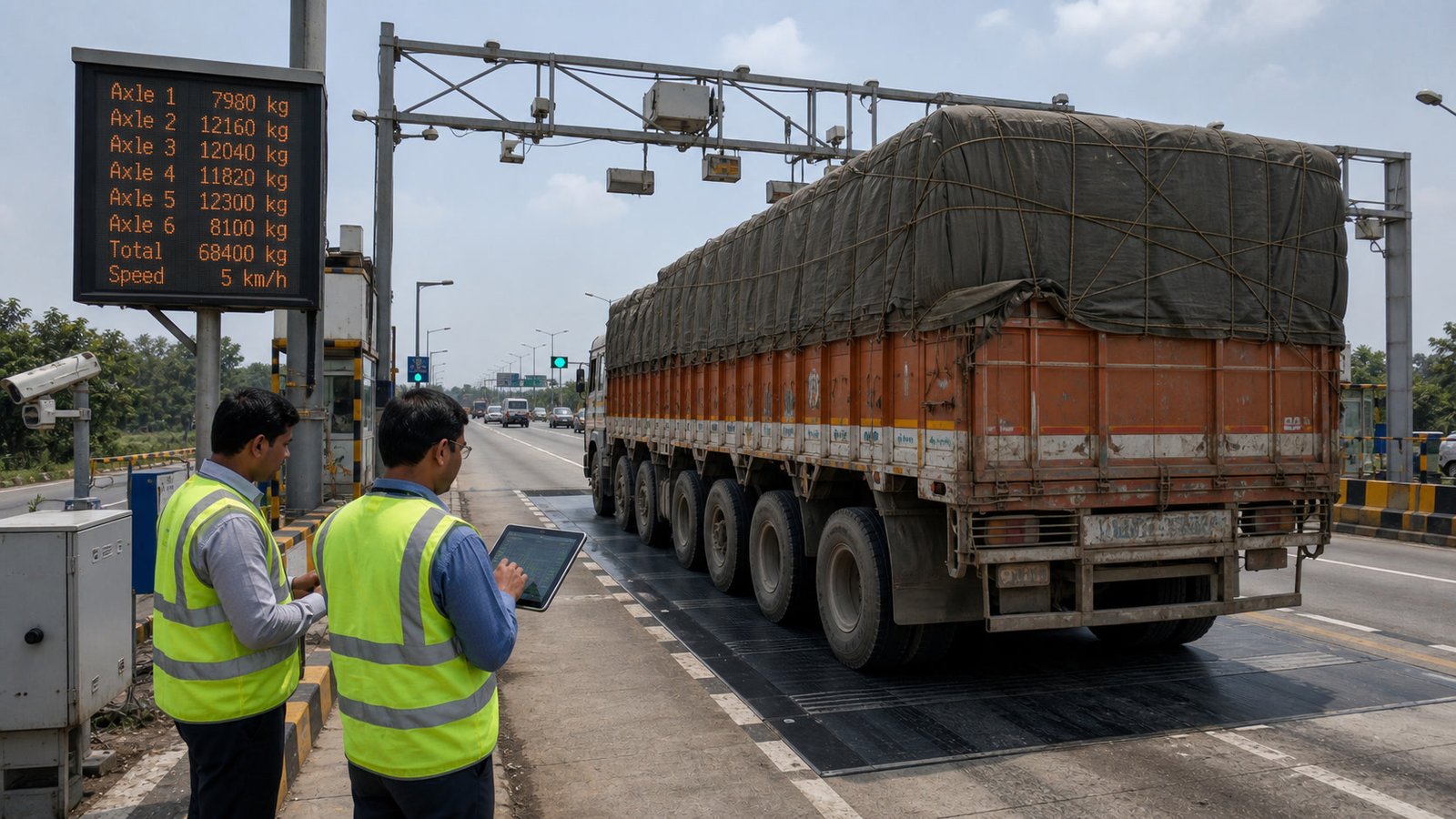
India has tightened the toll-fee framework for overloaded commercial vehicles on National Highways, and the change has direct consequences for freight operators, corridor compliance and fuel-linked logistics costs. Through the National Highways Fee (Determination of Rates and Collection) Fourth Amendment Rules, 2026, the Ministry of Road Transport and Highways (MoRTH) revised Rule 10 and brought the new mechanism into force from 15 April 2026.
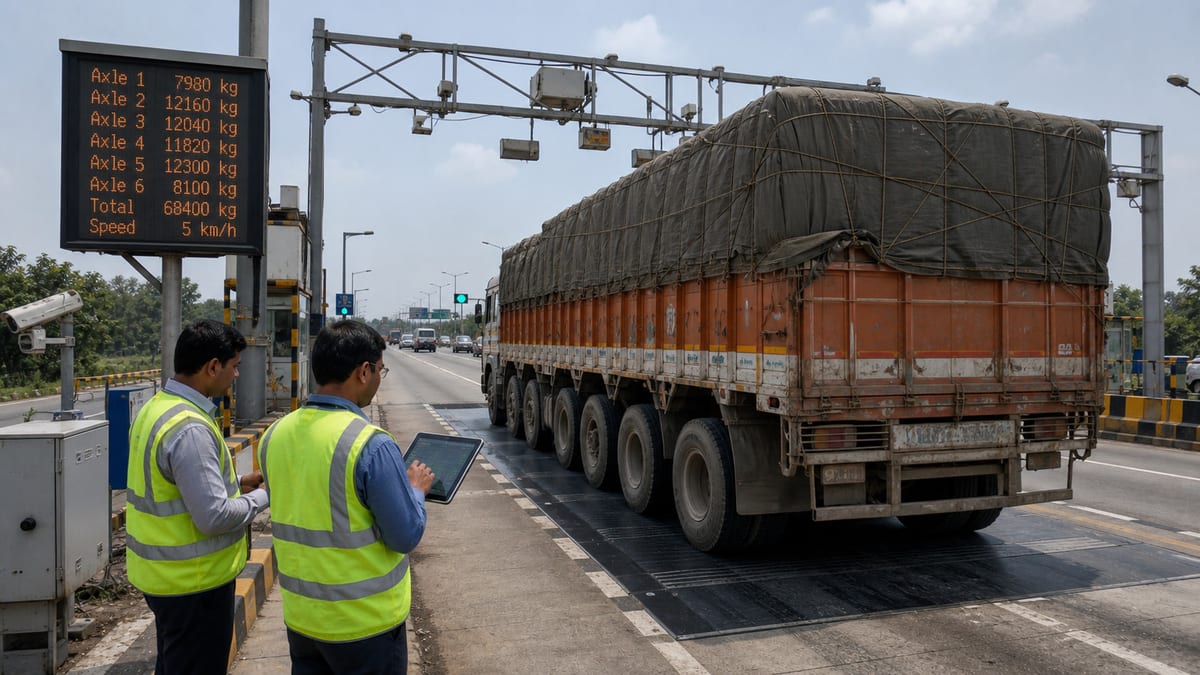 The revised Rule 10 introduces graded overloading user fees and digital reporting, aiming to curb road damage and improve compliance.
What Changed Under the New Rule 10
Under the amended framework, overloading fees are now linked to the extent of excess load and are to be collected digitally, including through FASTag-enabled systems where applicable. Based on the official notification and ministry communication, the broad structure is:
- Up to 10% overload: no overloading fee.
- 10% to 40% overload: user fee at 2 times the base applicable rate.
- Above 40% overload: user fee at 4 times the base applicable rate.
The rules also require overloaded-vehicle details to be recorded and reported to the National Vehicle Register (VAHAN), creating a stronger audit trail for enforcement agencies and highway administrators.
Before vs After: Why This Is a Material Policy Shift
Before: Enforcement quality varied by corridor and operational discipline. Overload fee recovery and data visibility were not always uniformly integrated with central digital records, leaving room for dispute and inconsistent compliance behaviour.
After: The policy now combines graded economic disincentives with digital reporting. That means both the cost of violating load norms and the probability of detection/traceability have increased. For transporters, this is not merely a toll-rate update; it is a compliance-architecture update.
In freight economics, overloading has often been used to lower per-tonne trip cost in the short term. The revised rule raises the immediate toll burden for non-compliant operators, while potentially shifting more fleets toward lawful loading patterns and better route-cost planning.
| Overload Band | Fee Impact | Operational Message for Fleets |
|---|---|---|
| Up to 10% excess load | No overload fee | Limited tolerance remains, but not a free pass for habitual overloading. |
| 10% to 40% excess load | 2x base user fee | Trip economics worsen quickly for non-compliant loading. |
| Above 40% excess load | 4x base user fee | Strong deterrence tier; extreme overloading becomes significantly more expensive. |
Who Is Affected and Why It Matters
- Truck fleet operators: dispatch planning, axle-load discipline and trip-level profitability assumptions need recalibration.
- Freight brokers and shippers: load contracts and lane pricing may need revision where overload-driven pricing was embedded informally.
- Toll operators/concessionaires: clearer digital process and reporting obligations can reduce leakages and improve traceability.
- Road users and public agencies: lower structural stress from overloading can improve pavement life and reduce maintenance burden over time.
Fuel and Logistics Impact: The Less Obvious Side
The rule is not a direct fuel-price change, yet it can influence the fuel-mobility chain in multiple ways. Overloaded trucks may appear fuel-efficient per trip in narrow accounting terms, but they increase pavement stress, braking risk and maintenance intensity, which eventually raises system-wide logistics friction. Corridor deterioration and disruption can create idling, detours and slower throughput, pushing up diesel burn at network level.
By penalising higher overload bands more sharply and requiring digital recording, the amended rule attempts to shift freight movement toward safer loading behaviour. If implemented consistently, that could support more predictable transit times, fewer heavy-load-induced road failures and better long-term efficiency for major freight corridors.
Key Compliance and Enforcement Signals
Two operational features make this update notable. First, overloading determination relies on certified weighment systems at fee plazas, tying penalty logic to measured load bands. Second, reporting to VAHAN introduces a cross-system visibility layer that can support coordinated enforcement under wider motor-vehicle compliance mechanisms.
The ministry communication also indicates that no overload fee is levied where weighment facilities are not available, highlighting the continuing importance of infrastructure readiness at fee plazas.
What Changes Now and What to Watch Next
For transport businesses, the immediate change is behavioural: route operators now have a stronger financial reason to avoid severe overload bands. Over the next few months, stakeholders should track:
- How quickly weighment-enabled enforcement becomes uniform across high-freight corridors.
- Whether freight rates adjust upward in lanes previously dependent on overload practices.
- How VAHAN-linked reporting affects repeat-offender detection and deterrence.
- Whether road-quality indicators in heavy-truck sections improve over medium term.
FuelPrice Takeaway
The Fourth Amendment to NH fee rules is a high-niche but strategically important logistics policy move. By combining graded overloading charges (0x/2x/4x structure) with digital reporting and FASTag-linked collection pathways, MoRTH has raised the cost of non-compliance while improving traceability. For transporters, toll operators and fuel-linked supply chains, this is a governance shift with real commercial implications: loading discipline is no longer just a safety issue, it is now a sharper cost-and-compliance variable in day-to-day freight economics.
Sources: