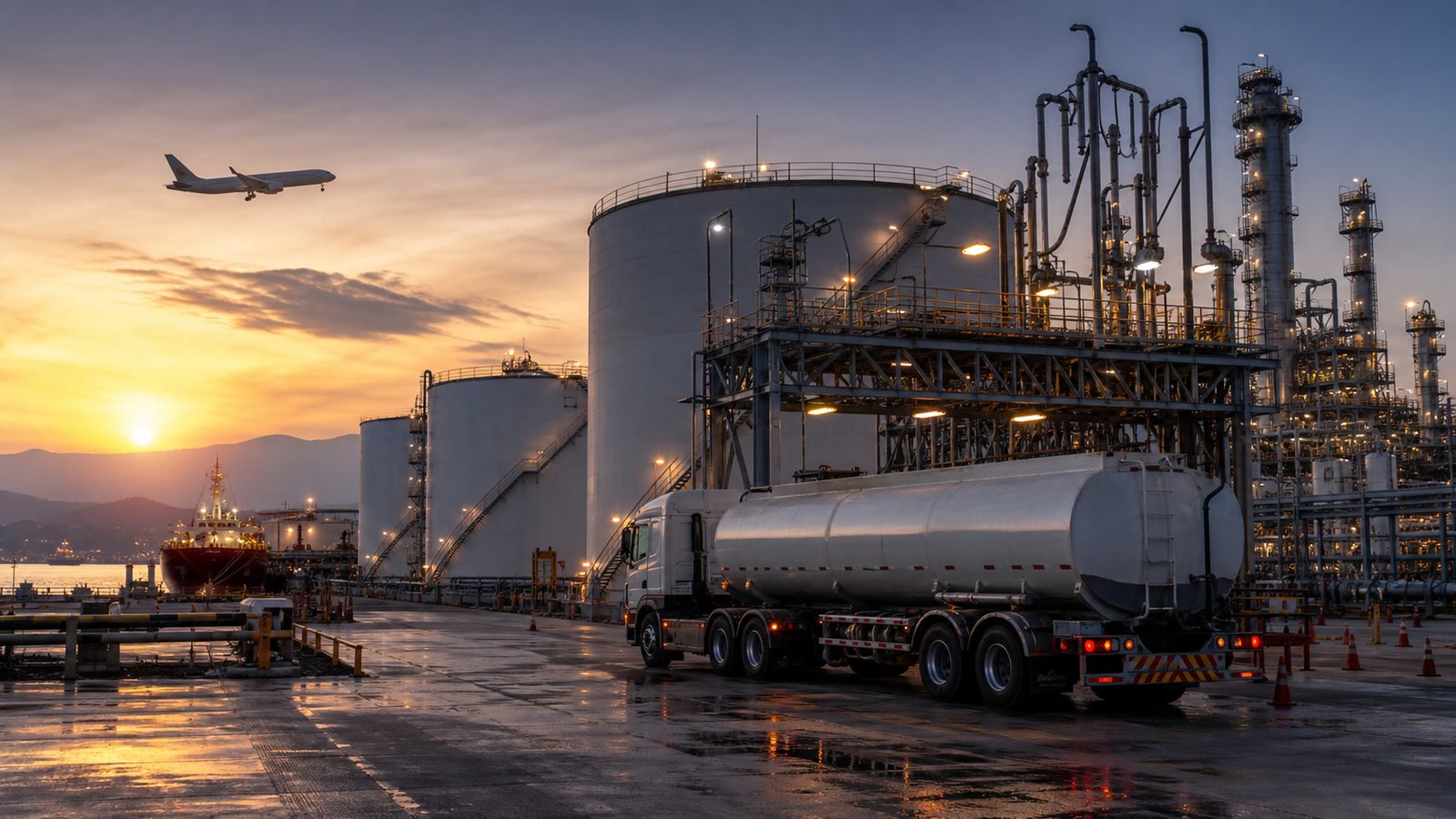
The Centre's latest fuel-policy move is easy to miss if you only track petrol and diesel pump rates, but it matters for the businesses that sit behind those prices. On June 16, 2026, India raised the special additional excise duty on diesel exports to ₹14 per litre and on aviation turbine fuel (ATF) exports to ₹12.5 per litre, while leaving the levy on petrol exports unchanged. The change takes effect at a time when domestic retail fuel prices are not being revised in the same way, which makes this a policy and market story rather than a simple consumer-price headline.
For FuelPrice readers, the core issue is not whether a car owner sees a cheaper filling-station bill tomorrow. It is whether the government is adjusting the export economics of refined fuels to keep more value aligned with domestic supply, refinery margins and revenue collection. That is why this move is important for oil refiners, airline fuel buyers, logistics operators, freight markets and investors who watch the fuel chain closely.
What changed on June 16
According to the government's notification reported by The Economic Times and The Times of India, the windfall-style levy on diesel exports moved up to ₹14 per litre, while the levy on ATF exports rose to ₹12.5 per litre. Petrol exports were left untouched. The timing matters: the change is effective immediately for the new fortnightly cycle beginning June 16.
In plain language, this is an export-side tax adjustment. It does not order oil marketing companies to cut retail petrol or diesel prices at the pump. Instead, it changes the economics of what refiners earn when they sell diesel or ATF abroad. If the export duty is higher, exporters keep a smaller share of the international sale price after tax, which can make domestic sales relatively more attractive than exports when global margins are tight.
Why the government keeps tweaking this levy
India introduced windfall-style export levies in 2022 when global crude prices surged and refiners were earning unusually high profits from international markets. Since then, the levy has been adjusted multiple times as crude, refining spreads and export incentives moved up and down. The policy logic has remained broadly the same: when export economics become unusually favourable, the government can reclaim part of that gain and keep the domestic supply system better balanced.
That balance is important because India is both a major fuel consumer and an exporter of refined products. Refiners earn in global markets, but domestic supply must stay dependable for transport, industry, power backup, farming and aviation. A levy on exports gives the Centre a lever to manage that trade-off. It is not a price control in the old sense, but it is a direct signal that the state wants to influence where refined fuel goes and how much of the upside stays with exporters.
There is also a revenue angle. Windfall levies can bring in money when the market is delivering unusually high margins, and they let the government respond faster than a full tax overhaul. That matters in a sector where crude prices, freight rates, exchange rates and geopolitical shocks can all change within days.
What it means for refiners
For refiners, even a small duty shift changes net realisation. Diesel is one of the most important refined products in India's export basket, and ATF is strategically important because aviation fuel economics are closely watched by airlines, airports and fuel traders. If export levies are higher, refiners may see thinner margins on overseas sales or may need to rework their mix between domestic and export volumes.
That does not automatically mean exports stop. Overseas demand, freight costs, the rupee, and the crack spread versus crude still matter. But it does mean export decisions become less attractive at the margin. A refinery will compare the tax-adjusted export return with domestic sale options, and even a modest change can influence where the barrel is placed.
For integrated oil companies, the effect can also show up in investor sentiment. A higher levy can be read as a revenue hit to export earnings, but it can also be seen as a signal that the government wants to preserve domestic supply discipline. Those are not the same thing, and the market will usually separate them quickly.
Why airlines and logistics users should still pay attention
ATF is the main fuel input for airlines, and while export duty on ATF does not directly change domestic airport refuelling prices, the policy still matters. Fuel is one of the largest cost lines in aviation, and the economics of domestic versus export sales affect how refiners and marketers think about supply allocation. If exports become less attractive, that can support domestic availability, which is useful in a market where carriers already face pressure from demand recovery, airport charges and route economics.
Logistics and freight users should also watch the policy signal. Diesel remains the backbone fuel for road transport in India, and export levies can influence the broader commercial fuel ecosystem even if they do not change pump rates immediately. The key point for truckers, fleet owners and distributors is that policy moves at the export end can shape refining behaviour, inventories and market sentiment, which eventually feed into freight pricing conversations.
Retail vehicle users should not expect a direct pump-price benefit from this notification. Pump prices move through a separate pricing and tax chain. But in a volatile global oil market, any policy that improves domestic supply discipline can help reduce the risk of sudden local distortions later. In other words, this is not a consumer discount. It is a structural move that can help prevent supply stress.
| Stakeholder | Immediate effect | Why it matters |
|---|---|---|
| Refineries | Lower net return on diesel and ATF exports. | Can influence how much fuel is sold domestically versus overseas. |
| Airlines | No direct domestic ATF price change from the export levy alone. | Policy shifts can affect supply economics and market sentiment. |
| Truckers and fleet owners | No instant pump-price move, but policy direction matters. | Export-side actions can influence broader diesel market behaviour. |
| Consumers | No immediate retail fuel relief or hike. | Signals how the government is managing supply and revenue. |
How this differs from a pump-price update
It is tempting to read every fuel headline as a retail-price signal, but this one works differently. A petrol or diesel pump update affects what motorists see on a board that morning. A diesel or ATF export levy changes the trade economics at the refinery and export-terminal level. The retail chain can feel the policy over time, but there is no automatic one-to-one pass-through to filling stations or domestic jet-fuel counters.
That distinction matters because the fuel market is often discussed as if every policy move has the same kind of impact. In reality, India's fuel chain has several layers: crude import pricing, refining margins, domestic taxes, export incentives, state-level taxes, transport costs and OMC pricing decisions. This levy sits near the export layer, not the consumer layer.
That is also why the latest move should be read alongside the broader June 16 fuel picture. Retail petrol and diesel prices were reported unchanged across major Indian cities on the same day, which means consumers are seeing stability at the pump even as the export side is being adjusted. The result is a split message: the domestic user sees little change now, while the refinery market absorbs the policy change immediately.
What to watch next
The most important signals over the next few days will be crude direction, export differentials, refinery throughput choices and whether the levy is held, cut or revised again in the next notification cycle. Watch also for any changes in domestic ATF pricing, because airline cost pressure is driven far more by the retail ATF formula than by export taxes alone.
For FuelPrice readers, the practical takeaway is straightforward: this is a policy move with indirect but real implications. It does not change the price you pay at the pump today. It does change the economics of how India sells refined diesel and ATF abroad, and that can influence domestic supply, refinery behaviour and fuel-market sentiment over time.
The story, in short, is not about a fuel price shock. It is about the government using a tax lever to shape the fuel market at the export end. That makes the June 16 revision important for refiners, airlines, logistics planners and energy investors, even if ordinary motorists do not see an immediate change on the road.
Sources: Economic Times, Times of India, Navbharat Times.