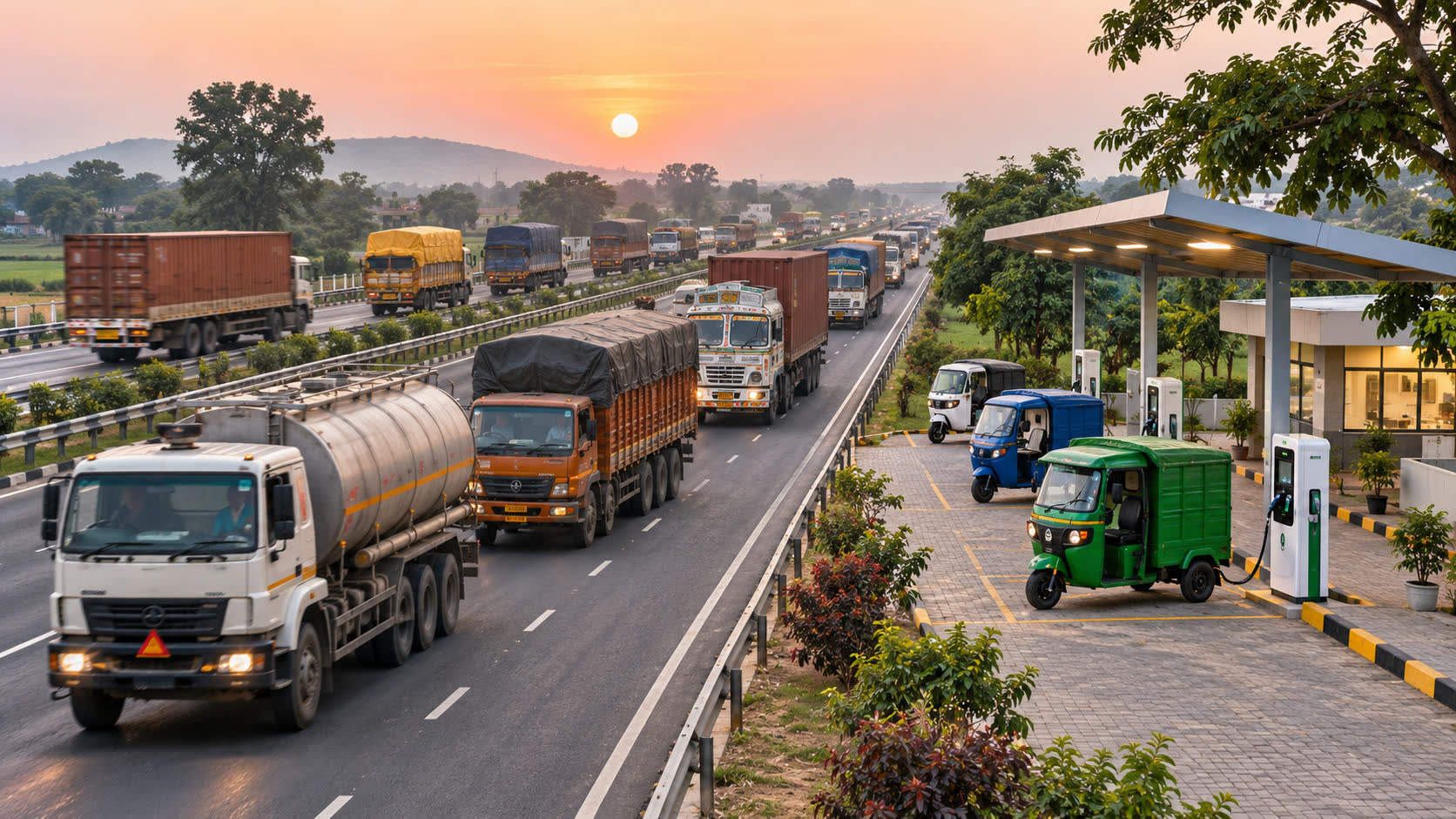
India’s road-fuel demand is projected to keep rising until 2034 and peak above 2.5 million barrels per day, even as electric-vehicle adoption accelerates. The BloombergNEF forecast matters to Indian drivers and fleet operators because it points to a long transition in which petrol and diesel remain central while charging infrastructure expands.
+ +Key takeaways
+-
+
- BloombergNEF expects India’s road-transport fuel demand to peak above 2.5 million barrels per day in 2034 before gradually declining. +
- A growing vehicle fleet and heavier commercial-transport use are expected to keep liquid-fuel demand rising in the near term. +
- Electric vehicle adoption is advancing unevenly: three-wheelers are closest to India’s targets, while other segments are projected to lag. +
- BloombergNEF estimates about $29 billion of charging-infrastructure investment will be needed by 2040. +
What the BloombergNEF forecast says
+The forecast comes from BloombergNEF’s Electric Vehicle Outlook 2026, which examines how electrification is changing road transport and related industries. Business Standard and OilPrice separately reported on 13 Nov 2026 that the report puts India’s road-fuel peak above 2.5 million barrels per day in 2034.
+ +This is a projection, not a promise about petrol or diesel prices. Pump rates will still depend on international crude, the rupee, taxes, refinery and marketing decisions, and local pricing. The forecast answers a different question: how much fuel the road-transport system may consume before the electric shift becomes large enough to reduce the total.
+ +Why fuel demand can keep rising during EV growth
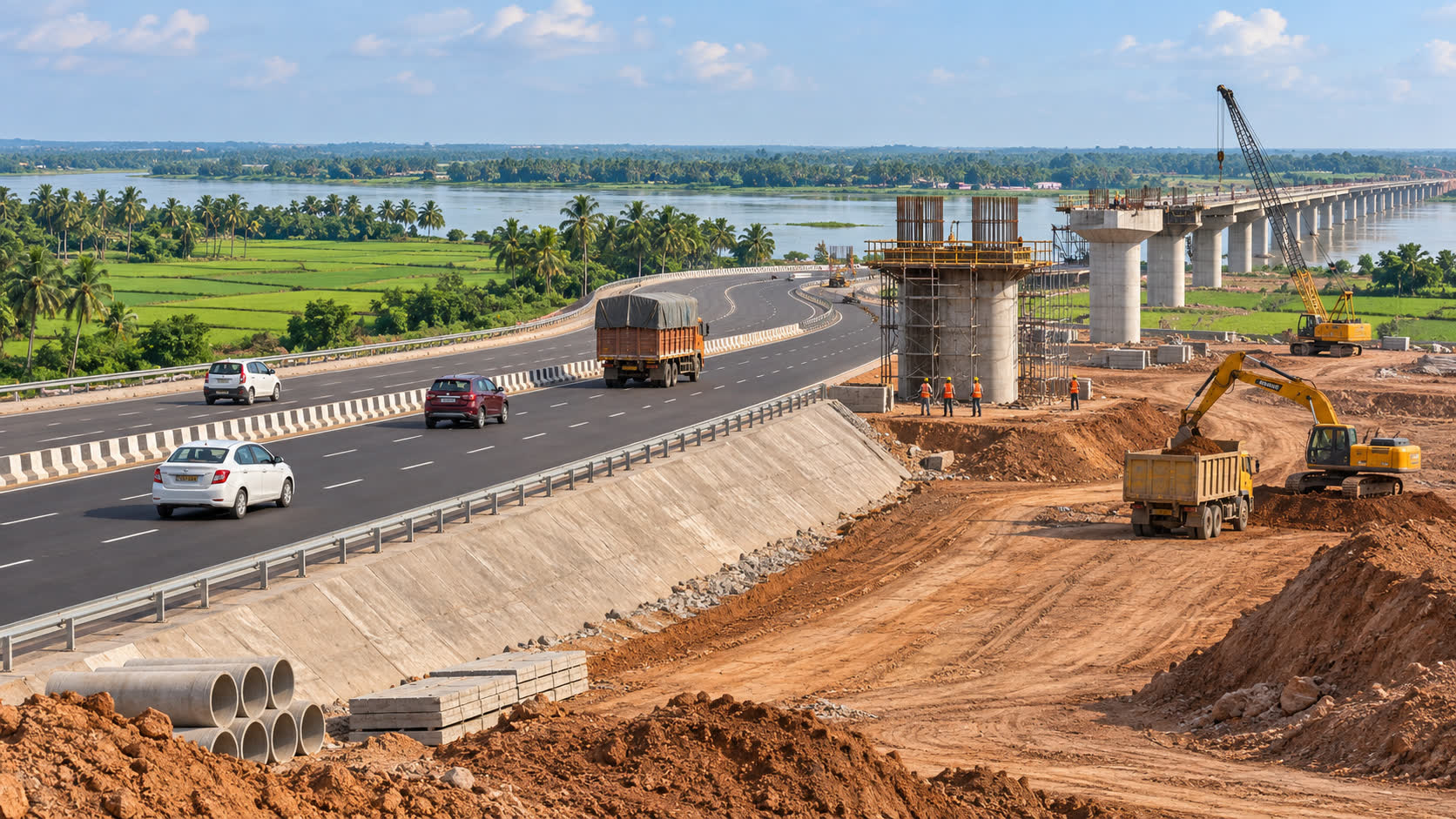
+India is adding vehicles and road movement at the same time that EV sales are growing. That combination matters because commercial vehicles travel more frequently and carry more goods than most private cars. Trucks, buses, light commercial vehicles and other work vehicles therefore continue to influence diesel demand even when electric two-wheelers and three-wheelers gain market share.
+ +The BNEF outlook also treats electrification as a segment-by-segment transition rather than one national switch. Its India assessment, as reported by Business Standard and OilPrice, says EV sales crossed 2.4 million units in 2025, but three-wheelers are the only segment projected to be on track to meet the country’s 2030 electrification targets. Passenger cars and commercial vehicles still face higher upfront costs, charging and operating requirements, and a need for more suitable models.
+ +Charging is the other half of the forecast
+BloombergNEF estimates that India will need about $29 billion in charging-infrastructure investment by 2040 if EV adoption is to spread beyond the segments already moving fastest. That figure does not mean every driver will see a charger on every route. It highlights the scale of network, grid, land and business-model investment needed before more cars and commercial vehicles can rely on electricity for longer trips.
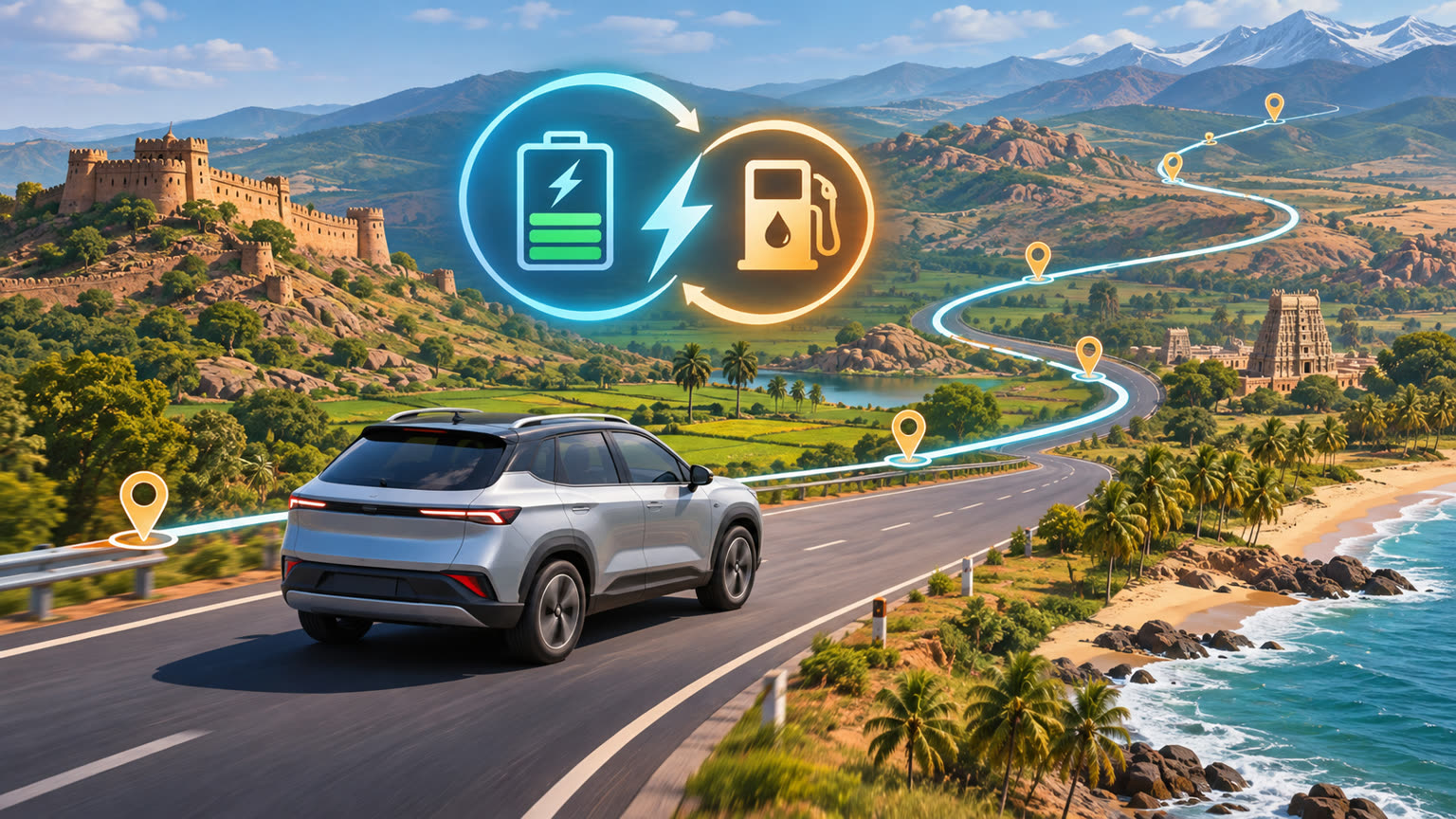
+ +For EV owners, the practical issue is route confidence: where a compatible charger is located, how far it is from the next stop, and whether the site is suitable for the vehicle. The state-wise EV charging directory can help with the first part of that check, but drivers should still confirm availability and connector details before a long journey.
+ +What it means for Indian drivers and fleets
+The near-term message is not that EVs have failed or that petrol and diesel use will rise forever. It is that the two systems will coexist for years. Private drivers will continue to compare fuel prices and running costs, while fleet operators will weigh utilisation, payload, charging downtime, vehicle availability and resale value alongside the cost of diesel or petrol.
+ +As a simple planning example, a petrol car that averages 15 km per litre on a 300-km trip would use about 20 litres. That is an illustrative calculation, not a forecast; the actual rupee total depends on the city’s pump price, traffic, load and driving conditions. Readers can check current rates on the live fuel-prices page and estimate a route on the fuel-cost calculator.
+ +For a wider road trip, fuel is only one part of the budget. Toll charges, route length, charging stops and expected travel time can change the result, so the road-trip planner is useful when comparing a petrol, diesel or EV journey on the same corridor.
+ +What to watch next
+Three indicators will show whether the forecast is moving closer to reality: the pace of commercial-EV adoption, the reliability and geographic spread of public charging, and fuel use by road-freight operators. A rise in private EV sales alone will not quickly remove the need for liquid fuel if high-utilisation commercial fleets remain predominantly internal-combustion powered.
+ +Policy targets and forecasts should also be kept separate. Government incentives can improve the economics of an EV, but adoption still depends on model availability, purchase cost, financing, charging access and the type of work the vehicle performs. For drivers, the useful takeaway is to compare the full trip and ownership cost for the vehicle and route in front of them, while recognising that India’s fuel and electric systems are likely to operate side by side through the next decade.
+ +