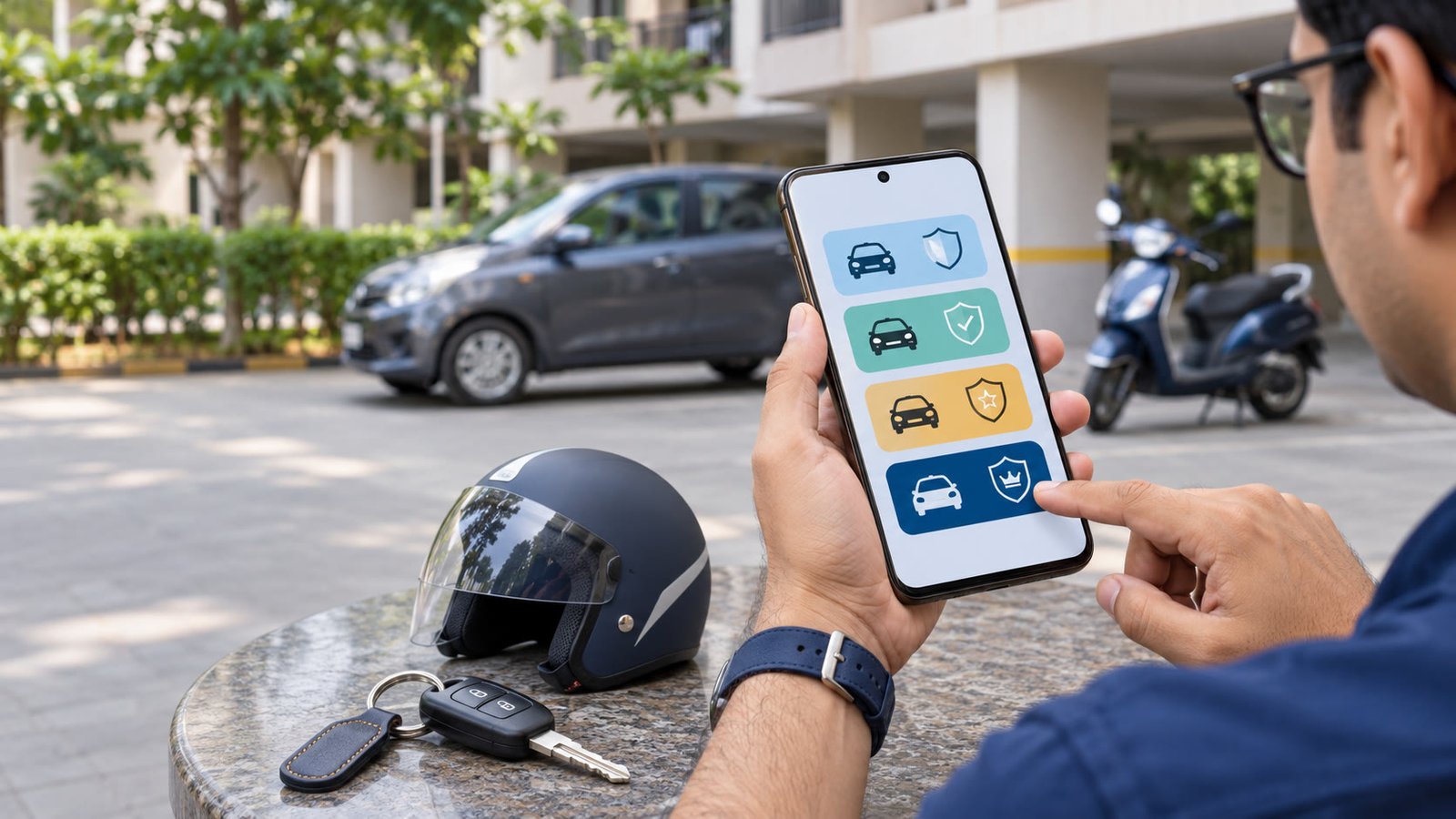
IRDAI will require motor-insurance policies for private cars and two-wheelers to follow a four-layer structure from 15 December 2026. The change is meant to show owners exactly which protection they have selected and what each part costs, rather than promising an automatic reduction in the final premium.
Key takeaways
- Third-party liability remains mandatory, as does the applicable owner-insured personal-accident cover.
- Occupant or pillion-rider liability, additional personal-accident protection and own-damage cover are separate options.
- Insurers must collect an option form and issue a Customer Information Sheet when a private-car or two-wheeler policy is bought.
- Policy schedules must show the coverage and premium for each section separately.
- An existing third-party policyholder can add occupant liability during the policy term through the same insurer, without cancelling the policy.
What IRDAI has changed
The IRDAI circular dated 2 November 2026, reference IRDAI/CIR/MOT/10/2026, directs general insurers to use uniform policy wordings for private vehicles. It follows the Supreme Court direction cited in the circular and covers new cars and new two-wheelers, with all policies issued from 15 December 2026 required to conform to the new structure.
The framework is designed to separate the risks that are often bundled together in a package policy. That should make the policy schedule easier to read, but the regulator has not set one common total premium for every vehicle or owner. Stand-alone health insurers and specialised insurers are outside the circular’s stated insurer scope; the change is aimed at general insurers carrying on motor-insurance business.
The four sections in plain language
| Section | Status | What it covers |
|---|---|---|
| I. Third-party liability | Mandatory | Legal liability arising from injury, death or property damage caused to a third party. |
| II. Occupant or pillion-rider liability | Optional | Legal liability for occupants, pillion riders and covered employees travelling in the insured vehicle. |
| III. Personal accident | Split by person | Owner-insured personal-accident cover remains mandatory; protection for occupants, pillion riders and other drivers is optional. |
| IV. Own damage | Optional | Loss of or damage to the insured car or two-wheeler. |
What owners will see when buying or renewing
The practical change is a more itemised purchase journey. The insurer must provide a customer option form, either online or offline, so the customer records which covers are selected. The completed form becomes part of the policy. A Customer Information Sheet must also be issued at the point of sale, while the schedule must show the actual cover and the premium charged against each section.
For a policy issued on or after 15 December, a single headline premium should therefore be read alongside the section-wise breakdown. A customer comparing a car or bike renewal will need to check whether the quote includes occupant liability, additional personal-accident protection and own-damage cover, or records them as declined. The important distinction is between the cover shown on the schedule and assumptions made from the word “comprehensive”.
Two-wheeler owners should also check whether pillion-rider liability and any additional personal-accident protection are separately shown. The bike-insurance renewal and validity checklist explains related renewal documents and policy details that remain useful when the new format arrives.
What happens to an existing third-party policy
The circular gives current policyholders a specific route for adding Section II. An existing third-party policyholder can request occupant or pillion-rider legal-liability cover during the policy period by paying an additional premium. The request must be made with the insurer that issued the third-party policy, and the extra risk begins from the date and time recorded in the endorsement.
The policy does not have to be cancelled to add this cover. This is separate from the earlier regulatory clarification covered in our report on adding occupant cover to an existing third-party policy. Owners should retain the endorsement and verify its start time, because the circular makes the effective point part of the documentation.
Does the four-layer format reduce premiums?
Not automatically. IRDAI has standardised the structure and wording, but it allows insurers to continue determining own-damage pricing in line with market conditions and to develop additional coverage options. Actual premiums can therefore still vary with the vehicle, owner profile, selected protection, insurer and applicable terms.
The likely benefit is transparency rather than a guaranteed rupee saving. Separate line items can make it easier to compare like-for-like cover and identify whether a lower quote is missing protection that another quote includes. Before a claim, the schedule and Customer Information Sheet will be the clearest record of what was selected. Owners can use the car-insurance claim and exclusion guide to review the policy questions that commonly matter when cover is tested.
What to check before paying
- Check the policy issue date and whether it falls on or after 15 December 2026.
- Match the option form with the policy schedule so the mandatory and optional sections are recorded consistently.
- Read the Customer Information Sheet and confirm the premium shown for each selected section.
- Do not assume that a third-party policy includes occupant or pillion-rider liability; look for the relevant section or endorsement.
- If an active third-party policy needs Section II, ask the issuing insurer for the additional premium and the endorsement’s exact start date and time.
What to watch before 15 December
Insurers must implement the uniform wordings, option form and Customer Information Sheet, and integrate the four-layer structure with Bima Sugam from the same date. The next practical development will be how insurers display the options and price own-damage protection. For owners, the central change is a clearer record of selected cover; the circular does not create a single premium or make all four sections compulsory.
Sources
- Insurance Regulatory and Development Authority of India — “Four Layer Structure-Motor Insurance Policy”, circular IRDAI/CIR/MOT/10/2026, 2 Nov 2026
- Business Standard — “Irdai introduces four-layer motor insurance structure from December 15”, 4 Nov 2026
- Moneycontrol — “IRDAI directs insurers to offer 4-part motor insurance cover from December 15”, 4 Nov 2026
This article is for general information only and is not financial, insurance or legal advice.