A rejected car insurance claim can turn a manageable repair into a large out-of-pocket bill. The rejection letter is not the end of the discussion, but it is the point at which the policy wording, the facts of the loss and the insurer's evidence must be compared carefully. An expired driving licence is a serious warning sign, but it does not by itself decide every insurance dispute.
This guide explains the common rejection points for Indian motor insurance, the documents that make a claim easier to assess, how to read a partial settlement and the formal routes available when the reason given does not match the policy. It is a practical checklist, not a promise that any particular claim will be approved.
Key takeaways
- Third-party motor insurance is compulsory for a vehicle used in a public place, but it does not automatically pay for damage to your own car.
- An insurer can examine policy validity, the driver's licence and vehicle class, declared use, exclusions, disclosure and the evidence submitted.
- An expired licence can weaken a claim, but the decision still has to be read against the exact policy clause and the facts of the accident.
- Keep the policy schedule, RC, driving licence, claim form, photographs, estimates and police records where relevant.
- Ask for a written rejection or settlement calculation. If the response remains unsatisfactory, use the insurer's grievance channel and then the appropriate external forum.
What a car insurance policy actually covers
Start by separating the two protections often called “car insurance”. Under Section 146 of the Motor Vehicles Act, 1988, a vehicle used in a public place must have insurance against third-party risk. That cover is designed for legal liability to another person or property; it is not the same as cover for repairs to the insured car.
Damage to your own vehicle normally depends on an own-damage section, a package policy or a standalone own-damage policy. The schedule and endorsements decide the insured vehicle, declared use, insured declared value, deductibles, add-ons and exclusions. Before arguing about a denial, read your car insurance policy document and locate the period of insurance, the claim section, exclusions and post-loss conditions.
The checks behind most claim disputes
1. Was the policy active on the date of loss?
Check the policy start and end dates, payment record and any endorsement that changed the vehicle or cover. A renewal quote, payment attempt or old policy copy is not the same as an active policy. Also confirm whether the claim is for theft, third-party injury, own-damage repair or a personal-accident benefit, because each section can have different conditions.
2. Was the driver legally entitled to drive?
Section 3 of the Motor Vehicles Act requires an effective driving licence authorising the person to drive the vehicle in a public place. Compare the licence validity and class with the driver and vehicle recorded in the claim. Do not confuse an old document format with proof that a licence was fake or invalid, but do not assume a genuinely expired or wrong-class licence can be ignored either. The written reason should identify the driver, alleged breach and policy condition.
3. Did the vehicle use match the policy?
A private-car policy and a commercial-use risk are not interchangeable. Carrying paying passengers, making deliveries, using the vehicle for business or permitting an unauthorised driver can create a dispute when the policy declared a different use. Record who was driving, where the car was going and whether the journey had a work purpose or permit requirement.
4. Did an exclusion or condition apply?
Common exclusion areas include driving under the influence, racing or speed testing, intentional damage, unauthorised modifications and damage outside the insured peril. Wear and tear, mechanical failure and consumables may also be treated differently from accidental damage. Ask whether a disputed item is excluded, subject to a deductible, depreciated, limited by an add-on or simply outside the accepted estimate.
5. Was the incident reported and documented?
The Government's car-insurance consumer booklet advises policyholders to contact the insurer promptly, understand the required documents and preserve evidence. Delayed reporting or repairs before inspection can make the accident, theft, witnesses, damage or vehicle location harder to verify. For a theft or serious accident, police records may be relevant; for a repair claim, photographs before dismantling, the claim number, surveyor details, estimate and final invoice are useful.
6. Was information disclosed accurately?
Policy applications, renewal forms and claim forms should describe the vehicle and incident accurately. Undeclared accessories, material modifications, an incorrect use category or a conflicting accident description can trigger an investigation. Do not guess a date, location or sequence to make a form look complete; mark what is known and attach supporting evidence.
Documents to keep before asking for a review
- Policy schedule, certificate, endorsements and premium payment record.
- Registration certificate and the driving licence of the person driving at the time of loss.
- Claim form, claim number, insurer messages and the surveyor or assessor's inspection record.
- Photographs or video of the scene, vehicle position, damage, number plate and road conditions.
- Repair estimate, parts list, invoices and proof of payment for a reimbursement claim.
- FIR, police report or other official record where the policy or incident makes it relevant.
The Consumer Affairs booklet notes that cashless repair can use a different document flow from reimbursement: a service centre may send many records, while the policyholder still needs to submit the claim form and cooperate with assessment. Confirm the exact list with the insurer and ask why any additional document is relevant.
What the recent licence dispute teaches
On 29 October 2026, The Indian Express reported that a Hassan consumer commission ordered an insurer to pay an accidental-death claim after the insurer relied on the deceased person's expired driving licence. The reported reasoning focused on evidence that another driver's negligence caused the fatal crash and that the insured person had not contributed to it.
The case is a warning against two shortcuts. An expired licence can create legal and insurance exposure, but a reference to an expired licence should not be treated as an automatic final answer without checking the policy, type of cover, insured event and evidence. Consumer decisions are fact-specific; one ruling does not guarantee the result of a different motor claim.
IRDAI's 2024 policyholder-protection framework requires transparent claim-settlement processes. Request the rejection, exact clause, documents considered, survey or assessment basis and calculation of deductions in writing.
Worked rupee example: rejection versus partial settlement
Consider this illustrative example, not a premium quote or prediction of an insurer's decision:
- Repair estimate: ₹80,000.
- Items treated as outside cover: ₹15,000.
- Eligible repair amount: ₹80,000 − ₹15,000 = ₹65,000.
- Applicable deductible: ₹2,000.
- Illustrative settlement: ₹65,000 − ₹2,000 = ₹63,000.
A payment of ₹63,000 is a partial settlement, not a repudiation. A zero payout should explain whether the policy was inactive, the event was excluded, a condition was breached or the evidence did not establish the loss. Ask for the calculation before treating the disagreement as a coverage, valuation, depreciation, deductible or document issue.
Where to escalate a rejected claim
First send a written representation to the insurer's grievance redressal officer with the policy, claim number, rejection letter, evidence and specific correction requested. Keep the acknowledgement and date. If the reply is absent or unsatisfactory, IRDAI's Bima Bharosa system can register and track the grievance; it is a regulatory channel, not a guarantee of claim payment.
The comparison below uses the limits and timelines published by the Council for Insurance Ombudsmen and Department of Consumer Affairs material available as of October 2026. Recheck current rules and eligibility before filing.
| Route | Published limit or timing | When it fits |
|---|---|---|
| Insurer grievance officer | First written representation | Ask for the clause, evidence and settlement calculation before using an external forum. |
| Insurance Ombudsman | Complaint within one year of the relevant insurer decision or permitted no-reply point; compensation sought must not exceed ₹50 lakh, as published in October 2026. | Personal-line policyholder disputes after first approaching the insurer, subject to the Ombudsman's rules. |
| Consumer Commission | Department of Consumer Affairs material: District up to ₹50 lakh; State above ₹50 lakh and up to ₹2 crore; National above ₹2 crore. | Consumer-service disputes where the forum's jurisdiction and limitation requirements are met. |
The Ombudsman and consumer-commission routes are not interchangeable in every case. The Council for Insurance Ombudsmen says a complaint on the same subject cannot proceed there when court or consumer-forum proceedings are pending or already decided. Preserve every submission and order.
What to check or do after a rejection
- Download the policy schedule, wording, endorsements and payment receipt in force on the loss date.
- Verify the driver's identity, licence validity and vehicle class against the claim and repair records.
- Write a short timeline with date, location, driver, vehicle use, damage and notification time.
- Ask for a written repudiation or settlement sheet naming the clause and evidence relied upon.
- Compare every deduction with the policy: exclusion, deductible, depreciation, add-on condition, sub-limit or unproven damage.
- Keep originals, submit copies through a traceable channel and record claim and grievance numbers.
- Send a reasoned representation to the insurer's grievance officer if the denial contains a factual or document error.
- Compare Ombudsman and Consumer Commission eligibility before selecting one escalation route.
For future renewals, the car insurance renewal after a claim guide explains how a claim can affect the renewal conversation. If the disagreement is about cover, the third-party versus comprehensive comparison helps identify the section purchased. For add-ons, the add-on cover guide explains why zero depreciation, engine protection and roadside assistance do different jobs.
Frequently asked questions
Does an expired driving licence automatically cancel car insurance?
No single answer applies to every claim. The licence, driver, vehicle class, policy wording, type of cover and facts of the loss all matter. An expired licence can create a serious breach or legal problem, but a reported consumer decision shows why a blanket conclusion should not replace a fact-specific review.
Can an insurer reject a claim because one document is missing?
A missing document can delay assessment or matter when directly relevant to the loss. Ask for the request and its relevance in writing, then supply it or explain why it is unavailable. The policy and incident determine whether the gap is material.
Is a zero payout the same as a low settlement?
No. A low settlement may reflect a deductible, depreciation, an excluded part, a sub-limit or damage that was not accepted. A repudiation means the insurer is refusing liability under the claim; request the written clause and calculation so the issues are not mixed.
Should I approach the Ombudsman or a Consumer Commission?
Check the Ombudsman's personal-line scope, compensation limit, one-year timing rule and requirement to approach the insurer first. Also check Consumer Commission jurisdiction and limitation rules. Do not file the same subject in multiple forums without understanding the consequences.
Keep the written rejection beside the policy wording and use the reported expired-licence claim ruling as context, not as a promise of outcome.
Sources
- The Indian Express — Insurer rejects claim over expired licence after fatal crash, widow wins Rs 10 lakh — 29 Oct 2026
- Department of Consumer Affairs — Car Insurance consumer booklet — accessed 29 Oct 2026
- IRDAI — Protection of Policyholders' Interests, Operations and Allied Matters of Insurers Regulations, 2024 — 20 Mar 2024
- India Code — The Motor Vehicles Act, 1988 — 14 Oct 1988, consolidated text accessed 29 Oct 2026
- IRDAI — Bima Bharosa grievance portal — accessed 29 Oct 2026
- Council for Insurance Ombudsmen — Complaint eligibility and limits — accessed 29 Oct 2026
- Department of Consumer Affairs — Annual Report 2023–24, consumer-commission jurisdiction — 2024
- Press Information Bureau — IRDAI strengthens regulatory framework for motor-insurance claim settlement — 16 Dec 2025
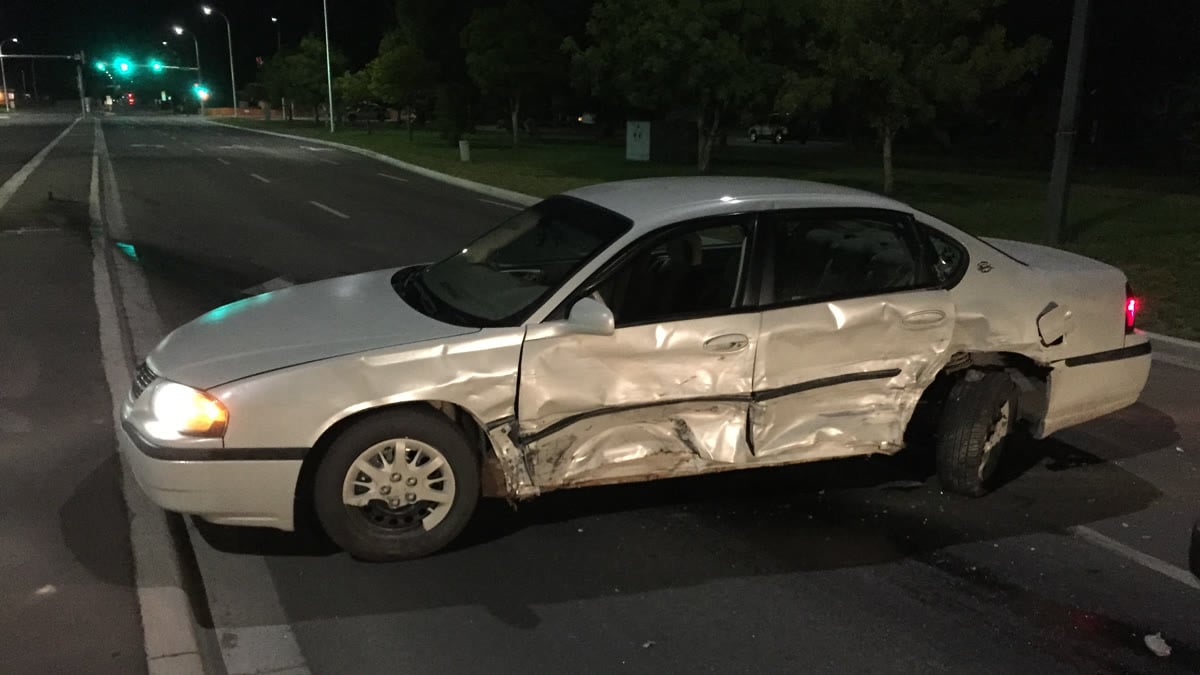
- Wikimedia Commons — Vehicle After a Side-Impact Collision, CC BY 4.0 photograph — accessed 29 Oct 2026
This article is for general information only and is not financial, insurance or legal advice.