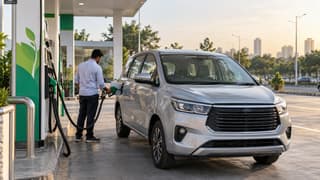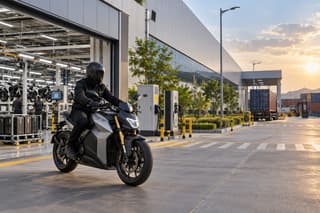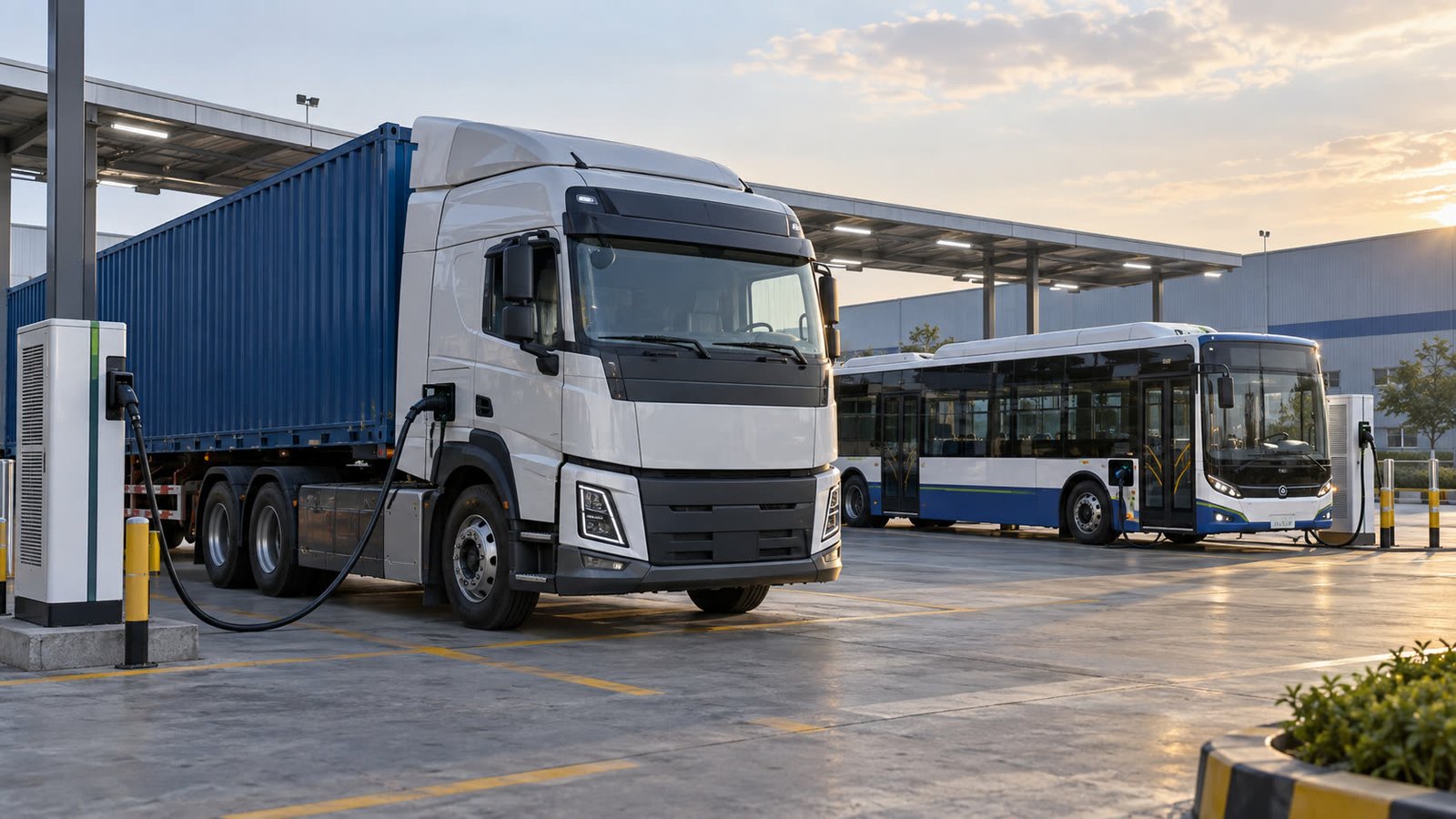
JSW Greentech launched the AMPSTAR brand on 22 Sep 2026 to design, manufacture and sell electric buses and trucks in India. The range starts with a 55-tonne electric tractor-trailer and buses from 7 metres to 18 metres, giving fleet operators a new option to compare against diesel on predictable commercial routes.
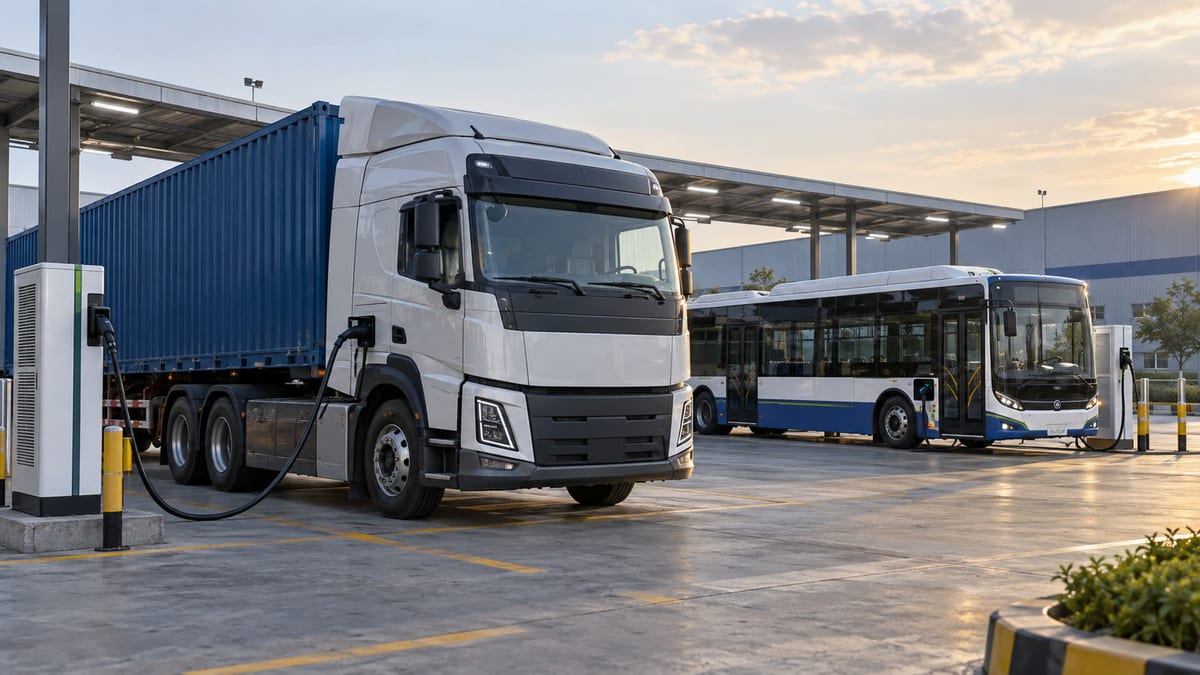 Editorial image generated for FuelPrice; it depicts the electric commercial-mobility story and is not an official AMPSTAR product photograph.
Key takeaways
- AMPSTAR is JSW Greentech's new electric commercial-vehicle brand, launched in India on 22 Sep 2026.
- The first truck is a 55-tonne electric tractor-trailer; the bus portfolio is planned from 7 metres to 18 metres.
- Moneycontrol and NDTV Profit reported a ₹2,500 crore first-phase investment in a 90-acre Chhatrapati Sambhajinagar facility with annual capacity of 15,000 buses and trucks.
- JSW says customers can choose 150 kW to 500 kW configurations and models such as outright purchase, leasing and Battery as a Service, or BaaS.
- A company route test reported by Moneycontrol and Times of India Auto put electric-truck cost at ₹465 per tonne versus ₹580 per tonne for diesel, but that is a route-specific comparison rather than a guaranteed fleet tariff.
What JSW has launched
AMPSTAR marks JSW Group's entry into commercial mobility through JSW Greentech. The company said its offer is designed as a full-stack package rather than only a vehicle sale: the proposition combines electric buses and trucks with charging infrastructure, operating solutions, financing options and after-sales support.
The initial range covers two very different use cases. On the truck side, JSW's 22 Sep release says it is starting with a 55-tonne tractor-trailer and plans to add tippers and fixed-body dumpers later. On the bus side, the stated 7-metre to 18-metre span covers staff transport, city, intercity and school mobility. These are commercial applications, so the relevant comparison is not simply an electric vehicle's sticker price against a diesel vehicle's price; it is the cost and uptime of the whole route.
The company also says customers can specify power configurations from 150 kW to 500 kW. That range is presented as a way to tailor vehicles to different operating requirements, not as one standard specification for every truck or bus.
Plant, investment and production capacity
Moneycontrol and NDTV Profit reported on 22 Sep 2026 that JSW has committed ₹2,500 crore in the first phase of its electric commercial-vehicle business. The manufacturing facility at Chhatrapati Sambhajinagar in Maharashtra covers 90 acres, and the reported annual capacity is 15,000 electric buses and trucks. JSW's own release also confirms the 90-acre site and 15,000-vehicle annual capacity.
JSW says the facility will include an automated truck-cabin line, an integrated battery ecosystem and a pre-treatment and electro-deposition process for bus manufacturing. The company also says it has developed the electric drivetrain's base logic, software and algorithms in-house, with a double-cooling battery system and a high-strength monocoque chassis intended for Indian operating conditions.
For India, the significance is capacity as much as branding. A commercial EV becomes useful to a transporter only when vehicles, chargers, maintenance support and replacement parts can be arranged around the route. A dedicated plant and a full-stack operating offer address that supply-side question, although real-world availability will depend on the production and delivery plans that JSW publishes next.
This is a fleet launch, not a private-car update
NDTV Profit reported that the initial truck focus is on closed-loop operations involving industries such as steel, cement, mining and ports, where vehicles can run along predictable routes. It also reported a direct business-to-business sales approach with outright purchase, cost-per-kilometre and wet-lease arrangements, along with financing, charging, maintenance and BaaS.
That focus matters because predictable routes make it easier to place charging infrastructure, schedule vehicles around charging windows and measure energy use against a known payload. A long-haul operator, a city-bus operator and a plant-to-plant transporter will not have the same energy, downtime or service requirements. The AMPSTAR launch is therefore best read as a commercial operating proposition, not as an announcement that one electric model will suit every fleet.
Operators comparing an electric route with a diesel route can start with the fuel cost calculator and then add electricity, charging, maintenance, finance and downtime assumptions from an actual fleet quotation. The site's live fuel-price page can provide the current diesel reference, but it cannot replace a route-specific commercial cost model.
What the reported route test shows
Moneycontrol and Times of India Auto separately reported a cost comparison from JSW's cement business, where the company said electric trucks on a 290-km Karnataka route worked out to ₹465 per tonne, including the high upfront cost, against ₹580 per tonne for diesel. The arithmetic difference is ₹115 per tonne, or about 19.8% below the diesel benchmark in that test.
That figure is useful because it includes the capital burden rather than presenting only an energy-cost comparison. It is not a promise of savings for every operator. The outcome can change with electricity tariffs, charging demand, vehicle utilisation, payload, route gradients, financing terms, battery life and the cost of keeping a backup vehicle available. A route with long dwell time and a fixed depot may produce a different result from a vehicle that must run continuously between changing destinations.
For that reason, the right reader takeaway is the method rather than the headline percentage: compare the full cost per tonne, kilometre or passenger trip over the vehicle's actual duty cycle. The road-trip planner can help map a route and stops, while commercial operators will still need their own payload, schedule and charging data.
Charging and ownership models will decide adoption
The launch combines several ways of paying for and operating the vehicles. Customers can choose outright purchase, leasing or BaaS, while the wider offer includes charging and operating support. NDTV Profit also reported that the vehicles will use fixed and swappable battery configurations tailored to different applications.
Those choices shift the comparison away from only the purchase price. A fleet assessing an electric truck will need to understand who installs and owns the charger, how charging or swapping affects duty time, what maintenance is included, how battery performance is covered, and whether a lease or BaaS contract changes the per-kilometre cost. The details are not interchangeable, so the same vehicle may produce different economics under different contracts.
Charging access remains a practical constraint for any operator moving beyond a depot-based route. Readers can use FuelPrice's state-wise EV charging directory to understand available public infrastructure, while a commercial deployment would need route-level confirmation of charger capacity, access and uptime.
What changes now, and what does not
AMPSTAR gives Indian fleet operators another announced supplier in electric trucks and buses, but it does not immediately change retail fuel prices or create a nationwide replacement programme. Moneycontrol reported that JSW plans to sell initially to group companies while also making the vehicles available to external customers. The launch reports reviewed for this article focus on the product portfolio and operating models rather than a standard public tariff for every vehicle.
For private motorists, the immediate effect is indirect. More commercial EV capacity could eventually affect the fuel mix used by buses, industrial fleets and freight operators, but the pace will depend on vehicle availability, route economics, financing, charging and service support. There is no basis to treat the launch itself as a reason for a near-term fall in petrol or diesel prices.
What to watch next
The next useful disclosures will be commercial-production timing, customer deliveries, model-level payload and range data, charging and battery-swapping terms, service coverage, warranty conditions and the final cost of each ownership model. Those details will show whether AMPSTAR's full-stack proposition works outside JSW's own operating ecosystem and on the wider routes used by Indian transporters.
For fleet owners and transport planners, the practical question is simple: can the vehicle complete the required duty cycle with acceptable downtime and a transparent total cost? The AMPSTAR launch makes that comparison possible, but the answer will come from route-level operating data rather than the launch announcement alone.
Sources
- JSW Group, “JSW Group powers into Electric Commercial Mobility with AMPSTAR” — 22 Sep 2026
- Moneycontrol, “JSW Group enters electric commercial vehicle market with Ampstar, invests Rs 2,500 crore” — 22 Sep 2026
- NDTV Profit, “JSW Greentech Marks Entry Into Commercial EV Market with ‘Ampstar’ Launch, Invests Rs 2,500 Crore” — 22 Sep 2026
- Times of India Auto, “The Problem Was Never the Battery, It Was the Wait” — 22 Sep 2026