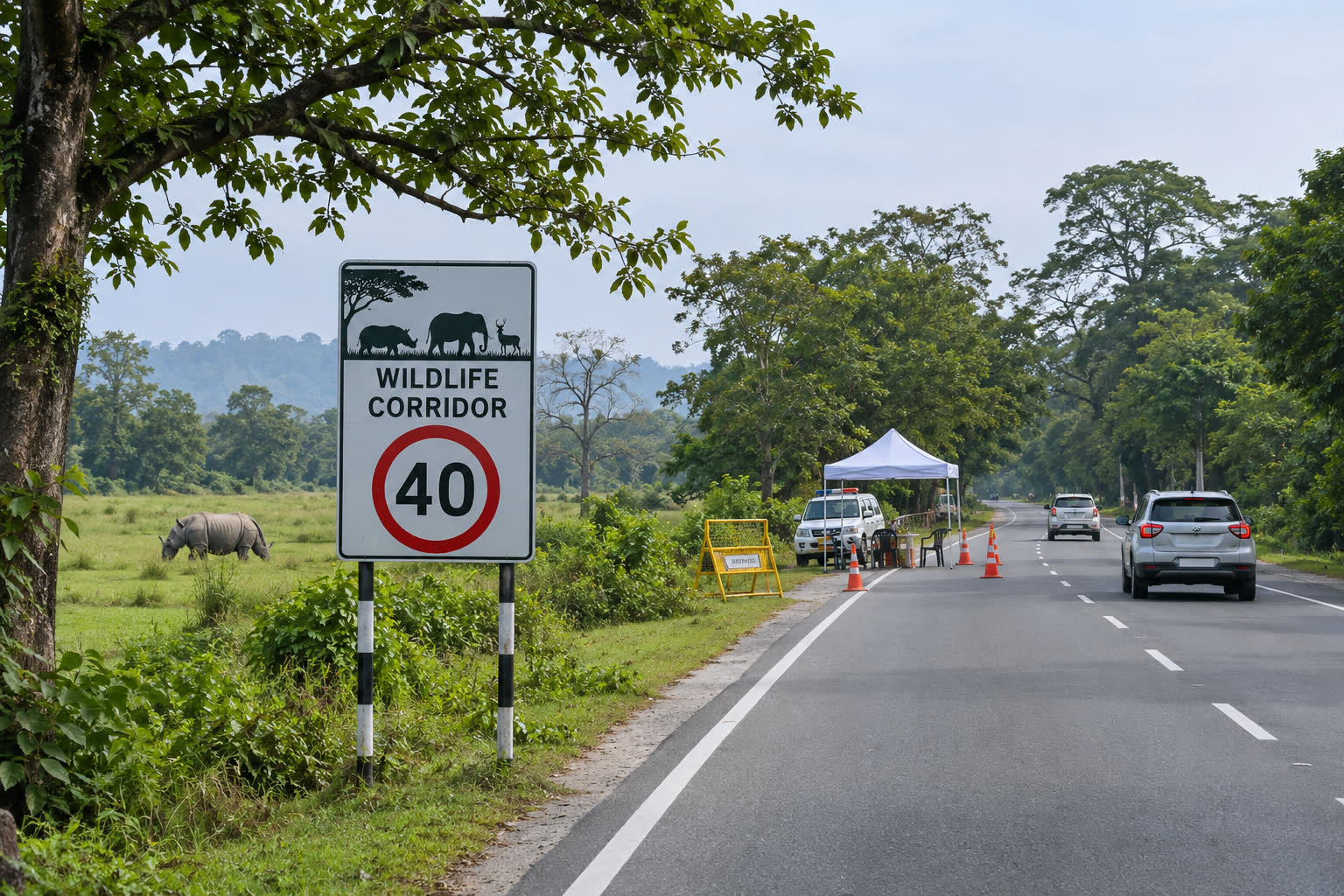
At least 26 people had died by 14 Nov 2026 after a minibus and a container truck collided on NH-715 near Rangajan, close to Kaziranga National Park in Assam's Golaghat district. Chief Minister Himanta Biswa Sarma ordered a detailed investigation and directed police and district officials to intensify road-safety enforcement; drivers using the route should treat the Kaziranga stretch as a controlled wildlife-corridor road and follow each posted limit.
Key takeaways
- The collision happened on 13 Nov 2026 on NH-715 near Rangajan; the reported death toll rose to 26 by the following day.
- The cause is not established. Investigators are examining possible speeding, overloading, vehicle condition and a possible medical emergency.
- The chief minister said most Kaziranga stretches carry a 40 km/h limit; reports also cite 20 km/h limits in identified animal corridors.
- Assam said it would tighten checks on speeding, overloading, drunk driving, helmet and seat-belt compliance, and vehicle fitness.
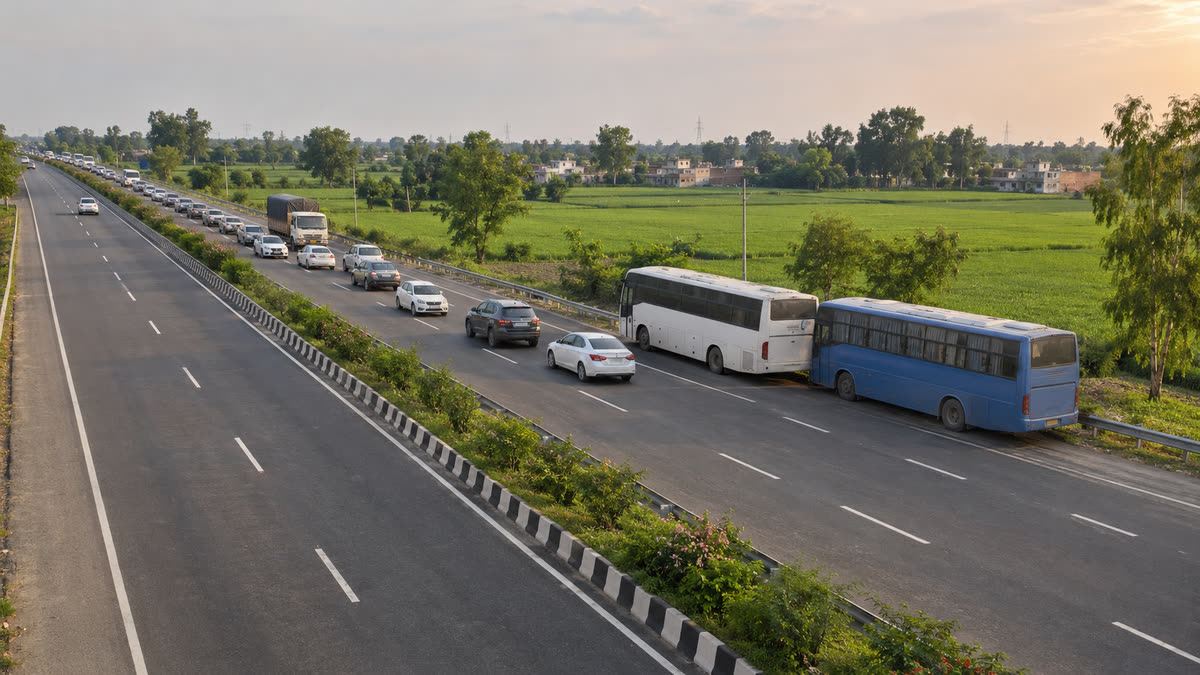
Image note: The hero visual is illustrative and shows a representative wildlife-corridor safety scene, not the actual crash.
What happened on NH-715
The crash took place on 13 Nov 2026 at Rangajan near Hathikuli Tea Estate in the Kohora range, close to Kaziranga National Park. A minibus travelling from Golaghat towards Nagaon collided head-on with a container truck travelling in the opposite direction, according to updates citing district officials.
The New Indian Express reported on 14 Nov 2026 that the death toll reached 26 after another injured passenger died and that 17 injured passengers were being treated at Jorhat Medical College and Hospital. NDTV's 14 Nov update said 16 people were undergoing treatment. The difference reflects moving hospital updates; neither number should be read as a final casualty record without the authorities' consolidated list.
The incident matters to road users beyond the crash site because NH-715 passes through a wildlife-sensitive corridor, where speeds and stopping rules are tighter than on a normal inter-city highway. The accident itself did not establish a new route rule; it has triggered a renewed enforcement direction.
What the investigation is examining
On 14 Nov, Sarma said a detailed investigation would examine every possible cause. NDTV reported that he described dashcam footage as showing the Traveller suddenly veering into the truck's path and said investigators were considering a possible medical emergency or intoxication. That remains an investigative possibility, not a finding.
Hindustan Times reported that the senior police officer briefed the chief minister that the Force Traveller was a 27-seater carrying 41 passengers. The report also said the vehicle's brakes were not in good condition and that its speed-limiting device had been removed; the device was reportedly set to limit the vehicle to 80 km/h. These details are part of the investigation and should not be treated as the final cause of the crash.
Passenger numbers also varied in early reports. NDTV cited officials saying more than 35 people were aboard, while the later Hindustan Times account quoted the police briefing as 41 passengers against a 27-person capacity. The final official record will matter for determining whether overloading rules were breached.
What drivers should know about the speed rule
Drivers should not treat 40 km/h as a blanket speed for every metre of the Kaziranga route. Sarma referred to 40 km/h on most stretches; reports citing officials said identified animal corridors have 20 km/h limits and other restricted stretches have 40 km/h limits. The Assam PWD's notified speed-limit table separately lists 40 km/h in curves and developed areas and 20 km/h in congested town areas.
The practical rule is to follow the posted sign and any traffic or forest-authority instruction, even if a general speed figure appears in a news report. Slow before wildlife-corridor signs and monitoring points, do not overtake aggressively, and do not stop or park in a restricted stretch except in an emergency.
If a journey includes Kaziranga and neighbouring districts, the FuelPrice road-trip planner can help build in slower sections and planned stops before departure.
What changes after the chief minister's visit
The official chief minister's statement said police and the district administration were directed to intensify road-safety awareness and enforcement. Hindustan Times reported that the government would crack down on overloading, speeding, drunk driving, helmet and seat-belt violations, and vehicles that do not meet fitness requirements.
In the updates used for this report, there was no announcement of a blanket closure or a route-wide speed-limit change as of 15 Nov 2026. Drivers should check local advisories before leaving and should not assume that the 40 km/h figure overrides a lower sign on the road.
For a longer journey, estimate the fuel cost for the trip separately when budgeting a controlled route. Lower speeds or a stop can add time and fuel use, while toll amounts may remain unchanged.
This distinction helps drivers and operators separate route costs from enforcement-related delays.
If the journey includes a tolled highway, check the expected toll charges separately. That distinction gives drivers and operators a more realistic trip budget than multiplying distance by a headline speed.
What to check before starting
- Confirm the speed limit shown at each wildlife corridor, town or monitoring section; do not rely on one general number for the entire NH-715 route.
- For a passenger or commercial vehicle, check authorised seating capacity, vehicle fitness, brakes and the speed-limiting system before departure. Do not carry more passengers than permitted.
- Use seat belts or helmets, do not drive after drinking, and stop safely if the driver feels unwell rather than continuing on a controlled highway stretch.
- In a wildlife corridor, avoid unnecessary stopping or parking and follow instructions from police, forest staff and road signage.
What to watch next
Authorities still have to establish the final speed, passenger count, vehicle condition and whether a medical event contributed to the crash. The post-mortem, vehicle inspection and police investigation will determine which reported factors are confirmed. Until those findings are released, claims about a disconnected limiter, poor brakes or driver illness should be treated as lines of inquiry rather than settled causes.
For readers, the immediate change is enforcement attention, not a confirmed change to every driver's permit or toll. Plan extra time, follow the lowest posted limit and check local warnings before travelling through the Kaziranga stretch.
Sources
- Chief Minister of Assam, post on the Rangajan crash probe and enforcement directions, 14 Nov 2026
- Hindustan Times, Assam CM orders probe into crash that killed 26, vows stricter traffic rules, 14 Nov 2026
- The New Indian Express, Kaziranga crash toll rises to 26; driver may have suffered heart attack, says CM, 14 Nov 2026
- NDTV, Driver may have suffered stroke before Kaziranga crash that killed 26, 14 Nov 2026
- The Times of India, Overspeeding, overloading: Fatal flaws behind Kaziranga bus accident, 13 Nov 2026
- Government of Assam PWD Buildings & NH, Speed Limits on National Highways, reviewed 9 Sep 2026