Gurugram will begin the first phase of automated Pollution Under Control (PUC) checks at fuel pumps from 15 November 2026, according to the district transport authority’s statement reported by PTI. The move matters because a vehicle without a valid PUC certificate may be refused petrol, diesel or CNG under the NCR’s no-PUC, no-fuel rule.
The wider rule is already in force across the National Capital Region from 1 October 2026 under the Commission for Air Quality Management’s Direction No. 101. The fresh Gurugram development is the local camera rollout and tighter pump-level checking, not a new nationwide fuel rule.
Key takeaways
- Gurugram’s first phase of ANPR checks at petrol pumps is reported to start on 15 November 2026.
- ANPR cameras are intended to read a vehicle’s number plate and match it with online PUC records before fuel is dispensed.
- The NCR rule covers petrol, diesel and CNG stations; a missing or expired PUC can lead to fuel being refused.
- PTI reported 300 cameras in the first phase, while Amar Ujala reported 249 Gurugram pumps; the difference may reflect cameras versus pump coverage or separate deployment counts.
- Drivers should verify the certificate’s validity and the registration details in the record before a refill or a longer trip.
What changes at Gurugram fuel pumps
The Economic Times, carrying a PTI report dated 14 November, quoted District Transport Officer and Regional Transport Authority secretary Sanjeev Singla as saying that 300 ANPR cameras would be installed in the first phase from 15 November. The cameras are meant to identify vehicles arriving to refuel and cross-check their registration numbers against online PUC records.
The same report said petrol pumps had been instructed to put warning boards in Hindi and English at entry points and fuelling areas. Vehicles without a valid certificate will not be provided petrol, diesel or CNG, according to the official quoted in the report.
There is a coverage-count difference in the reporting. Amar Ujala reported on 12 November that the first phase would cover 249 pumps in Gurugram, as part of 775 installations across Gurugram, Faridabad, Sonipat and Jhajjar. Since one report counts cameras and the other counts pumps, the two figures should not be silently treated as the same thing. The final station list and the exact number of live systems at the start date were not published in the sources reviewed.
The rule behind the rollout
CAQM Direction No. 101, reviewed in a Ministry of Environment, Forest and Climate Change press release, sets the compliance framework for the NCR. The official account says fuel stations must restrict fuelling of vehicles without a valid PUCC from 1 October 2026, with technology such as ANPR connected to vehicle and PUC databases. The direction applies to NCR jurisdictions, so a driver should not read it as an all-India instruction or assume that the same pump procedure is in force outside the region.
The rule is also broader than one type of fuel. The implementation described by the administration includes petrol, diesel and CNG. Electric vehicles do not need a fuel-pump refill, but an owner of a petrol, diesel or CNG vehicle travelling through Gurugram should treat PUC validity as a pre-trip document check.
What enforcement has looked like so far
Hindustan Times reported on 13 November that Gurugram’s Regional Transport Authority had inspected 198 fuel stations since 1 October and barred 310 vehicle owners from getting fuel because their PUC certificates were missing or expired. The report also said 16 vehicles were denied fuel and penalised on one Wednesday during the checks.
Those figures are an account from local officials quoted by the publication, not a live statewide dashboard. They nevertheless show why the camera rollout can change the experience at the pump: a driver may find that a certificate problem is identified before the vehicle reaches the dispenser, rather than during a later roadside check.
What drivers should check before refuelling
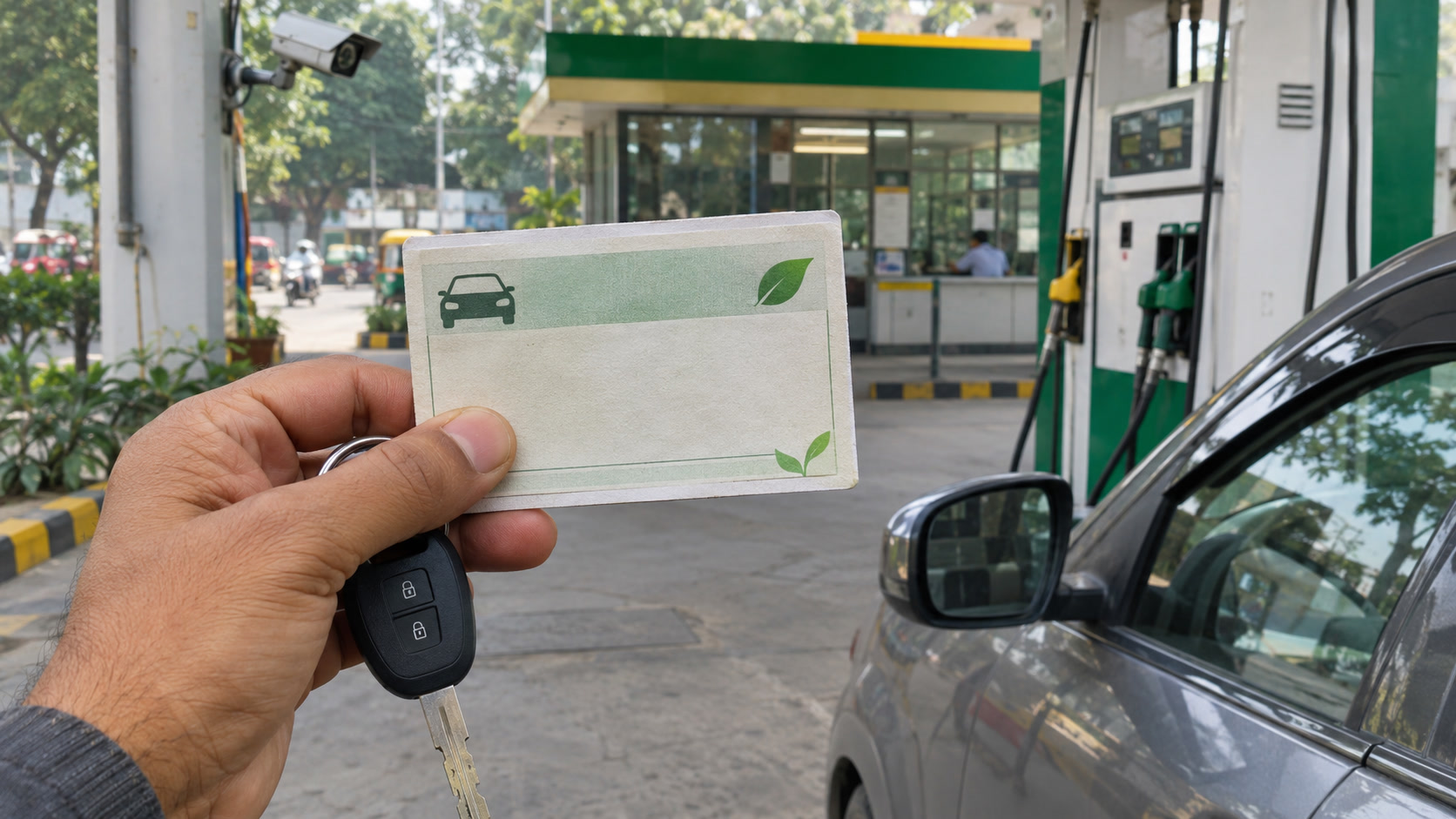
- Check the expiry date. Confirm that the PUC certificate is valid on the day of travel, not merely that the vehicle had one in the past.
- Match the registration number. The vehicle number on the certificate, RC and online record should refer to the same vehicle. A typo or an unupdated record can create a different problem from an actually expired certificate.
- Keep proof of a recent renewal. Save the certificate and payment record on the phone, and keep a readable copy available if a station’s system does not immediately show a recent update.
- Use the correction route. If the certificate is valid but the online record is wrong, ask the issuing PUC centre or the relevant transport authority how the record should be corrected. Do not assume that visiting another pump will resolve a database mismatch.
The PUC check and renewal guide explains the document details worth checking before a Delhi-NCR journey. Once the compliance record is clear, the live fuel-price hub can be used to check current petrol, diesel and CNG rates; the Gurugram rule itself does not change the price of fuel.
Fine risk is separate from fuel refusal
The District Transport Officer told PTI that driving without a valid PUC certificate can attract a fine of up to ₹10,000 under the Motor Vehicles Act. That is a separate enforcement risk from being refused fuel. The reports do not say that every ANPR scan automatically creates a challan, so drivers should not treat a pump refusal, a camera alert and a traffic fine as identical steps.
For fleet operators, the operational issue is timing. A vehicle sent out with an expired certificate may lose time at a pump, need a document correction or require a change of vehicle before the trip can continue. A route plan can be prepared with the road-trip planner, but the route tool does not replace the PUC check or guarantee that a fuel station will dispense fuel to a non-compliant vehicle.
What remains to watch
The next useful update will be the final list of participating pumps, the status of camera integration with VAHAN and PUC records, and the correction process for valid certificates that are missing from the online database. The conflicting counts in current reports also make it important to distinguish the number of cameras from the number of fuel stations actually live.
For now, the practical takeaway is narrow: if a petrol, diesel or CNG vehicle is travelling through Gurugram, check the PUC expiry and registration details before entering the pump. The 15 November rollout is a local implementation milestone inside an NCR-wide rule that has already taken effect.
Sources
- Ministry of Environment, Forest and Climate Change/PIB — CAQM reviews enforcement measures across key sectors to curb air pollution in Delhi-NCR — 13 Jun 2026
- The Economic Times/PTI — Gurugram to install 300 ANPR cameras at petrol pumps to enforce no PUC, no fuel rule — 14 Nov 2026
- Hindustan Times — Gurugram intensifies vehicular pollution checks — 13 Nov 2026
- Amar Ujala — Gurugram News: ANPR cameras will be installed at 249 pumps in the district — 12 Nov 2026