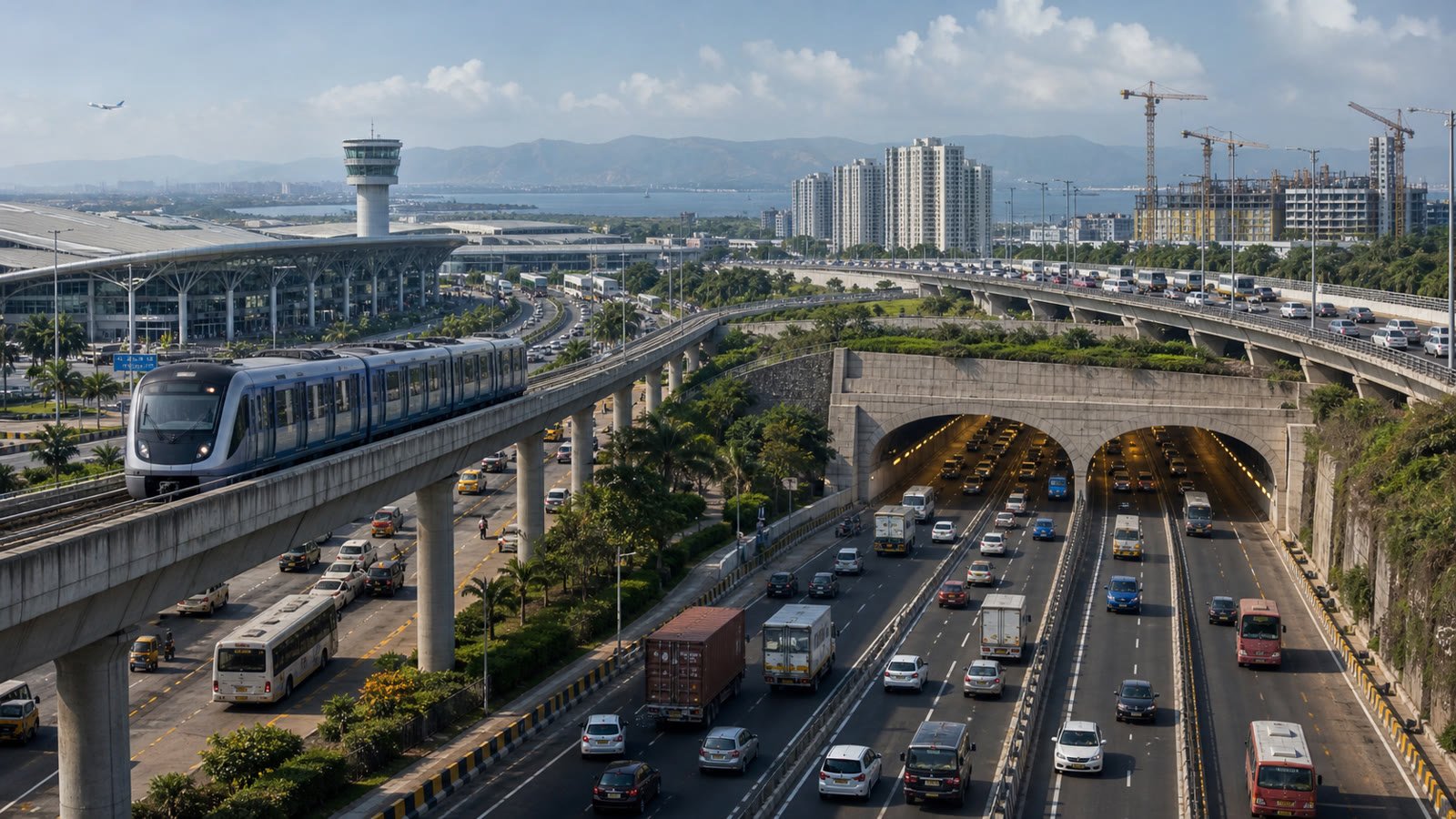
Maharashtra has cleared a Rs 22,611 crore transport infrastructure package for the Mumbai Metropolitan Region, putting two pressure points on the same policy map: Navi Mumbai's airport-linked metro expansion and the Ghodbunder Road-Bhayandar tunnel plus elevated corridor. For commuters, taxi users, buses, airport passengers and freight operators, this is not only a construction announcement. It is a fuel-use and journey-time story.
The Cabinet Infrastructure Committee headed by Chief Minister Devendra Fadnavis has approved Rs 5,575 crore for the Navi Mumbai Metro expansion and Rs 17,036 crore for the Ghodbunder Road-Bhayandar tunnel and elevated road corridor. The metro portion is planned as a continuous 28 km corridor from Sagar Sangam to the upcoming Navi Mumbai International Airport through Line 1A and Line 2. The road portion includes a six-lane tunnel from Gaimukh to Fountain Hotel and an elevated corridor towards Bhayandar.
The important question for FuelPrice readers is straightforward: will this package reduce the kind of stop-start road movement that burns petrol, diesel and CNG without adding productive kilometres? The answer depends on execution, but the direction is clear. If the metro link pulls airport and daily commuter trips away from private vehicles, and if the road tunnel gives through-traffic an alternative to current choke points, the savings can show up in lower idling, shorter detours and better fleet scheduling.
What exactly has been approved
The approval has two major mobility pieces. The Navi Mumbai Metro expansion gets Rs 5,575 crore and is expected to add 13 new stations: two on Line 1A and 11 on Line 2, according to current reports. The expanded network is expected to serve around 12 lakh passengers daily in the coming years. The purpose is to connect residential, commercial and airport movement more directly instead of pushing every trip into roads around Belapur, Kharghar, Taloja, Kalamboli, Khandeshwar and the airport zone.
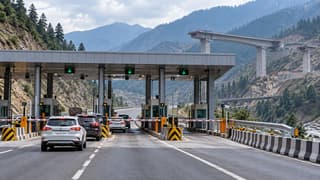
The larger road component gets Rs 17,036 crore. It covers the Ghodbunder Road-Bhayandar tunnel and elevated corridor, including a 14 metre diameter six-lane tunnel between Gaimukh and Fountain Hotel. Reports say the corridor is planned for speeds of up to 100 kmph and is intended to improve movement between western Mumbai, Thane, Kalyan-Dombivli, Nashik, Panvel, NH-48 and Gujarat-linked routes. Navbharat Times also reported that the project is expected to be implemented under a PPP model on a build-operate-transfer basis.
| Project | Key approval details | FuelPrice relevance |
|---|---|---|
| Navi Mumbai Metro expansion | Rs 5,575 crore; 28 km Sagar Sangam-airport corridor via Line 1A and Line 2; 13 proposed stations. | Can shift airport and commuter trips from cars, taxis and two-wheelers to mass transit if feeder links work. |
| Ghodbunder-Bhayandar tunnel and elevated corridor | Rs 17,036 crore; six-lane tunnel from Gaimukh to Fountain Hotel plus elevated road towards Bhayandar. | Targets a high-congestion road belt where idling, detours and stop-start fuel burn are common costs. |
| MMR connectivity package | Combined Rs 22,611 crore approval for metro, tunnel and elevated road works. | Links fuel efficiency with urban planning: less congestion can matter as much as cheaper fuel. |
Why this matters for fuel users
Congestion is a hidden fuel tax. A car or taxi stuck on a jammed corridor burns fuel while covering very little distance. A diesel truck waiting at a bottleneck loses time, disrupts delivery windows and may need extra buffer fuel planning. Buses running late reduce reliability, which pushes more people back to private vehicles. That cycle is visible in many fast-growing urban corridors: road demand rises, travel speed drops, and every trip becomes more expensive even if pump prices do not change.
The Ghodbunder belt is especially important because it is not just a local commute corridor. It links Thane-side movement with western suburbs, Mira-Bhayandar, NH-48 and Gujarat-facing traffic. When such a road slows down, the impact is wider than office commuters. It affects airport cabs, logistics vehicles, intercity buses, service vans, construction supply movement and private vehicles travelling between residential growth pockets and employment zones.
A tunnel and elevated corridor can help if it separates through-traffic from local road friction. Vehicles that do not need to stop at intermediate junctions can avoid slower surface stretches. That can improve average speed and reduce idle fuel burn. But the benefit depends on entry-exit design, toll or user-charge decisions, lane discipline, enforcement, and how well the new corridor connects with existing roads without creating new bottlenecks at the portals.
The metro side is an airport-access story
The Navi Mumbai Metro component has a different fuel impact. It is not about making car traffic faster; it is about replacing some road trips altogether. CIDCO's official Navi Mumbai Metro material says the system was planned to reduce pressure on existing public transport, connect Navi Mumbai nodes more smoothly and support economic development. It also identifies the airport connection as part of the broader Line 1 planning.
That context matters because the upcoming Navi Mumbai International Airport is expected to generate large daily movement: passengers, employees, airport services, taxis, app cabs, hotel shuttles, delivery fleets and supporting businesses. Without strong public transport access, much of this demand flows into road networks. A metro extension to the airport can reduce private-vehicle dependence, especially for airport workers and repeat travellers who value predictable travel time over door-to-door convenience.
The metro will not eliminate road use. Most passengers still need first-mile and last-mile links, and luggage-heavy travellers may continue using taxis. But even a partial shift can matter. If regular airport employees, students, office commuters and short-hop city travellers move to metro, road space opens for trips that genuinely need vehicles. That is where public transport creates a fuel benefit indirectly: it reduces the number of vehicles competing for the same road space.
This approval also restarts a complicated road project path
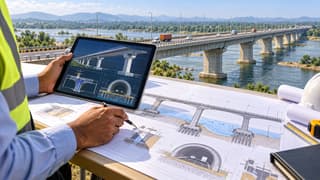
The tunnel-elevated corridor has a recent institutional backdrop. Economic Times reported in May 2025 that MMRDA had told the Supreme Court it was scrapping an earlier Rs 14,000 crore Thane-Ghodbunder to Bhayandar tunnel and elevated road tender process. That earlier process involved a five km twin tunnel and a 9.8 km elevated creek road bridge. The new Rs 17,036 crore approval therefore matters not only as a fresh funding number, but also as a sign that the state wants the corridor back on track after procurement complications.
For road users, that means expectations should be realistic. Approval is not the same as open lanes. Detailed tendering, financial closure, environmental permissions, land and utility coordination, traffic management plans and construction sequencing will decide when the benefits arrive. During construction, some stretches may face temporary diversions, slower movement or lane constraints. In the short term, poor work-zone management can increase fuel burn before the long-term savings begin.
Who is affected
- Daily commuters: Metro expansion can improve predictable travel options in Navi Mumbai, while the tunnel corridor can reduce road pressure around Ghodbunder-side travel.
- Airport passengers and workers: A direct metro connection gives repeat users an alternative to cab-only access, especially when road traffic is uncertain.
- Taxi, bus and fleet operators: Faster corridors and better mass transit can improve daily vehicle utilisation, but construction delays may need route planning.
- Freight and logistics users: NH-48 and Gujarat-facing movements could benefit if through-traffic gets a cleaner bypass of congested local stretches.
- Fuel users: The practical saving is not a pump-price cut; it is fewer wasted litres from idling, detours and repeated acceleration in traffic.
What to watch next
The next milestones are tender documents, final alignments, construction timelines, financing structure, station integration and user-charge policy. For the metro, watch whether the airport link gets strong feeder bus, parking and pedestrian access. For the tunnel and elevated road, watch portal design, connection to existing highways, environmental clearance, construction-stage traffic diversions and whether the corridor is tolled.
The reader takeaway is clear: this is a transport approval with a direct fuel-economics angle. If Maharashtra executes the package with good integration, MMR users may gain lower travel uncertainty and less wasted fuel even without any change in petrol, diesel or CNG prices. If execution is delayed or disconnected from last-mile planning, the headline investment will deliver less relief than the numbers suggest.
Sources: Times of India current approval report, Navbharat Times approval details, CIDCO official Navi Mumbai Metro page, Economic Times project tender context, Times of India airport metro connectivity context.