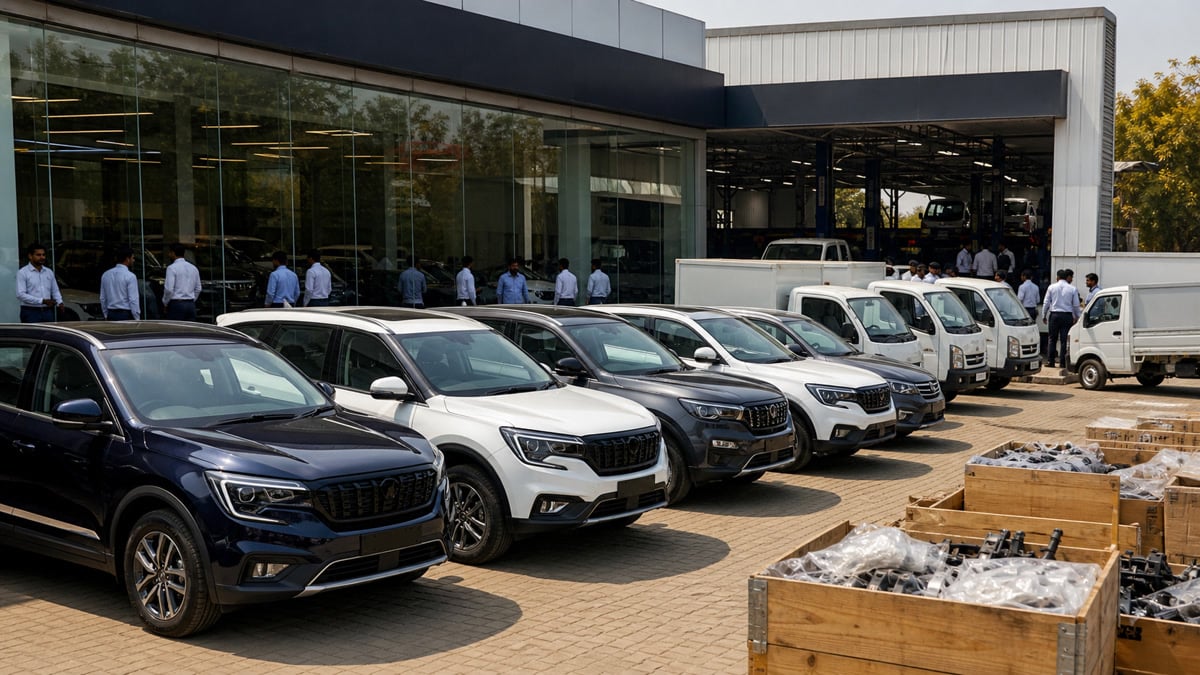
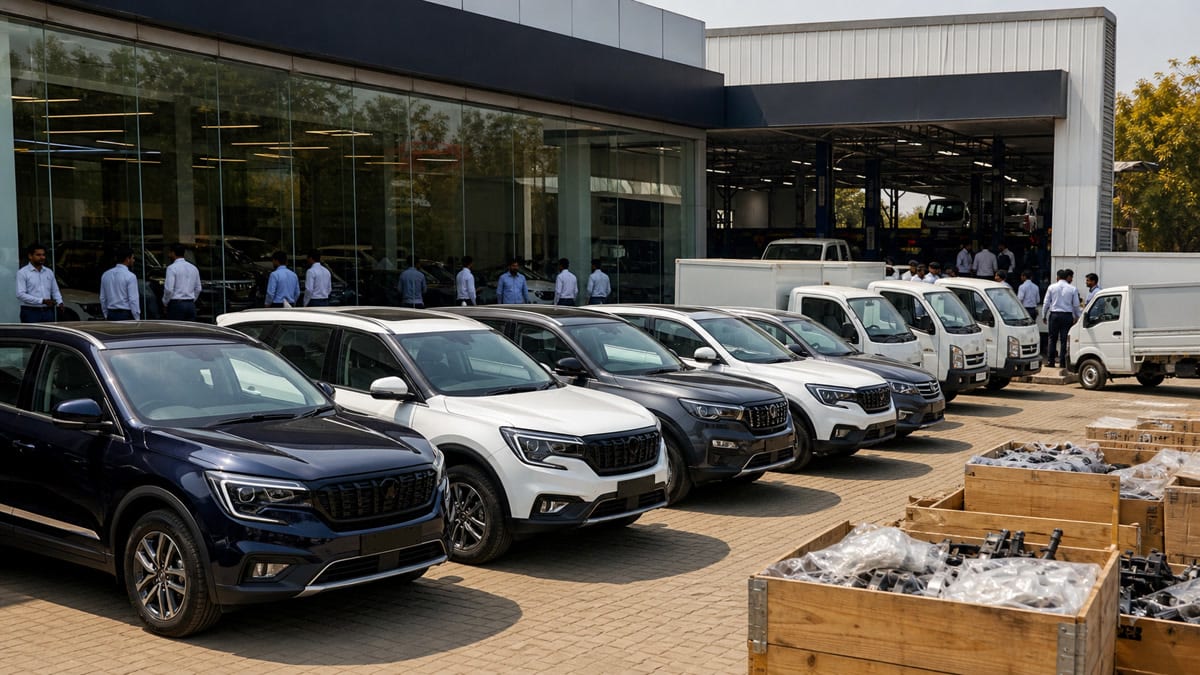
 Mahindra's May 2026 sales update points to strong SUV and commercial-vehicle demand, but also highlights supply pressure at select vendors.
Mahindra & Mahindra closed May 2026 with 99,636 total vehicle sales, a 20% year-on-year rise including exports, but the headline strength came with an important supply-chain warning. The company said domestic SUV sales stood at 58,021 units, up 11% from May 2025, while total utility vehicle sales including exports reached 59,573 units.
For FuelPrice readers, this is more than a monthly sales scorecard. Mahindra is now operating at a scale where SUVs, light commercial vehicles, three-wheelers and exports all matter to the wider mobility economy. Strong demand suggests Indian buyers are still choosing high-utility vehicles even in a period of elevated ownership costs. At the same time, supplier manpower shortages can affect delivery timelines, dealer inventory, component vendors and fleet buyers waiting for work vehicles.
What Mahindra reported for May 2026
Mahindra's official June 1 release said overall auto sales reached 99,636 vehicles in May 2026. Domestic utility-vehicle sales were 58,021 units, up 11% year-on-year from 52,431 units. Domestic commercial-vehicle sales stood at 24,079 units, up 19%. Exports rose to 5,000 units, a 37% increase from the year-earlier month.
The company's three-wheeler segment, including electric three-wheelers, was the standout mobility sub-segment. Sales rose to 12,536 units from 6,635 units in May 2025, an 89% year-on-year jump. That matters because three-wheelers sit directly inside India's last-mile delivery, urban passenger mobility and small-business transport network.
| Segment | May 2026 | May 2025 | YoY change |
|---|---|---|---|
| Domestic utility vehicles | 58,021 | 52,431 | 11% |
| Domestic commercial vehicles | 24,079 | 20,298 | 19% |
| Three-wheelers including EVs | 12,536 | 6,635 | 89% |
| Exports | 5,000 | 3,646 | 37% |
| Total auto sales including exports | 99,636 | 83,010 | 20% |
Why this matters for vehicle buyers
The 58,021 domestic SUV number shows that utility-vehicle demand remains resilient. That is important because SUVs are not the lowest-cost vehicles to own. Higher tyre costs, insurance, service costs, fuel consumption and road-tax outgo usually make buyers more selective. Yet Mahindra's May volume suggests many buyers still value space, ground clearance, road presence, diesel and petrol powertrain options, and long-distance usability.
The risk is waiting time. Mahindra said demand across the portfolio remained strong but supply was constrained by manpower shortages at select suppliers. For a customer, that can mean slower allocation of some variants, thinner dealer inventory, fewer immediate-delivery options and tighter room for discounts. Buyers comparing SUVs should watch delivery timelines as closely as prices and feature lists.
Why transporters and small businesses should care
The commercial-vehicle and three-wheeler data is directly relevant to fuel, logistics and mobility. Mahindra sold 24,079 domestic commercial vehicles in May, led by light commercial vehicles in the two-tonne to 3.5-tonne category. These vehicles serve local freight, e-commerce movement, wholesale distribution, rural supply and small-business deliveries.
When commercial-vehicle demand grows, it usually indicates confidence among fleet operators and small entrepreneurs. But it also means fuel efficiency, uptime and payload economics become sharper buying filters. Diesel and CNG operating costs remain central for many LCV users, while the strong three-wheeler performance points to faster adoption in low-cost last-mile mobility, including electric variants where running cost is a major advantage.
The supply-chain angle is the real watch point
Supply-chain problems in the auto industry are not always about one headline shortage. A single vendor bottleneck can affect production sequencing, finished-vehicle dispatches, variant availability and dealer-level stock. Mahindra's reference to manpower shortages at select suppliers suggests the issue is operational rather than demand-led.
That distinction matters. If buyer demand remains strong but vendors cannot scale output smoothly, the market can see uneven delivery timelines even when official sales remain healthy. Component suppliers, logistics partners and dealerships will need to manage the pressure through better scheduling, faster parts movement and tighter coordination with plants.
Market impact and what to watch next
Mahindra's May update strengthens the view that India's SUV cycle has not cooled sharply despite fuel and ownership-cost pressure. It also keeps the spotlight on commercial mobility, where LCVs and three-wheelers are sensitive to freight activity, last-mile demand and fuel economics.
The next numbers to watch are June wholesales, dealer inventory levels, waiting periods for high-demand SUV variants, and whether supplier manpower constraints ease. If supply improves, Mahindra could convert more demand into dispatches. If the bottleneck persists, strong demand may continue to show up as longer delivery queues rather than immediate retail availability.
Final takeaway: Mahindra's 99,636-unit May performance is a strong auto-sector signal, but the more useful insight is the combination of demand resilience and supply restraint. Buyers should track waiting periods, transporters should watch LCV availability, and investors should monitor whether supplier constraints limit the next phase of growth.