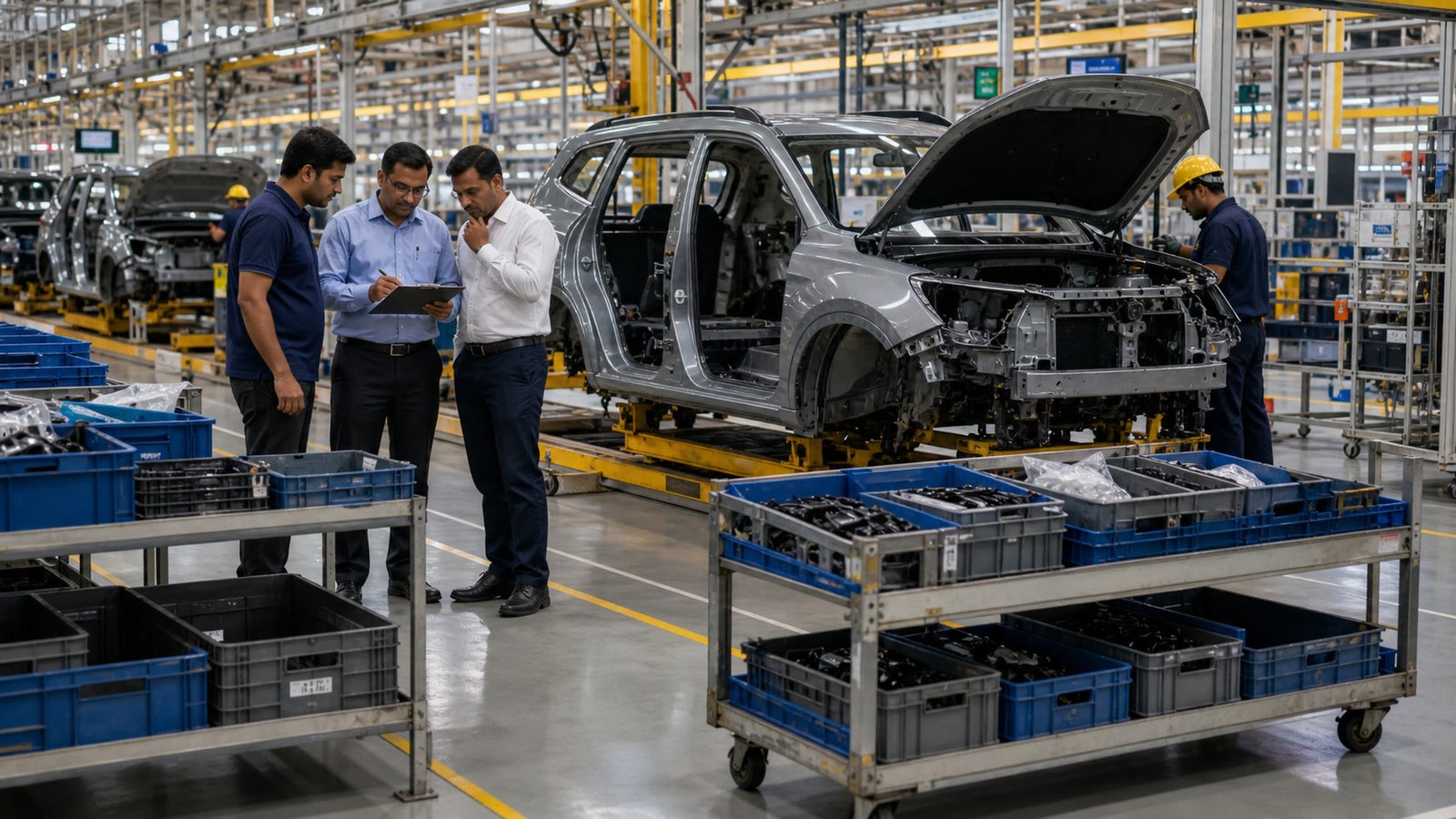
Mahindra & Mahindra is facing a reported production squeeze in June, with SUV output expected to dip by up to 15 percent because some key component suppliers are struggling with a shortage of contract workers. The disruption, reported by Economic Times, is said to be affecting high-demand SUV lines including the XUV 7XO and Thar.
This is a high-niche but important auto-sector story because the pressure is not coming from weak demand or fuel-price reluctance. It is coming from the supplier network behind the assembly line. For buyers waiting for popular SUVs, dealers managing allocations, and logistics teams moving parts to factories, a short-term labour bottleneck can quickly translate into longer delivery timelines and uneven stock availability.
What happened
Economic Times reported that Mahindra could see SUV production fall by up to 15 percent in June as some suppliers face an acute shortage of contract workers. The company is understood to be monitoring the situation and working with vendors to reduce the disruption. The report points to models such as the XUV 7XO and Thar being impacted, making the issue relevant to buyers in the premium and lifestyle SUV space.
Mahindra has not been dealing with a demand problem. In fact, India's SUV market remains one of the strongest pockets of the passenger vehicle segment. Times of India reported that the broader passenger vehicle market stayed healthy in May 2026, with several manufacturers posting growth, while FADA data cited by Economic Times showed retail auto sales rising 9.6 percent in May. That demand background makes any production dip more visible because fewer vehicles can mean pressure on delivery promises instead of inventory build-up.
Why a supplier labour shortage matters
Modern SUV production depends on hundreds of suppliers delivering seats, wiring, electronics, plastic modules, stampings, braking parts, trim pieces and drivetrain components on tight schedules. If a key vendor slows down because it does not have enough trained contract labour, the final vehicle assembly plant may not be able to simply switch to another source overnight. Even a missing small component can hold back a completed vehicle from leaving the line.
For buyers, that means the visible factory output number is only the last stage of a much wider chain. A shortage at a supplier can affect dealer dispatches, variant availability, colour mix, delivery dates and waiting periods. The effect can be especially sharp when the affected vehicles are already popular or have limited production buffers.
For transporters and logistics partners, this also changes planning. Automotive logistics runs on predictable schedules: inbound parts, plant-side storage, outbound vehicles and dealer dispatches are all planned around production rhythm. A temporary slowdown may reduce outbound vehicle volumes from the plant while also creating congestion once parts supply normalises and production ramps back up.
Buyer impact: waiting periods may become more uneven
The most likely customer impact is not a uniform delay for every Mahindra SUV. Instead, waiting periods may become uneven by model, variant, fuel type, transmission, region and dealer allocation. A buyer waiting for a specific high-demand configuration may feel the impact more than someone choosing a readily available variant.
Dealers may also have less flexibility to swap allocations if production is constrained. Buyers planning a purchase around monsoon travel, business use or a festive booking pipeline should track dealer updates closely rather than relying only on national waiting-period estimates. If the bottleneck eases quickly, the impact could remain limited to June dispatches. If vendor staffing remains tight, delayed production can spill into July delivery schedules.
Auto-sector signal: supply chains still decide market momentum
The reported disruption is also a reminder that India's auto growth story depends on labour availability as much as plant capacity. Mahindra has benefited from strong SUV demand, product launches and investor confidence in its auto business. Economic Times earlier noted that the company's auto momentum was supported by improving demand, capacity ramp-up and a broader future launch pipeline.
But capacity is useful only when the supplier ecosystem can support it. Contract labour shortages can emerge because of migration patterns, wage competition, seasonal work, local industrial demand or skill gaps. For automakers, that means vendor risk management now includes workforce stability, not only component cost and quality.
What to watch next
- June dispatch numbers: They will show whether the reported production dip materially affects wholesale volumes.
- Dealer waiting-period updates: The clearest buyer-facing signal will come from variant-level delivery timelines.
- Supplier recovery: If vendors restore staffing quickly, production can normalise without a large backlog shock.
- High-demand SUV allocations: Lifestyle and premium SUV models may need closer tracking because demand is already strong.
- Industry-wide labour risk: If similar shortages appear across other supplier clusters, the issue could move beyond one automaker.
For FuelPrice readers, the takeaway is practical: a production slowdown caused by supplier labour is not directly a fuel-price story, but it affects vehicle availability, dealer logistics, buyer planning and the wider auto supply chain. When demand is strong, even a temporary 10 to 15 percent output dip can matter because it narrows the cushion between factory production and customer deliveries.
Sources: Economic Times production report, Times of India May car sales report, Economic Times FADA retail sales report, Economic Times Mahindra auto momentum report, Mahindra XUV 7XO page, Mahindra Thar ROXX page.