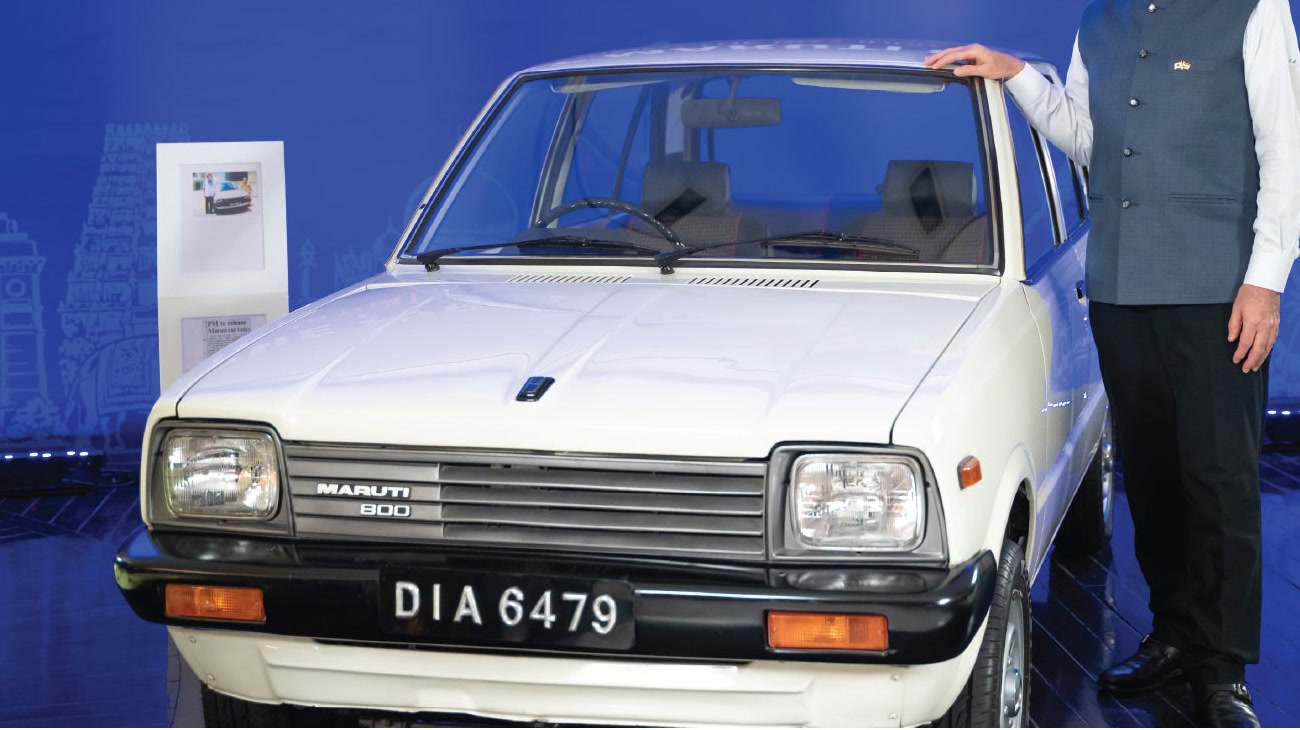
The Maruti 800 has become the first Indian vehicle to receive the inaugural Fédération Internationale des Véhicules Anciens (FIVA) World Vehicle Heritage Award, Maruti Suzuki said in a release dated 16 Nov 2026. The honour recognises the hatchback’s role in widening personal mobility and building India’s car industry; it does not by itself create a new benefit or change the documents required to drive an older car today.
Key takeaways
- FIVA selected the Maruti 800 as the only Indian vehicle among 21 awardees in its inaugural World Vehicle Heritage Awards.
- Maruti Suzuki says the first Maruti 800 was manufactured in December 1983 after Suzuki’s 1982 joint venture with the Government of India.
- The company says more than 2.9 million Maruti 800 cars were made over 30 years, with exports to Europe beginning in 1987.
- The recognition is for historical, social and industrial influence. It is not a new insurance, registration, tax or road-use notification for owners.
What FIVA recognised
FIVA’s inaugural World Vehicle Heritage Awards are designed to recognise vehicles that shaped national identities, changed everyday mobility or contributed to industrial development. Maruti Suzuki said the award is not limited to rare, expensive or low-volume cars. That distinction explains why a mass-produced hatchback can receive the same type of heritage recognition as a more exclusive historic vehicle.
NDTV Auto’s report on 17 Nov 2026 described the Maruti 800 as the first Indian vehicle to receive the award and said FIVA selected 21 vehicles from different countries. The award therefore speaks to the model’s cultural and industrial footprint rather than its current resale value, performance or collectible status.
How the Maruti 800 changed access to cars
The Maruti 800 emerged from the partnership between Suzuki Motor Corporation and the Government of India that began in 1982. According to Maruti Suzuki’s 16 Nov release, the first car was manufactured in December 1983 and the programme started with capacity for 40,000 cars a year. NDTV’s account also places the model’s arrival in a period when private car ownership was limited and describes its small size and accessible positioning as important to its appeal.
Maruti Suzuki says more than 2.9 million Maruti 800 cars were produced over 30 years. The company also says the model began exporting to Europe in 1987, with Hungary, France and Belgium among the early destinations. Hindustan Times’ HT Auto report on 17 Nov 2026 carried the same production and export history, while noting the model’s wider effect on local manufacturing and the component ecosystem.
Those figures matter because the award is not simply a nostalgia exercise. A large installed base created demand for service, parts, suppliers and skilled manufacturing. In practical terms, the Maruti 800 helped make car ownership familiar to households that had previously relied more heavily on two-wheelers, public transport or shared travel. The sources attribute that broader social impact to the vehicle’s scale and accessibility, rather than to one technical feature.
What the award means for today’s owners
The announcement is a heritage recognition, not a change to current road-use rules. The Maruti Suzuki release and the two independent reports reviewed for this article do not announce any exemption from insurance, registration, pollution checks, taxation or other requirements. They also do not announce a fixed price premium for surviving cars.
That distinction is useful for anyone who still drives, maintains or evaluates an old Maruti 800. The model’s historical importance does not replace the ordinary checks for a road trip. Owners can use the road-trip document checklist to review the RC, insurance, PUC and other travel paperwork before setting out.
Running cost is a separate question as well. Fuel use in an older car can vary significantly with maintenance, traffic and the condition of the engine and tyres. A route estimate from the fuel cost calculator is most useful when it is based on the car’s current observed mileage, rather than a historical brochure figure.
For the price input, drivers can check the latest rates on the live fuel prices page. That keeps the award’s historical meaning separate from the present-day cost of using a surviving car.
What to watch next
FIVA’s new award programme may bring more attention to vehicles that changed everyday life without being luxury products. For the Maruti 800, however, no official owner scheme, registration category or valuation change was announced with this award. Any claim that the honour automatically makes every surviving example more valuable would go beyond the evidence available.
The immediate significance is clearer: the Maruti 800 has been formally recognised as part of India’s mobility and manufacturing history. Its award status may matter to museums, clubs and owners preserving well-documented examples, but current roadworthiness and running costs remain separate, practical questions.
Bottom line
The Maruti 800’s FIVA award confirms the importance of a car that helped move India from limited private ownership towards mass personal mobility. For current drivers, the useful takeaway is to treat the announcement as heritage news, while continuing to check the documents, condition and fuel cost that determine whether an old car is ready for a trip.