Maruti Suzuki has raised prices of select car models with effect from 22 Nov 2026, the company said in an exchange filing. The filing gives an estimated volume-weighted average increase of about 0.31% and cites sustained cost pressures, but it does not name the affected models or their exact rupee changes.
That means the announcement matters immediately to buyers checking a quotation, but it does not yet provide a model-by-model price list. The final impact depends on the vehicle, variant and booking or invoicing terms confirmed by the seller.
Key takeaways
- The price revision is effective from 22 Nov 2026.
- Maruti Suzuki estimates the increase at around 0.31% on a volume-weighted average basis for select models.
- The exchange filing does not identify the affected models, variants or exact rupee increase.
- The stated reason is sustained cost pressure despite the company’s cost-reduction efforts.
- Buyers need a current written price breakup before treating an earlier quotation as final.
What Maruti Suzuki has confirmed
In a filing sent to the National Stock Exchange and BSE on 22 Nov 2026, Maruti Suzuki said it had decided to increase prices of select models. The company put the estimated volume-weighted average increase at around 0.31% and said prevailing cost pressures had made it necessary to pass on part of the increase to the market.
NDTV Profit independently reported the same day that the revised prices would apply from 22 Nov 2026. Goodreturns also reported the effective date and the approximately 0.31% volume-weighted average increase, while attributing the move to the company’s exchange disclosure. The primary filing and the two reports agree on the central point: this is a current price action, not a proposal or a future estimate.
The filing does not provide a revised price sheet. It also does not state whether every model is affected, how the increase is distributed across variants, or whether a specific booking will be protected from the revision. Those details cannot be inferred from the 0.31% average.
Why 0.31% is not a model-specific increase
“Volume-weighted average” is important here. It means the company’s percentage is an average calculated across the affected models with their sales volumes taken into account; it is not a statement that every Maruti Suzuki car has become exactly 0.31% costlier.
As a result, the filing does not let a buyer calculate the exact change for a particular hatchback, sedan, SUV or van. One model or variant could have a different percentage adjustment, while another may not be included at all. Applying 0.31% mechanically to an old quotation would therefore create a false sense of precision.
The next useful document is a model- and variant-level price list or an updated quotation from the authorised seller. Until that is available, the confirmed number is the company’s estimated average for the select models covered by the announcement.
What buyers should check now
A buyer comparing a Maruti Suzuki vehicle should separate the ex-showroom revision from the final on-road amount. The company’s filing covers the vehicle price action; it does not quantify registration charges, insurance, accessories, financing costs or other items that can appear in an on-road quotation.
Ask for the model name, variant, fuel type, transmission, ex-showroom price, effective date and all additional charges in one updated written breakup. If a quotation or booking document was issued before 22 Nov 2026, check its stated validity and the seller’s terms rather than assuming that the earlier number automatically applies or automatically changes.
The same check matters for buyers comparing a factory-fitted CNG vehicle with a petrol version or comparing an entry variant with a higher trim. The price headline is not enough to establish the cost difference between those choices, especially when the company has not disclosed the affected variants.
Put the price change beside running cost
For a vehicle buyer, the useful comparison is not only the revised purchase price. Fuel type, monthly distance, traffic conditions and observed efficiency determine how the car will affect the household or business budget after delivery. The fuel-cost calculator can help estimate running cost once the specific model and a realistic efficiency figure are known.
Fuel prices vary by city and can change the comparison between petrol and CNG use. Check the live fuel prices page before using a monthly fuel estimate, and keep the fuel-price date alongside the calculation. That keeps the one-time price revision separate from the recurring cost of using the vehicle.
For long-distance users, route length, tolls and traffic can matter as much as the purchase-price difference. A buyer who uses the vehicle for regular inter-city travel can also compare likely trip costs with the road-trip planner, using the same vehicle and fuel assumptions across the routes.
What to watch next
The next material update will be Maruti Suzuki’s model-wise revised price communication. It should establish which vehicles and variants are included and the rupee change for each one. Dealer quotations and the company’s customer-facing price pages may then show whether the change is uniform, selective or linked to particular trims.
Buyers should also watch for any clarification on orders placed before the effective date. The 22 Nov filing does not settle that question. Until an official or contractual document does, it is safer to treat the earlier quotation as a document whose validity must be checked, not as proof of the final amount.
Reader questions
Have all Maruti Suzuki cars become 0.31% costlier?
No. The company disclosed an estimated volume-weighted average increase for select models. It did not say that every vehicle or variant would receive the same 0.31% adjustment.
Which models are affected?
The 22 Nov 2026 exchange filing does not list the affected models or variants. Buyers need the updated model-wise price communication or a current written quotation.
Is the final on-road price 0.31% higher?
It cannot be calculated from the filing alone. The percentage is an estimated average for select models, while an on-road quotation also contains location- and buyer-specific charges that are not covered by the disclosure.
Sources
- National Stock Exchange/BSE filing — Maruti Suzuki price increase for select models — 22 Nov 2026
- NDTV Profit — Maruti Suzuki Declares Fourth Price Hike In 2026: Cars To Get Costlier From Nov. 22 — 22 Nov 2026
- Goodreturns — Maruti Suzuki Announces Fourth Price Hike in 2026; Cars to Get Costlier From November 22 — 22 Nov 2026
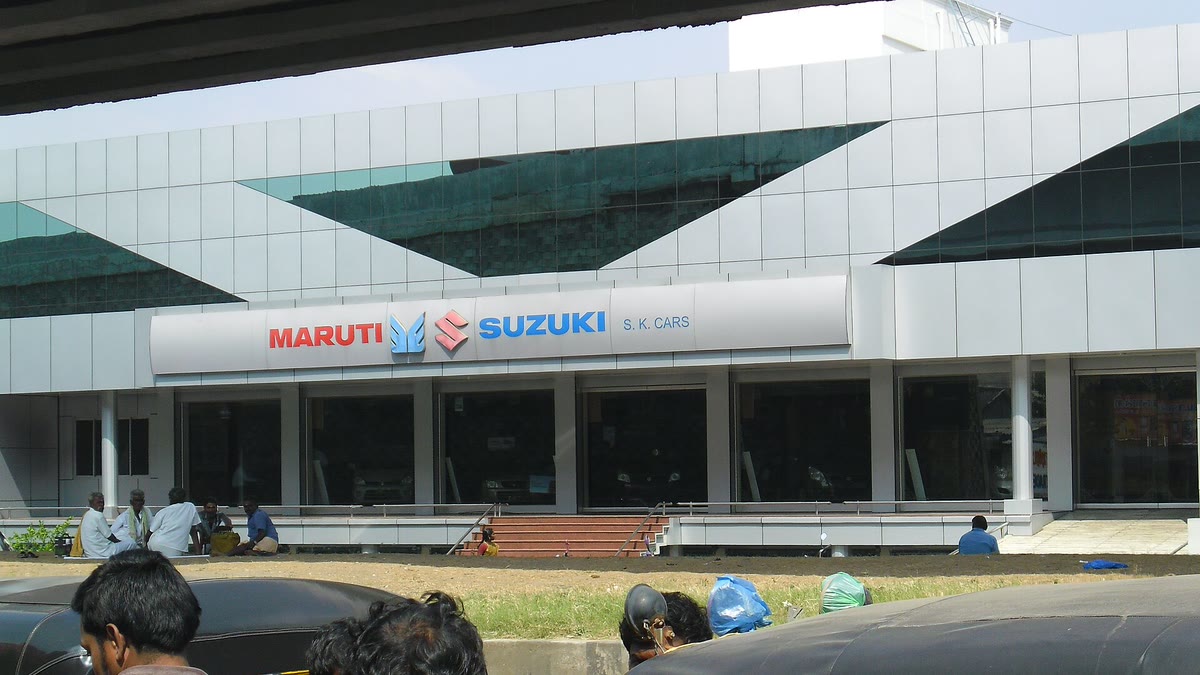
- Image credit: Wikimedia Commons — “Maruti showroom.JPG” by Surya Prakash.S.A., CC BY-SA 3.0; cropped representative showroom image, not a specific repriced model.