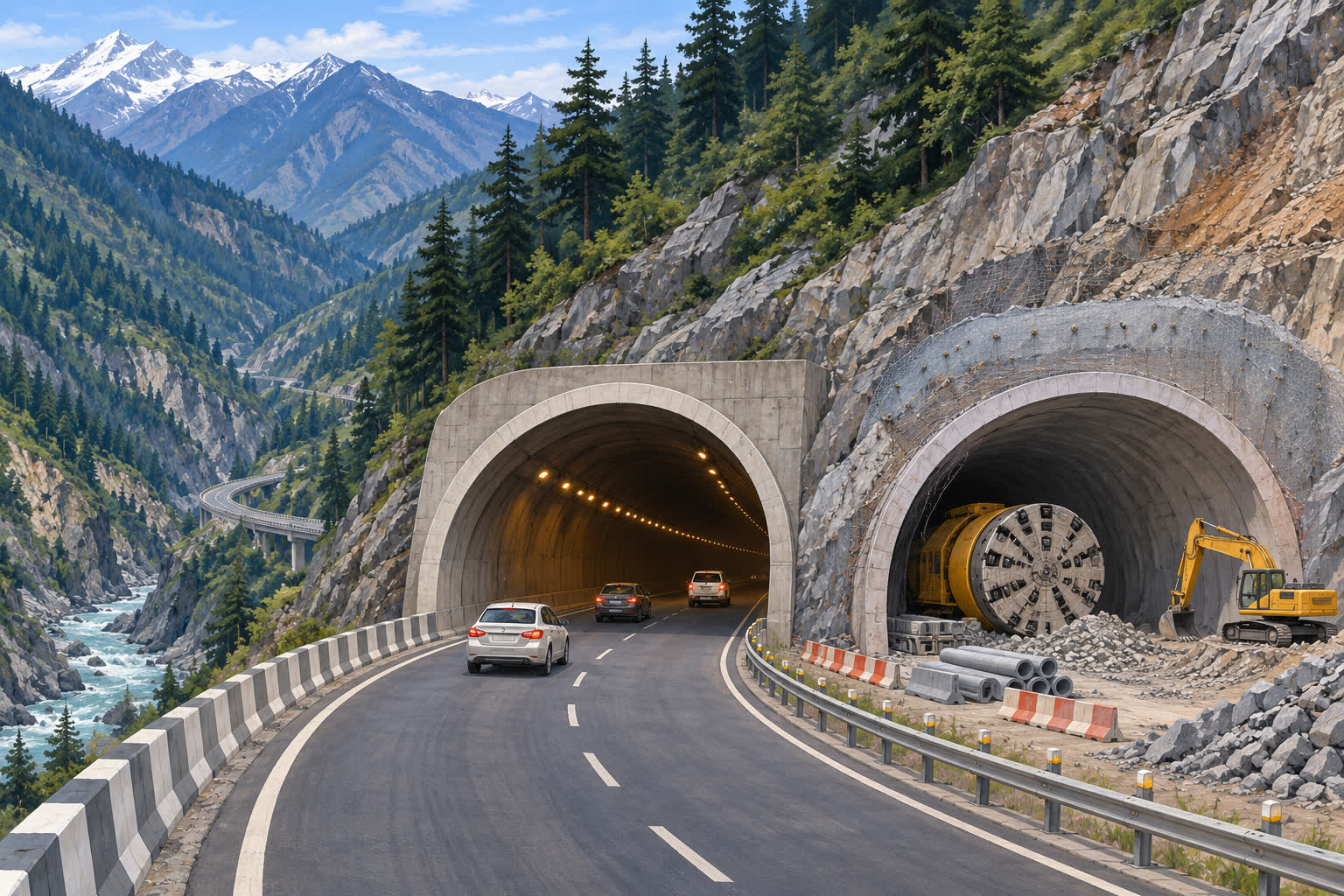
NHAI has reportedly sent the Ministry of Road Transport and Highways (MoRTH) a ₹3,449.63-crore Detailed Project Report (DPR) for a roughly 9-km tunnel parallel to the existing Chenani–Nashri tunnel on Jammu and Kashmir’s NH-44. If the proposal is approved and built, the extra tube could add capacity on a key Jammu–Srinagar road section, but it does not change today’s toll or travel rules.
Key takeaways
- Two reports dated 21 Nov 2026 say NHAI has forwarded the DPR through its headquarters to MoRTH.
- The reported project is about 9 km long and is estimated at ₹3,449.63 crore, but that is not a final sanctioned cost.
- NHAI’s regional office expects approval by the end of Dec 2026; construction in Feb–Mar 2027 is a reported expectation, not a confirmed start date.
- The existing tunnel is expected to remain operational during construction, subject to approvals, clearances and the final traffic plan.
What the new reports say
Greater Kashmir and Daily Excelsior, citing official sources and NHAI Project Director, Udhampur, Ish Gupta, report that NHAI’s Jammu regional office prepared the DPR and sent it to MoRTH through the authority’s headquarters. The proposed tube would sit on the left side of the existing Dr Syama Prasad Mookerjee Tunnel, formerly known as the Chenani–Nashri Tunnel, with separation between the two structures.
The reports say MoRTH approval is expected before the end of Dec 2026. If the ministry clears the project, NHAI is expected to invite global tenders. The tendering and technical and financial evaluation process has been described as taking about 45 days. The reports also put a possible construction start in Feb–Mar 2027 and estimate roughly four years for the new tunnel work. These dates remain conditional: the report is about a DPR moving through approval, not a work order or an opening announcement.
Both reports say the existing tunnel should continue operating while the new one is built, so the proposed work is not an immediate closure or diversion notice for NH-44 users. They also say geological and environmental clearances have been obtained while the forest-clearance process is being initiated. The final approval documents will matter because they will establish the sanctioned scope, conditions and construction traffic arrangements.
Why the project matters to road users
The existing Dr Syama Prasad Mookerjee Tunnel opened in 2017 and provides an all-weather link between Udhampur and Ramban. In its 17 Oct 2026 infrastructure note, the Press Information Bureau describes it as a 9-km highway tunnel and says it cuts the distance by 31 km and travel time by two hours. A second tube would therefore be a capacity and resilience project on an established corridor, rather than a new shortcut whose benefits are already available to drivers.
For private drivers, the practical benefit—if the project is approved, constructed and opened—would be more room on a heavily used section of the Jammu–Srinagar route and potentially fewer delays when traffic is concentrated. There is no official traffic forecast or fuel-saving estimate for the proposed tube in the reports reviewed, so a precise rupee or time saving cannot be stated yet.
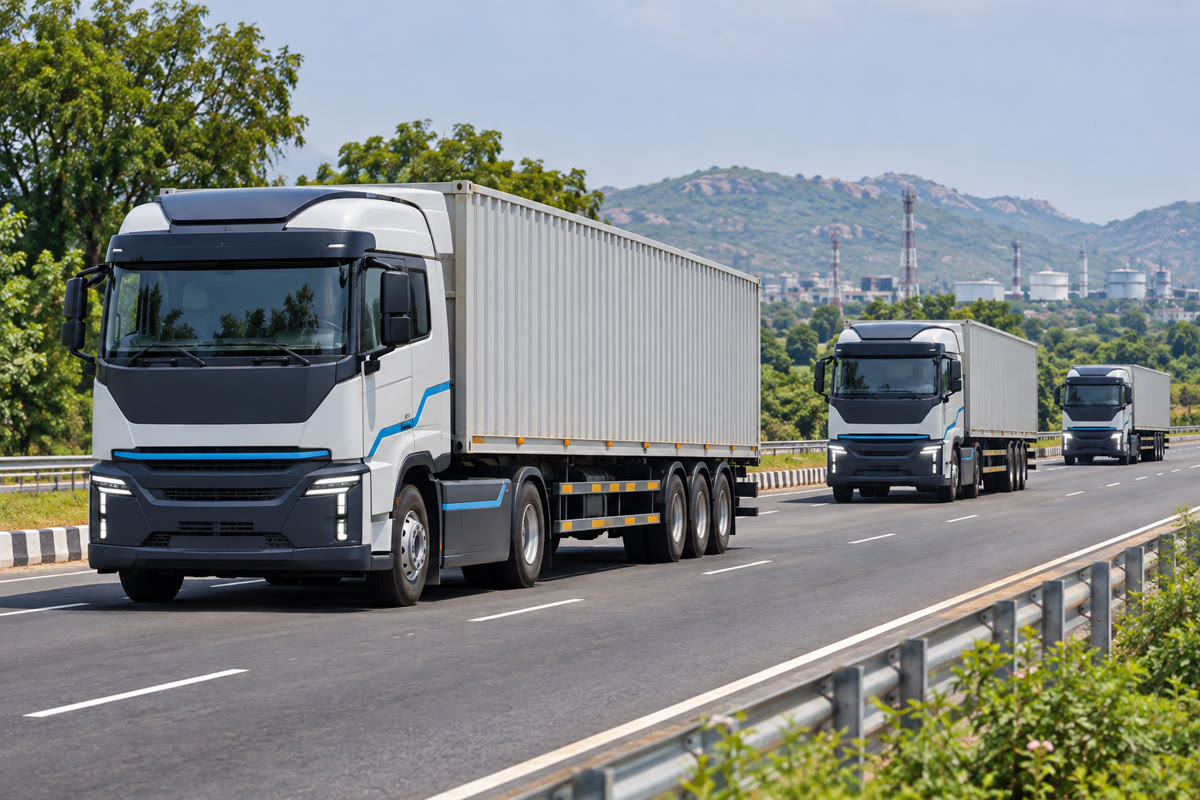
Fleet operators face the same distinction. More capacity could eventually make schedules more predictable, but the proposal does not create an immediate change in journey distance, toll liability or delivery timings. For a current trip, use the road-trip planner with the route and conditions that apply today.
Once an approved alignment and operating plan are available, a driver can compare the distance and fuel assumptions in the fuel cost calculator. Until then, any calculation based on the future tunnel would be a projection rather than a verified trip cost. Current fuel rates can be checked through the live fuel prices page.
Why the reported project cost needs checking
The ₹3,449.63-crore figure is reported by both Greater Kashmir and Daily Excelsior as the estimate in the DPR sent to MoRTH. However, NHAI’s FY 2026–27 Award Plan lists a 9-km “Chennani - Nashri Tunnel” with a tentative total capital cost of ₹2,869 crore. The plan does not explain whether that earlier figure predates or differs from the newly reported DPR estimate.
That difference should not be hidden. The two numbers may reflect different stages or scopes, but only the sanctioned project documents and later tender package can settle the final cost. Readers should treat ₹3,449.63 crore as the current reported DPR estimate, not as an approved expenditure or a signal that toll rates will rise.
What changes now—and what does not
Submitting a DPR does not itself change FASTag deductions, the toll charged at an existing plaza or access rules on NH-44. The 21 Nov reports concern a proposed tunnel and its approval process; they do not announce a new toll notification. Drivers planning a present-day Jammu–Srinagar trip should continue to check the toll-charge calculator, current road advisories and the operating status of the existing corridor.
The next meaningful updates are likely to be MoRTH’s approval, the forest-clearance position, the tender notice, the confirmed construction schedule and the final project cost. The traffic-management plan during construction will also be important, even though the current reports say the existing tunnel is expected to remain open.
Reader takeaway
This is a capacity proposal at the DPR stage, not a tunnel opening or a toll change. It could strengthen all-weather road movement between Jammu and the Kashmir Valley in the longer term, but drivers and transporters should base today’s fuel, toll and time planning on the existing NH-44 route and revisit the numbers only after official approval and tender details are published.
Sources
- Greater Kashmir — “NHAI submits Rs 3,449.63-cr DPR for 9-km parallel tunnel on Chenani-Nashri axis” — 21 Nov 2026.
- Daily Excelsior — “Another 9 kms long tunnel coming up parallel to Chenani-Nashri tube” — 21 Nov 2026.
- NHAI — “Award Plan FY 2026-27” — 2 Aug 2026.
- Press Information Bureau — “Connecting Kashmir: Building the Infrastructure for Growth” — 17 Oct 2026.