India’s electric passenger-vehicle market has entered a new phase of scale. In May 2026, electric car and SUV retail sales reached a record 26,221 units, according to industry tracking of Vahan-based registrations reported by multiple auto publications. The same cycle also marked a milestone for the segment leader: Tata Motors crossed 10,000 EV units in a single month for the first time.
This is not just a one-month spike headline. It matters because it combines three important market signals at once: a new volume high, broader brand participation beyond one dominant player, and a clear consumer response to running-cost pressure in petrol-diesel mobility. For FuelPrice readers, the key question is no longer whether EV demand exists; the question is how quickly EV adoption is beginning to change buyer behavior, dealer inventory strategy, and future fuel demand curves in urban India.
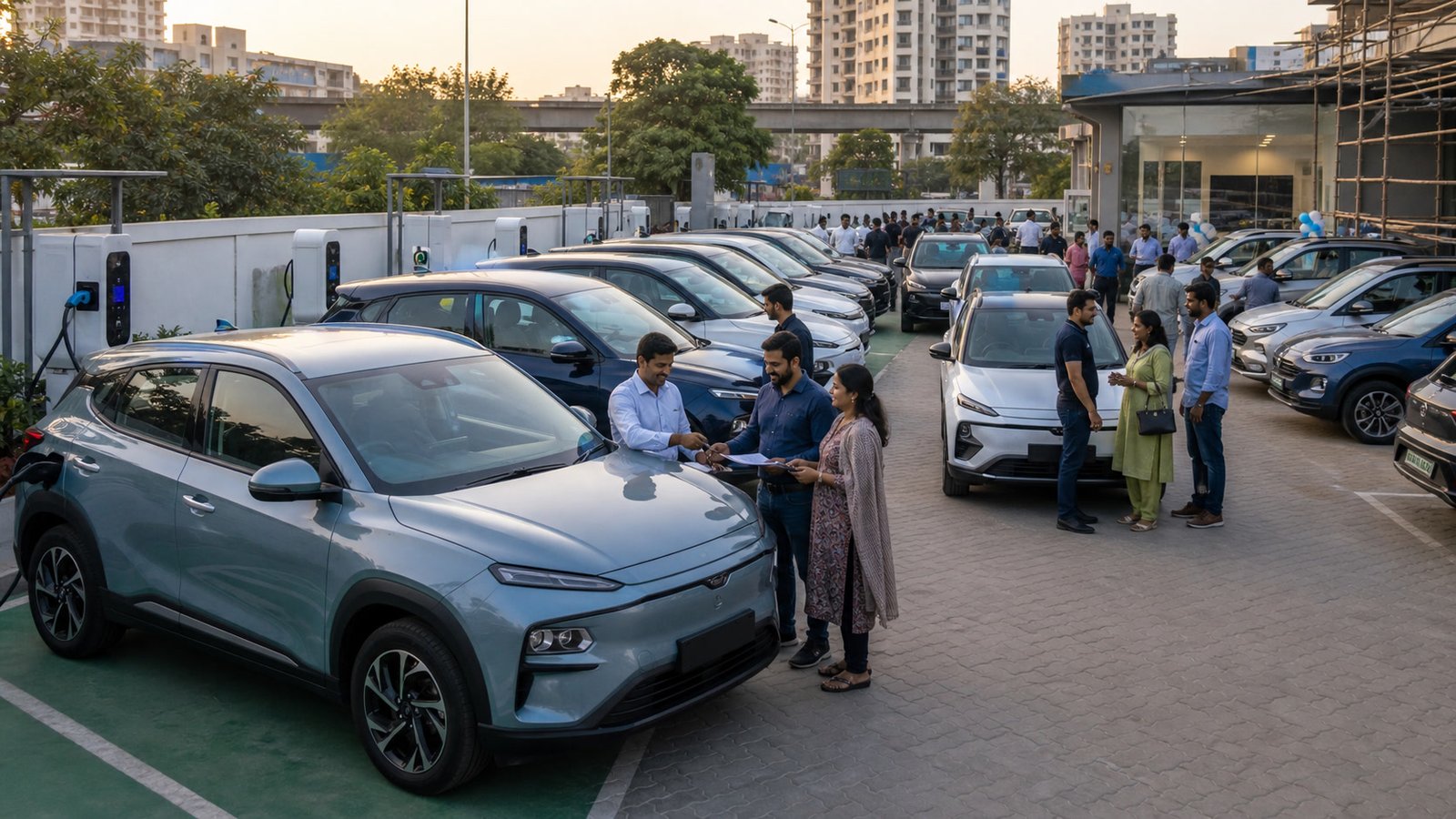
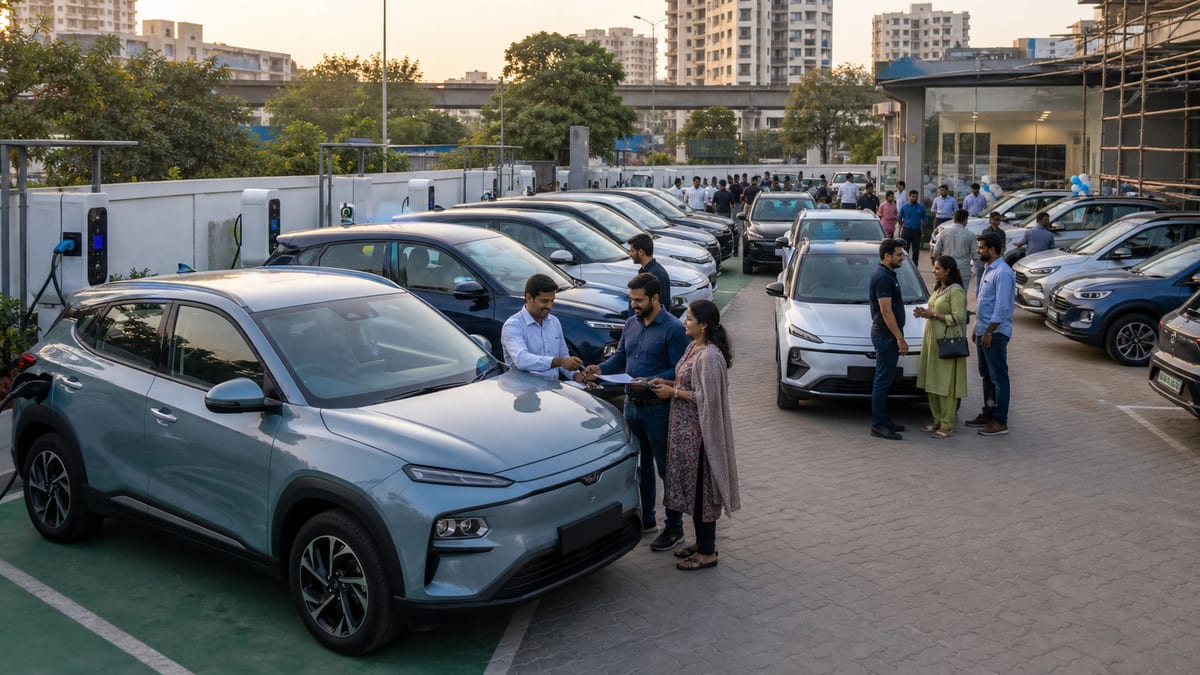 A high-activity EV delivery scene in India, reflecting rising registrations and faster retail conversion in May 2026.
What Happened in May 2026
May data reported by trusted auto industry desks shows that e-passenger vehicle retail volumes rose sharply year-on-year, setting a fresh monthly record. Autocar India and Autocar Professional reported 26,221 retail EV units for the month with around 80% YoY growth. Tata remained the market leader and moved beyond the 10,000-unit threshold, while Mahindra continued its recent momentum and stayed ahead of MG for another month.
This came alongside broader growth in India’s auto retail environment. Financial Express reported that overall auto retail sales rose around 5.5% in May, while EV registrations jumped strongly, indicating that electrification is expanding faster than the industry average in several key urban and peri-urban clusters.
Why This Matters for Fuel and Mobility Users
From a fuel-economy perspective, EV growth in private mobility creates a gradual but durable shift in urban energy demand. One record month will not immediately change national petrol and diesel consumption, but repeated 25,000-plus monthly EV registration cycles can alter city-level fuel retail trends over the next 12 to 24 months.
Three direct impacts are already visible:
- Urban running-cost recalculation: buyers comparing monthly outflow are increasingly modeling electricity cost against petrol and CNG spend, especially in high-commute households.
- Dealer strategy pivot: dealerships are allocating more floor space and delivery bandwidth to EV variants with faster booking-to-delivery conversion.
- Charging-network utilization: higher retail penetration improves commercial viability for private and public charging points, reinforcing further adoption.
Who Is Most Affected
- Urban car buyers: faster EV model availability and stronger resale confidence can reduce hesitation in first-time EV purchase decisions.
- ICE-focused OEM portfolios: brands with weaker EV line-ups may face pressure in high-growth city segments.
- Fuel retailers: immediate impact is limited, but long-term planning for forecourt mix, quick commerce hubs, and convenience offerings becomes more important.
- Fleet and corporate buyers: record retail momentum improves confidence in EV procurement for employee mobility and city fleet use-cases.
Market Context: Not Just One-Brand Growth
What makes the May story stronger than earlier months is that growth is no longer concentrated in a single manufacturer alone. Tata crossing 10,000 is significant, but the broader narrative is the expansion of the competitive set: Mahindra’s electric SUV line-up has scaled quickly, MG continues to hold relevant share in key sub-segments, and newer entrants are adding pressure on product value, finance packages, and feature standards.
That competitive broadening matters for consumers because it typically leads to better price-feature balancing, improved warranty confidence, and quicker network investments from both OEMs and ecosystem partners.
Key Numbers Snapshot
| Indicator | May 2026 signal | Why it matters |
|---|---|---|
| India e-PV retail volume | 26,221 units (record month) | Confirms EV demand scale beyond early-adopter phase |
| YoY EV growth | ~80% (industry reports) | Shows acceleration against broader auto growth |
| Tata EV monthly milestone | Crossed 10,000 units for first time | Signals stronger conversion at current price bands |
| Overall auto retail trend | ~5.5% growth (FE report) | EV segment is growing faster than total market |
What Changes Now
For the next quarter, the market is likely to focus on three operational variables: price revisions, waiting periods, and financing offers. If OEMs announce further price increases from July, as hinted in some market reports, June booking momentum could remain strong. At the same time, any bottleneck in charging availability or delivery timelines can quickly affect buyer sentiment, especially in first-time EV households that are comparing against familiar petrol options.
What to Watch Next
- Whether June EV retail volumes sustain above 25,000 units
- Brand-level share movement between Tata, Mahindra, MG and newer entrants
- Impact of fuel-price movement on urban EV booking velocity
- Charging network uptime and utilization in top demand cities
- Any shift in incentive, tax, or registration policy at state level
Final Takeaway
May 2026 is a meaningful marker for India’s EV transition: record monthly retail volume, a new single-brand milestone above 10,000 units, and faster growth than the broader auto market. For consumers, the practical implication is that EVs are moving from “alternative” to “mainstream shortlist” in many city segments. For the fuel and mobility ecosystem, this is an early but clear indicator of structural demand rebalancing that will become more visible with each successive high-volume month.