Mercedes-Benz India plans another car-price revision in January 2027, CEO Santosh Iyer said in media interactions reported on 5 and 7 October 2026. The amount and the models covered are not fixed yet, so the immediate issue for buyers is a possible change to the purchase budget rather than a confirmed rupee increase.
The company is expected to decide the size of the revision in December 2026. Until then, a quotation for a Mercedes-Benz car should be read as time-bound commercial information, not as a guarantee of the January 2027 price.
Key takeaways
- Mercedes-Benz India plans another price revision in January 2027.
- The percentage or rupee amount has not been announced.
- The company has not said whether every model or only selected cars will be affected.
- Earlier 2026 revisions were linked by the company to currency, inflation, input costs and logistics pressure.
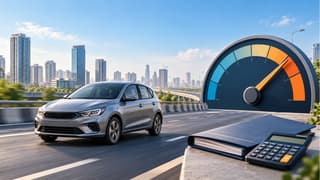
 Illustrative showroom scene for a planned Mercedes-Benz India price revision; this is not an official Mercedes-Benz product photograph. Image: FuelPrice illustration.
What Mercedes-Benz has confirmed
HT Auto reported on 7 October 2026 that Mercedes-Benz India will see another price hike in January 2027. Iyer said the company had already made several price increases in 2026 and would look at another revision because the rupee had not improved and inflation also had to be factored in. He did not give a final percentage, a rupee range or a model-wise list.
That distinction matters. The January 2027 change is a management plan reported from the CEO’s comments, not a published price circular. The final ex-showroom prices, the effective date and any model exclusions remain open. Buyers therefore cannot calculate the exact increase from the announcement alone.
Why another revision is being considered
ETAuto reported on 5 October 2026 that the company is facing rupee depreciation, higher input costs, longer shipping timelines and higher logistics expenses. The same report quoted Iyer as describing more frequent price revisions as a new normal for the business.
Local assembly does not remove every cost variable. ETAuto reported in the same 5 October 2026 interaction that about 95% of the cars Mercedes-Benz sells in India are produced at its Chakan facility, while the level of local sourcing varies by model. That helps explain why a brand-wide price announcement does not automatically translate into the same change for every vehicle.
What the 2026 price record shows
The reports do not describe the 2026 revisions in exactly the same sequence. HT Auto reported increases of about 2% in January 2026 and about 2% in April 2026, followed by selective revisions of ₹1.2 lakh to ₹7.4 lakh depending on the model in June 2026. ETAuto reported increases in January, April and July 2026, followed by another revision on 1 October 2026.
Those accounts should not be treated as a single model-wise price table. They do agree on the useful buyer point: Mercedes-Benz India has been revising prices repeatedly in 2026, while the amount for January 2027 is still undecided. The October 2026 revision and the January 2027 plan also mean that a vehicle booked in late 2026 may need a fresh price check if invoicing or delivery moves into the new year.
What this means for a buyer’s budget
The first check is the quotation date and validity period. A buyer comparing a model or variant can separate the ex-showroom price from registration, insurance, accessories and other on-road charges, then ask which of those items can change if the invoice is raised after January 2027. The written booking and delivery terms matter more than an informal promise that an older price will continue.
Running costs remain separate from the showroom price. A buyer comparing petrol, diesel or electric versions can use the fuel cost calculator to test a typical monthly commute, and can check live fuel prices when updating that estimate. This does not predict the January price revision, but it keeps the purchase comparison focused on total ownership cost rather than the sticker price alone.
For Mercedes-Benz electric-car shoppers, the cost check also includes access to charging. The EV charging directory can help map public charging availability by state before a buyer compares an electric model with a petrol or diesel alternative. Charging access and vehicle price are separate decisions, and the January revision does not change the need to check both.
Sales remain strong despite price pressure
The price plan comes as Mercedes-Benz India reports continued demand. HT Auto said the company sold 15,190 cars between January and September 2026, up about 8% from the same period in 2025. Its July–September 2026 sales reached 5,422 units, a record quarter and about 6% higher year on year. Business Standard reported the same sales totals and said the company’s order intake remained strong, although supply constraints affected some electric models.
FuelPrice’s earlier Mercedes-Benz India Q3 sales report provides the related sales context. The new development is the planned January 2027 price revision, not a new sales target or a confirmed price list.
What to watch in December and January
The next useful update should come when Mercedes-Benz India decides the quantum in December 2026. Buyers will then need to check whether the change applies across the range or only to selected models, whether it is expressed as a percentage or a fixed amount, and the exact effective date in the revised price list.
Until those details are published, the confirmed takeaway is limited but relevant: Mercedes-Benz India has signalled another price revision for January 2027, while the financial effect on a particular car remains unknown. Treating the announcement as a confirmed percentage would overstate what the company has disclosed.
Sources
- HT Auto — Mercedes-Benz India to increase car prices in January 2027, says CEO Santosh Iyer — 7 Oct 2026
- ETAuto — Quarterly price hikes becoming ‘new normal’ amid rising costs: Mercedes-Benz India’s Santosh Iyer — 5 Oct 2026
- Business Standard — Demand continues to be stronger than supply: Mercedes-Benz India MD — 5 Oct 2026