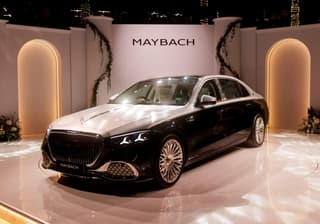
Mercedes-Benz India delivered 5,422 vehicles in July–September 2026, its best-ever quarter, and said January–September sales reached a record 15,190. The result matters beyond the luxury segment because electric-car orders are growing while supply and delivery timelines remain a live constraint for Indian buyers.
The company’s update gives a useful snapshot of what is moving in India’s premium market: festive demand is supporting showroom activity, core luxury models still provide most of the volume, and battery-electric vehicles are gaining attention even when deliveries cannot immediately match orders.
Key takeaways
- Mercedes-Benz India retailed 5,422 vehicles in Q3 2026, up about 6% year on year and 17% from the preceding quarter.
- January–September sales reached 15,190 vehicles, the company’s best nine-month result in India; the year-on-year rise works out to about 7.5%, rounded to 8% in the company’s statement.
- The battery-electric portfolio grew 16% in January–September, while the CLA Electric crossed 1,000 confirmed orders and faces deliveries extending into 2027.
- Core Luxury contributed about 60% of nine-month sales, while Top-End Luxury made up more than 25% and grew 13% year on year.
- Electrified S-Class deliveries are due from mid-October, and Mercedes-Benz has scheduled the India debut of the GLC Electric for 4 Nov 2026.
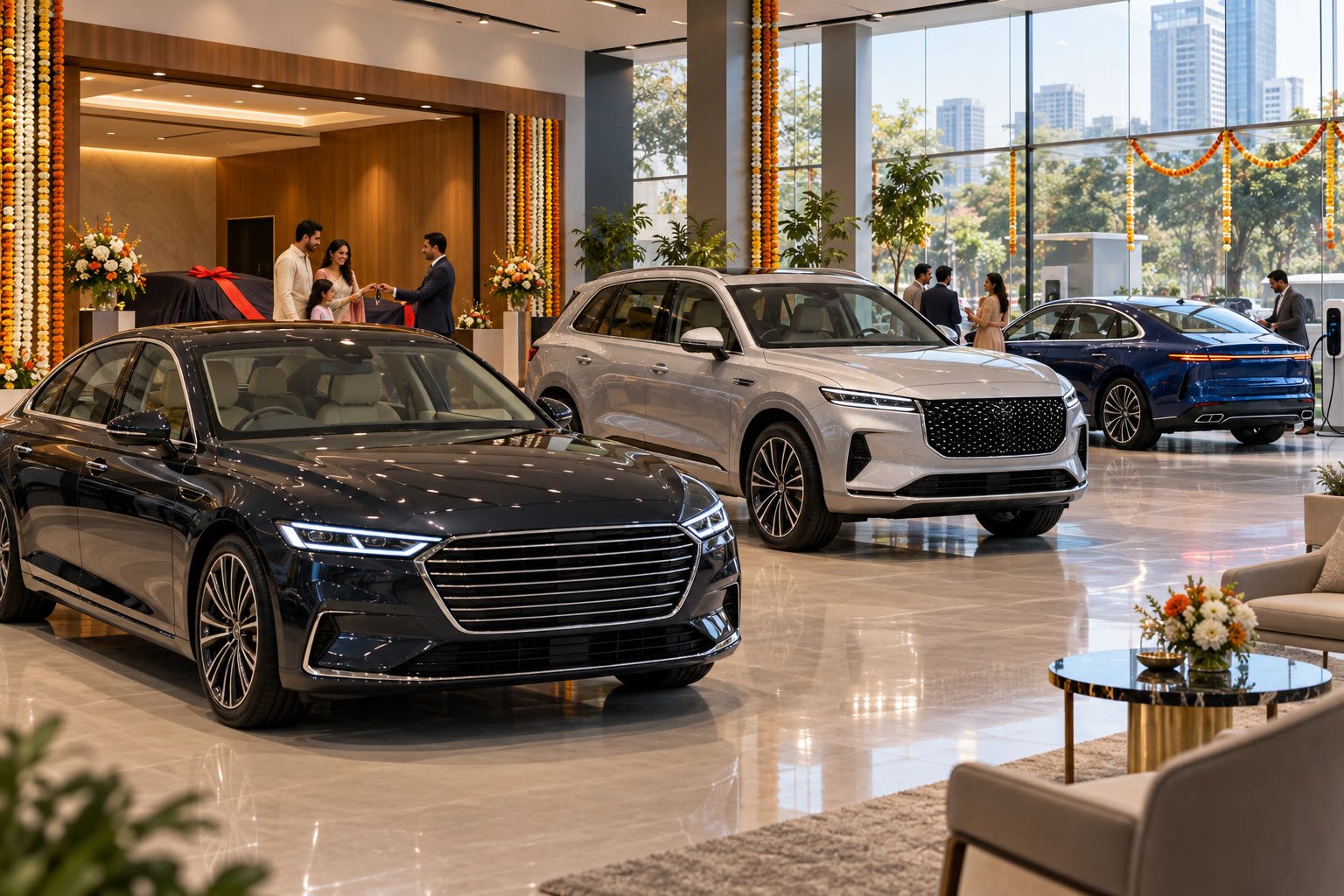
 Illustrative editorial image of a premium Indian showroom and EV sales context; it is not an official Mercedes-Benz photograph. Credit: FuelPrice editorial illustration.
What the sales numbers show
Mercedes-Benz India announced the figures on 5 Oct 2026. Business Standard reported the company’s explanation in an interview with Managing Director and CEO Santosh Iyer, while Moneycontrol and Autocar Professional independently carried the same Q3 and nine-month totals. These are vehicles retailed or delivered to customers, not a count of registrations for the entire luxury-car market.
The Q3 total of 5,422 vehicles compares with 5,119 in Q3 2025, a difference of 303 vehicles and an increase of about 6%. Sales were also 17% higher than in Q2 2026. For January–September, the company reported 15,190 vehicles against 14,132 in the same period of 2025. That is 1,058 additional vehicles; calculated from the published figures, the increase is about 7.5%, while the company and several reports round it to 8%.
Festive demand helped the quarter
The company attributed the sequential improvement to early festive-season buying and its Dream Days campaign, which included financing offers. That explanation describes the company’s reported sales drivers; it does not mean every model has the same availability or that a buyer will receive a particular offer.
For the wider market, the result is a signal that premium demand has remained active despite price and supply pressures. It should not be read as a market-wide growth rate or as proof that every luxury vehicle is selling faster. Mercedes-Benz’s result is measured against its own prior periods and product mix.
EV demand is rising, but supply is the next test
Battery-electric vehicles were an important part of the update. Mercedes-Benz said its BEV portfolio grew 16% in January–September 2026 despite limited vehicle availability. The CLA Electric had more than 1,000 confirmed orders, and reports said delivery timelines extend into 2027. Business Standard quoted Iyer saying the company could have sold another 1,000 vehicles if adequate CLA EV supply had been available. That is a company estimate of missed sales opportunity, not a confirmed number of additional deliveries.
The distinction between orders and deliveries matters for buyers. A strong order book can indicate interest, but the useful transaction details are the specific variant, the expected delivery window, the price applicable at invoicing and the equipment included in the quoted vehicle. The upcoming GLC Electric launch and the first electrified S-Class deliveries will provide further evidence of how quickly the brand can add supply to its EV range.
Anyone comparing a premium EV with a petrol or diesel vehicle should check charging access at home and along regular routes rather than treating a claimed range or an order count as a complete ownership calculation. FuelPrice’s state-wise EV charging directory can help with the infrastructure part of that check.
Where the sales mix is strongest
The nine-month mix shows that the current momentum is concentrated across more than one price band, but not evenly. The Core Luxury portfolio—C-Class, long-wheelbase E-Class, GLC and GLE—contributed about 60% of sales. The Top-End Luxury portfolio accounted for more than 25% and grew 13% year on year, while the Entry Luxury segment, led by the GLA and CLA Electric, made up about 15% and grew 4%.
The percentages are approximate company-reported segment shares, so they should be used to understand the direction of the portfolio rather than to compare models as if they had disclosed unit-level results. The company did not publish individual sales for each model in the reports reviewed.
For drivers, the mix also shows why fuel and charging costs remain relevant even in a premium-EV story. A vehicle’s purchase price is only one part of the decision. Monthly distance, real-world efficiency, insurance, maintenance, home charging and route availability can change the ownership picture. Petrol and diesel comparisons can be set up with FuelPrice’s fuel-cost calculator using the driver’s own distance and efficiency assumptions.
What buyers should check next
- Availability: Ask for a written delivery estimate for the exact variant and confirm whether the vehicle is already allocated, in transit or awaiting a future production slot.
- Final cost: Separate ex-showroom price, registration, insurance, accessories, charging equipment and any finance-related charges in the quotation. A headline sales result does not establish the final amount payable.
- EV readiness: Check home-parking permissions, electrical load, charger installation, public charging compatibility and the warranty terms for the battery and charging hardware.
- Powertrain fit: Compare the expected monthly distance and route pattern with the practical refuelling or charging time, not only with the vehicle’s claimed performance.
- Trip use: For longer intercity journeys, use the road-trip planner to map distance and stops before comparing a vehicle’s running-cost estimate.
What to watch after the record quarter
The next useful signals will be actual deliveries of the CLA Electric and the electrified S-Class, the India-spec pricing and equipment announced for the GLC Electric, and whether supply constraints ease for imported EVs. October retail-registration data will also help separate festive-season enquiries and company order books from vehicles that reached customers.
The reader takeaway is narrower than the headline: Mercedes-Benz India has reported a record quarter and a stronger EV order pipeline, but neither result guarantees availability, pricing or delivery timing for a particular model. Buyers should use the sales update as market context, then compare a dated, variant-specific quotation with the practical fuel, charging and trip costs they expect to face.
Sources
- Business Standard — “Demand continues to be stronger than supply: Mercedes-Benz India MD” — 05 Oct 2026.
- Moneycontrol — “Mercedes-Benz India posts record Q3 sales, 9-month volumes rise 7.5%” — 05 Oct 2026.
- Autocar Professional — “Mercedes-Benz India Reports Sales of 15,190 Units for January-September 2026” — 05 Oct 2026.
- The New Indian Express — “Mercedes-Benz India posts strongest-ever quarter” — 05 Oct 2026.